In 2025, Havana recorded the highest negative migration rate in all of Cuba, with a striking -33.6 per thousand residents, as revealed by an infographic from the National Office of Statistics and Information of Cuba (ONEI) in its report, "Demographic Indicators of Cuba and its Territories, 2025."
The capital's figure far exceeds the national average, which stood at -25.6 per thousand by the end of last year. Following Havana, Matanzas and Cienfuegos reported rates of -28.8 and -28.0, respectively, while Holguín and Las Tunas showed the least negative values at -19.8 and -20.5.
A telling detail is that every Cuban province without exception showed a negative migration balance in 2025. This indicates that more people are leaving the island than arriving in any region.
In absolute terms, Havana saw a net loss of 57,433 residents due to migration over the year. While 78,537 individuals left for foreign shores, only 21,104 migrated from other Cuban provinces. With approximately 1,673,208 inhabitants by the end of 2025, Havana accounted for nearly a quarter of the country's total negative migration balance, which was estimated at 245,264 people.
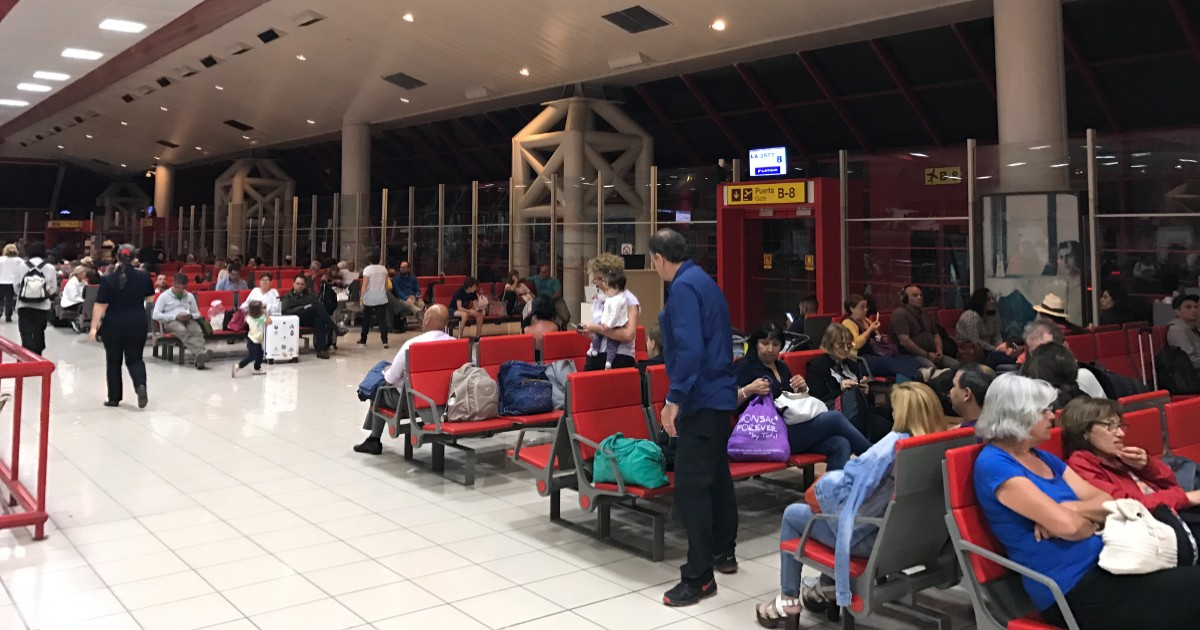
Havana's status as the main departure point in the country is no coincidence, serving as the hub for José Martí International Airport and the largest network of connections with the Cuban diaspora abroad.
The migration exodus is just one of the three forces driving Cuba's demographic collapse. In 2025, deaths nearly doubled births, with 136,214 deaths compared to 68,064 births, resulting in a natural decrease of -7.1 per thousand. Combined, these factors led to Cuba losing 313,414 residents in a single year, ending 2025 with 9,434,593 residents, down from over 11 million in 2020.
Aging further exacerbates the situation in the capital. Havana ranks as the second oldest province in the nation, with 29.1% of its population being over 60 years old—almost twice the number of those under 14 (251,527). Nationally, 26.7% of Cubans are 60 or older, the highest proportion in Latin America and the Caribbean.
The fertility rate has plummeted to 1.29 children per woman, the lowest since 1958, and significantly below the replacement level of 2.1. Arelis Rosalen Mora Pérez, a researcher at the Center for Demographic Studies (CEDEM), warned last July that "by the end of 2024, 50% of those who moved out of the country were young people and children under 35."
Juan Carlos Alfonso Fraga, deputy head of ONEI, encapsulated the crisis's severity with a stark statement: "There is no similar experience," noting that no country in the so-called Global South has faced such a population contraction outside a wartime context.
The United Nations Population Fund (UNFPA) cautioned in June 2026 that if current trends persist, Cuba's population could dwindle to just 5.6 million by 2100.
Understanding Havana's Migration and Demographic Challenges
What was Havana's migration rate in 2025?
Havana's migration rate in 2025 was -33.6 per thousand inhabitants, the highest in Cuba.
How does Havana's aging population compare to the national average?
Havana has a significantly older population, with 29.1% over 60, compared to the national average of 26.7%.
What impact has the migration exodus had on Cuba's population?
The migration exodus, combined with high death rates and low birth rates, led to a loss of 313,414 residents in 2025.
How has the fertility rate changed in Cuba?
Cuba's fertility rate has dropped to 1.29 children per woman, a historic low since 1958, and below the replacement level.