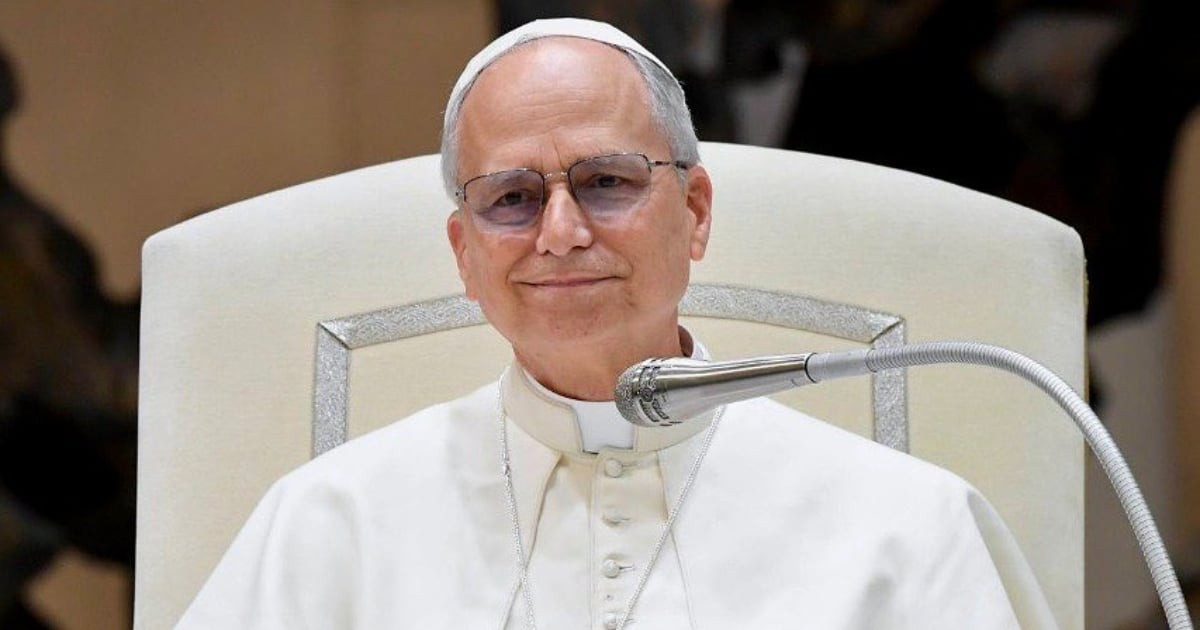
The Cuban government has extended an invitation to Pope Leon XIV to visit the island, utilizing a press briefing in Rome to once again urge the lifting of the United States' economic embargo. This comes just days before a new vote on the matter is set to take place at the United Nations General Assembly.
According to ANSA news agency, Leyde Ernesto Rodríguez Hernández, Cuba's ambassador to the Holy See, announced the invitation on Thursday during a press conference in the Italian capital.
The ambassador reiterated the Cuban regime's opposition to U.S. sanctions and highlighted the Catholic Church's statements regarding the ongoing tensions between Havana and Washington. This occurs amidst diplomatic engagements between the two countries and the Vatican.
"Cuba is not a threat; the blockade is. We are a nation of peace, seeking and deserving peace," declared Rodríguez, echoing the regime's familiar rhetoric, as reported by the Italian agency.
As of now, the Vatican has not officially responded to the invitation. Therefore, there is no public confirmation from the pontiff nor any announced date for a potential visit to Cuba, as noted by ANSA's Brazilian edition.
Rodríguez's statements come ahead of the UN General Assembly debate scheduled for October 27-28, where a resolution calling for the end of the U.S. embargo on Cuba will be revisited.
Expressing "confidence" in gaining significant international support, Rodríguez denounced what he described as U.S. pressure aimed at altering other nations' votes.
During his remarks, the Cuban diplomat attributed significant economic and social damages to U.S. sanctions, presenting official Cuban government data on their impact.
According to his report, from March 1, 2025, to February 28, 2026, the embargo resulted in damages amounting to $8.083 billion. The cumulative losses over the decades are estimated to be $178.7 billion at current prices.
The ambassador also claimed that approximately 7,000 containers remain stranded in Caribbean ports, unable to reach Cuba due to commercial operators' fear of potential U.S. sanctions.
Labeling the embargo as "cruel" and "illegal," the Havana representative argued that its effects particularly harm Cuba's most vulnerable populations.
The U.S. government, however, continues to uphold the sanctions as part of its policy towards Cuba. The legal framework for potentially lifting the embargo involves conditions related to political changes and guarantees of fundamental rights and freedoms on the island.
In Rome, Rodríguez also recalled statements made by Leon XIV in February 2026, where the pontiff expressed concern over escalating tensions between Cuba and the United States and advocated for dialogue.
The diplomat additionally mentioned comments from the Vatican's Secretary of State, Cardinal Pietro Parolin, regarding Cuba's challenging humanitarian situation.
During the press briefing, the ambassador noted that January 2028 will mark the 30th anniversary of Pope John Paul II's historic visit to Cuba in 1998.
The diplomat referenced the famous phrase uttered by Pope John Paul II during that visit: "May Cuba open itself to the world, and may the world open itself to Cuba," linking it to the Cuban authorities' demand for the end of the U.S. embargo.
However, John Paul II's message also called for the opening of Cuban society itself, extending beyond economic relations with the United States.
Since that 1998 visit, Cuba has hosted Pope Benedict XVI in 2012 and Pope Francis in 2015. Should Leon XIV accept the invitation, he would become the fourth pontiff to visit the island.
The invitation follows several high-level contacts this year between Cuban, U.S., and Vatican officials.
On February 28, Leon XIV received Cuban Foreign Minister Bruno Rodríguez Parrilla in an audience. Rodríguez had traveled to Rome as a special envoy from Miguel Díaz-Canel amid heightened tensions between Havana and Washington.
This meeting followed interactions between U.S. representatives and Vatican authorities, positioning the Holy See as a significant intermediary in diplomatic efforts concerning Cuba.
In March, Parolin stated that the Vatican had taken steps to facilitate a negotiated solution to the Cuban crisis, although he acknowledged the challenges in achieving concrete outcomes.
Frequently Asked Questions about the U.S. Embargo on Cuba
What is the U.S. embargo on Cuba?
The U.S. embargo on Cuba is a series of economic sanctions and trade restrictions imposed by the United States on Cuba, intended to pressure the Cuban government on political and human rights issues.
How has the embargo affected Cuba economically?
The Cuban government claims that the embargo has resulted in economic damages totaling billions of dollars, impacting various sectors including healthcare, food, and infrastructure.
Has the Vatican responded to Cuba's invitation to the Pope?
As of now, the Vatican has not publicly responded to the invitation for Pope Leon XIV to visit Cuba, and no date for a potential visit has been announced.