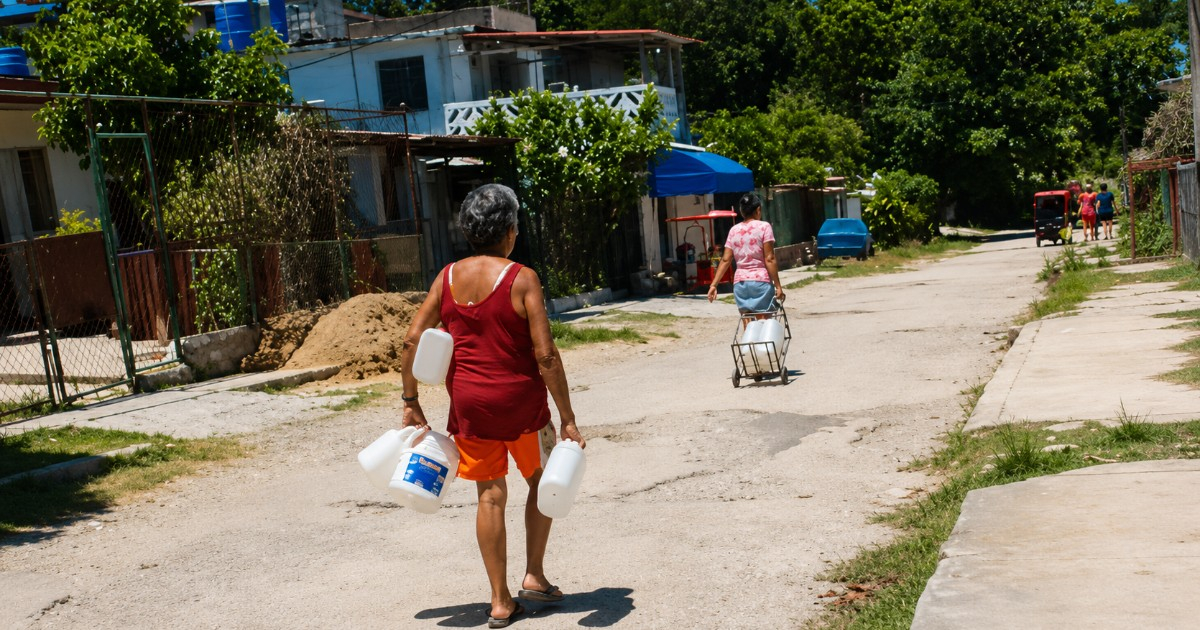
Inhabitants of San Juan y Martínez in Pinar del Río and the central area of Songo-La Maya in Santiago de Cuba have reported enduring water shortages lasting from three to four months, as highlighted in a recent report by journalist Ivette Pacheco for Martí Noticias.
Michel Valladares, a local from La Estrella in San Juan y Martínez, expressed that families in the area have been without water in their homes for over four months. According to him, residents are forced to boil rainwater for drinking and cooking due to the prohibitive costs of private water trucks, priced between 15,000 and 20,000 Cuban pesos, and 200-liter tanks, costing between 1,000 and 1,200 pesos.
Valladares also pointed out alleged mismanagement at the local aqueduct and possible illegal connections to the main network, which might be affecting water pressure. These claims, however, have not been independently confirmed.
Moving to the eastern part of Cuba, independent journalist and activist Yadira Serrano reported that the water scarcity in Songo-La Maya spans three to four months, with some communities experiencing up to a year without regular service. Serrano mentioned that residents resort to using artisanal wells or pay between 1,000 and 1,500 pesos per tank to independent sellers. Meanwhile, the cost of water trucks has surged to 15,000 pesos, far exceeding the average state wages.
In Granma province, activist Yurisnel Domenech from Media Luna noted that several areas have been without water for five to six days, despite previously having service. The situation in Pinar del Río has been deteriorating for some time. Back in mid-October, seven damaged pumping units in the main pipelines of the provincial capital, combined with power outages lasting over 16 hours daily, left entire communities without water for up to 67 days and beyond three months.
The scenario in Songo-La Maya is equally concerning. In May 2026, residents reported over 50 consecutive hours without electricity or water, and by September, local authorities acknowledged that the municipality's pumping equipment had been malfunctioning since the start of the year.
The link between water supply issues and power outages is clear: the National Institute of Hydraulic Resources admitted that over 85% of the country's pumping stations rely on the National Electric System. Electrical outages and equipment malfunctions account for 88% of the reasons for the water supply collapse.
These stations need 10 to 12 continuous hours of electricity to maintain network pressure, a condition unattainable under the current blackout schedules. The state agency conceded that approximately 2.5 million people—32% of customers connected to public networks—are affected by water service disruptions nationwide, with the UN (OCHA) estimating that by September 2026, this number could rise to 3.5 million.
Frequently Asked Questions About Water Shortages in Cuba
What is causing the water shortages in San Juan y Martínez and Songo-La Maya?
The water shortages are primarily attributed to damaged pumping equipment, power outages, and possible mismanagement of local water systems.
How are residents coping with the lack of water?
Residents are resorting to boiling rainwater and using artisanal wells. Some purchase water from private sellers, although the costs are significantly high.
How many people in Cuba are affected by water service disruptions?
Approximately 2.5 million people, or 32% of those connected to public networks, are affected. Estimates suggest this number could rise to 3.5 million by 2026.