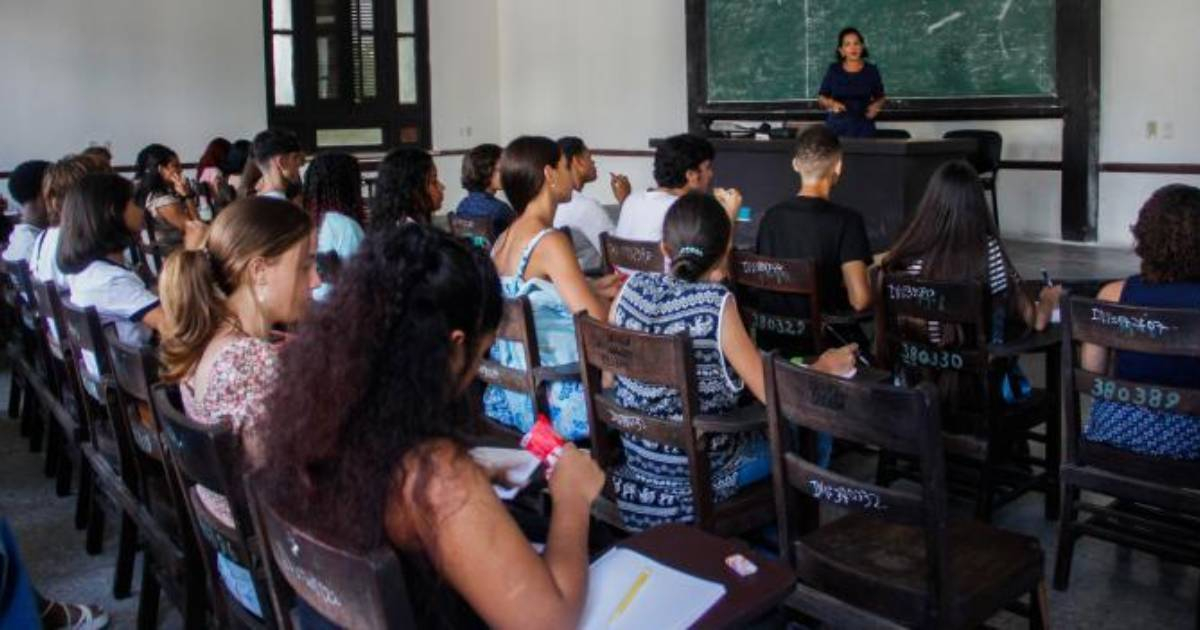
The Cuban Council of Ministers has initiated a job training program aimed at young individuals between the ages of 18 and 30 who are neither employed nor in school. Participants will engage in educational courses and receive a monthly stipend equivalent to the current minimum wage during their training.
This initiative was formalized under Agreement No. 10463 of 2026 and was published on October 22 in the Official Gazette of the Republic of Cuba No. 88 Ordinary of 2026.
Reintegrating Youth into the Workforce
The primary goal of this program is to reintegrate young people into the educational and workforce systems, enhancing their job skills and employment opportunities through targeted training activities.
Eligibility Criteria for the Program
While the program is mainly targeted at unemployed youth aged 18 to 30, it can exceptionally include teenagers between 15 and 17 years old after assessing their social risk situations. Additionally, individuals aged 31 to 35 with family caregiving responsibilities may also qualify.
Eligible candidates include residents from areas with high youth unemployment, women with dependents, transgender individuals, those living with HIV/AIDS, people with disabilities, and others in vulnerable situations. The selection process will be managed by municipal labor and social security offices.
Training Duration and Financial Support
The training courses will last between one and six months, requiring at least 20 hours of weekly instruction. These courses will be tailored to meet the labor demands of each region, facilitating participants' integration into the workforce.
Participants will earn a monthly stipend equivalent to the current minimum wage in Cuba, set at 3,210 Cuban pesos as per the Ministry of Labor and Social Security's Resolution 14/2026. For vulnerable youth, social assistance conditional benefits will fund this stipend. Attendance of at least 85% of classes and passing evaluations will be necessary to maintain the stipend.
Beneficiaries may be required to repay the stipend partially or fully if they unjustifiably leave the courses, fail to take up available jobs aligned with their training, or resign without cause within the first six months. In such cases, they will have up to 180 business days to repay, with the option of a 12-month payment plan if they can demonstrate financial hardship.
Program Implementation and Oversight
Municipal labor and social security offices will oversee the program's implementation, with support from the Ministry of Labor and Social Security, the Ministry of Education, municipal administration councils, and educational entities responsible for conducting the courses. These bodies will coordinate training activities and align them with the local labor market demands.
Announced in June 2026, this measure is part of Cuba's broader labor and wage reform efforts. The program also recognizes the training period as service time.
Youth unemployment has been a longstanding issue acknowledged by Cuban authorities. As of February 2023, official figures indicated approximately 800,000 young people were neither studying nor working. The government later reported that by December 2024, 16,327 youths had resumed studies, and 28,011 had entered employment through educational programs. An independent report from the Social Rights Observatory in September 2025 estimated that nearly two out of every ten Cuban youths were still disengaged from both activities.
Agreement 10463/2026 took effect on October 22, 2026, the date of its publication in the Official Gazette of the Republic of Cuba.
FAQs on Cuba's Youth Job Training Program
Who is eligible for the job training program in Cuba?
The program targets unemployed youth aged 18 to 30, but may also include teenagers aged 15 to 17 after a social risk assessment, and individuals aged 31 to 35 with caregiving responsibilities.
What are the financial conditions of the program?
Participants receive a monthly stipend equivalent to the minimum wage, contingent upon attending 85% of classes and passing evaluations. Vulnerable participants may receive funding through social assistance.
What happens if a participant leaves the program?
Beneficiaries who unjustifiably leave the program or fail to take up jobs may need to repay the stipend, with a 180-day period for repayment and a possible 12-month payment plan for financial difficulties.