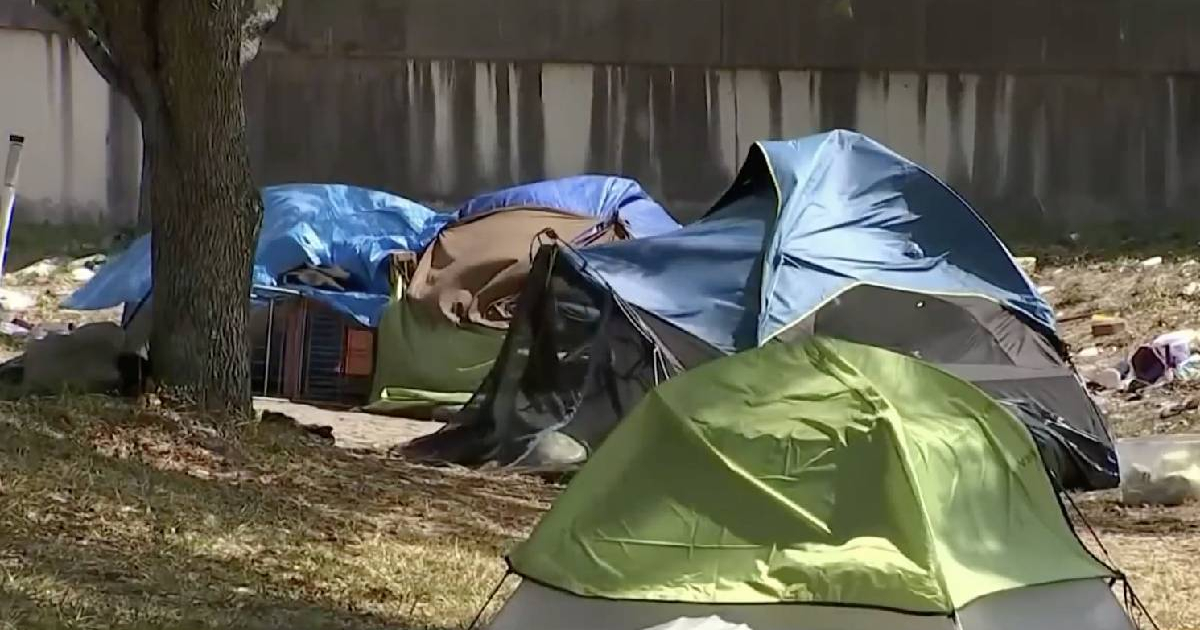
Having a job doesn't always secure a place to live in Miami-Dade. As the homeless population grows, some employed individuals and seniors are resorting to spending their nights in their vehicles.
The most recent count by the Miami-Dade Homeless Trust, conducted on August 27, 2026, identified 3,748 homeless individuals in the county, marking a 5% rise compared to the same time the previous year. Among these, 1,089 were unsheltered, while the remaining 2,659 were in shelters, hotels, or temporary accommodations.
"Many of them are employed but earn too little to afford rent," Katherine Martínez, a representative from the organization, told Telemundo 51.
This crisis particularly impacts seniors living on fixed incomes around $950 a month, a sum far from sufficient to cover the high rental costs in the county.
As a result, some have turned to sleeping in their cars and paying for a gym membership to access shower facilities.
"We're noticing more seniors. We're seeing more women," noted Martínez, highlighting the changing demographics of the homeless population.
During a nighttime counting operation, teams discovered a family of four living in a car in Hialeah. It comprised two elderly adults, their 36-year-old daughter, and a six-year-old child.
The family was determined to stay in Hialeah for a crucial reason: the child attended school in the city.
Enumerators paused their count to find emergency accommodation for the family, successfully placing them in a hotel that night while exploring further assistance options.
Contrasting Trends in Homelessness Across Miami-Dade
The official report from the Miami-Dade Homeless Trust highlights a stark contrast between different areas of the county. While the city of Miami saw a slight reduction in unsheltered individuals, from 537 to 530 over one year, Miami Beach's numbers fell from 122 to 92, a decline of 24.6%.
Conversely, the situation in southern Miami-Dade, from Kendall Drive to the Monroe County line, worsened significantly, with unsheltered individuals increasing from 47 to 105 between August 2025 and August 2026, representing a 123.4% rise—the highest percentage increase among the four counted areas.
While the south added 58 more unsheltered individuals, Miami and Miami Beach collectively saw 37 fewer. The unincorporated northern areas remained constant, with 362 individuals.
Though the data does not clarify whether people moved between these areas or the reasons for the rise, it clearly shows uneven growth in homelessness across the county, with a pronounced spike in the south.
However, the true scale of the crisis might be much larger than official statistics indicate. An independent study on unstable housing, published by the Miami Herald, estimated around 66,000 people live precariously, temporarily housed by relatives or friends due to their inability to afford their own homes.
Those in need of assistance can contact the Miami-Dade Homeless Trust by calling 1-877-994-4357. Families should select option 6 after choosing their language preference.
Understanding Miami-Dade's Homelessness Challenges
What is contributing to the rise in homelessness in Miami-Dade?
Factors include insufficient income to cover high rental costs and a lack of affordable housing options, affecting even those who are employed.
How has the demographic of the homeless population changed?
There is an increase in the number of seniors and women among the homeless population in Miami-Dade.
How can those in need access help?
Individuals seeking assistance can call the Miami-Dade Homeless Trust at 1-877-994-4357. Families should select option 6 after choosing their language preference to access help.