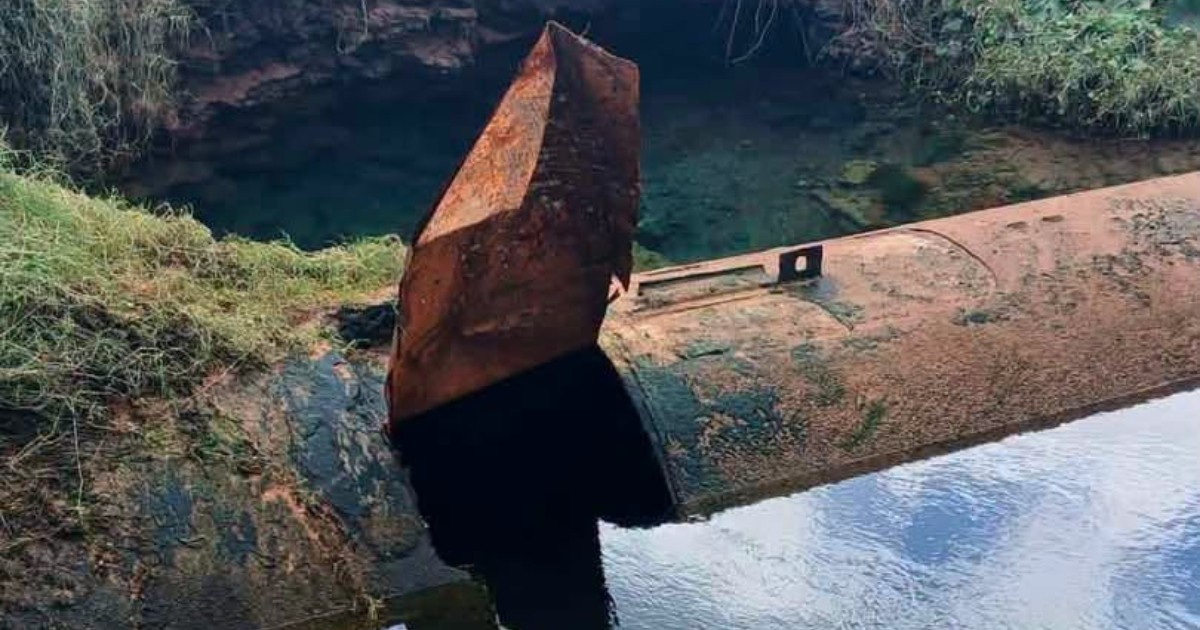
A significant electrical failure on Thursday resulted in a water outage impacting five central districts in Havana. The issue arose when the 110 kV lines at the Cuenca Sur source tripped, causing a complete halt in pumping and a substantial breakdown at two locations along the main 78-inch conduit.
According to official communications from Aguas de La Habana, the districts of Plaza de la Revolución, Cerro, Diez de Octubre, Centro Habana, and La Habana Vieja are currently without water.
The company assured that water supply will be maintained for the Príncipe and Hermanos Ameijeiras hospitals, as well as parts of Centro Habana. However, it cautioned that "other areas will experience disruptions."
In addition to these central districts, the outage has also affected pumping operations in La Fortuna, Capdevila, Mazorra, and sections of Alta Habana, all located within the Boyeros municipality.
Repair crews from Aguas de La Habana are working to restore the service, yet no estimated time for recovery has been provided.
Recurring Infrastructure Challenges
This is not the first time a blackout has triggered such a disaster. The 78-inch conduit at Cuenca Sur has faced repeated ruptures since 2024, all due to the same problem: sudden power cuts lead to "water hammer" effects—sudden pressure changes—that damage the pipeline.
Similar incidents occurred in July 2024, September 2024, September 2025, August 2026, and multiple times in October 2026, when outages in the 110 kV lines damaged the conduit and affected four pumping units.
On October 6, Aguas de La Habana had already announced scheduled interruptions in the same districts due to electrical work and maintenance on the Cuenca Sur conduit. This latest breakdown occurred amid ongoing repairs.
National Water Supply Crisis
This incident exacerbates a national crisis. On Tuesday, Alexis Acosta, Vice President of the Water and Sanitation Business Group at INRH, disclosed that only 32% of the population connected to the network receives water service, "either partially or fully," affecting around 2.5 million people.
The INRH reports that power outages and pump failures account for 88% of the national water shortage issues, while drought is responsible for only 4%.
The dependency on electricity is structural: between 80% and 85% of water distributed in Cuba requires pumping, and pump stations need 10 to 12 continuous hours of electricity to operate. This is unattainable when blackouts extend over 20 hours in urban areas.
Faced with desperation, many Cubans are turning to self-reliant solutions. In Matanzas, the number of hand-dug wells in the La Playa neighborhood has more than doubled from 20 to over 40 in just a few months. "I never imagined I would have to dig a well, just as I never thought I'd have to cook with charcoal or install solar panels," said Kevin Martínez, a restaurant owner in the city, capturing the resignation felt by millions of Cubans as blackouts make the crisis a permanent fixture of life.
Understanding the Water Crisis in Havana
What caused the recent water outage in Havana?
The outage was triggered by a major electrical failure when the 110 kV lines at the Cuenca Sur source tripped, halting pumping and causing significant damage to the main 78-inch conduit.
Which areas in Havana are affected by the water outage?
The affected districts include Plaza de la Revolución, Cerro, Diez de Octubre, Centro Habana, and La Habana Vieja, along with parts of Boyeros municipality.
Why is electricity so crucial for water distribution in Cuba?
Electricity is essential because 80% to 85% of Cuba’s water supply relies on pumping, requiring 10 to 12 continuous hours of power, which is difficult to achieve given frequent blackouts.