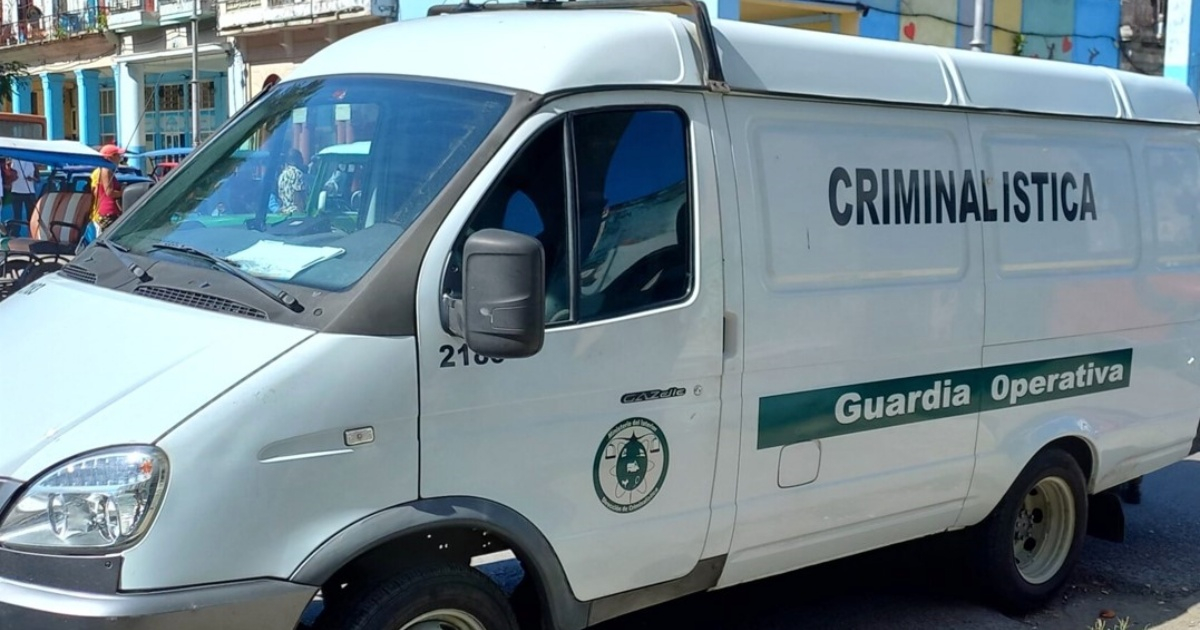
Yudiley Rodríguez Enríquez, affectionately known as "Mimí," was tragically stabbed to death on a Tuesday afternoon in her home located in the Margodo neighborhood of Gibara, Holguín province. The horrific incident unfolded in front of two young girls, one of whom was her four-year-old daughter.
At the age of 37, Yudiley was a devoted mother to four children.
This heartbreaking case has been reported by the Alas Tensas Gender Observatory (OGAT), based on accounts provided by the victim's family. It marks the 58th documented instance of femicide in Cuba for the year 2026.
The Violent Attack
Around five in the evening, the alleged perpetrator, Iram García, a neighbor to Yudiley, forcibly entered her residence and launched a brutal assault using multiple knives.
Yudiley succumbed to her injuries, bleeding to death from the numerous wounds inflicted during the attack.
According to OGAT, "the alleged attacker was a neighbor of the victim, with no romantic or familial connection to her."
Family members revealed that Yudiley had consistently opposed García's harassing behaviors toward another woman in the family, which is believed to have provoked the fatal violence.
In the chaos, Yudiley's father was also injured but is reported to be out of danger. Her daughter-in-law managed to evacuate the two young girls and called for assistance.
A Mother’s Legacy
Yudiley worked as a store clerk and left behind four children aged 18, 15, 13, and four. Her youngest, who witnessed the tragedy, was one of the two children present during the attack.
OGAT expressed a "deep solidarity with the two girls who witnessed the murder" and stressed the importance of providing them with specialized psychological care and emotional support to help them cope with the trauma. Ensuring their protection and well-being is deemed crucial.
Understanding the Social Femicide
This incident has been classified by the observatory as a social femicide, distinguishing it from intimate femicides, which involve partners or ex-partners and remain the most common type in Cuba. In 2026, 83.3% of documented cases fell into this category.
Earlier in May 2026, Gibara witnessed two other femicides involving Yadira González Gámez and Osleidys Bonaga Corella. With Yudiley's tragic death, the municipality has now experienced three femicides this year, making it one of the hardest-hit areas in Holguín province.
A Grim Statistic
With 58 femicides reported as of October 21, 2026, this year has already surpassed previous annual counts recorded by OGAT, except for 2023, which saw a historic high of 90 cases. This figure also exceeds the 49 femicides of 2025 and the 56 of 2024.
Recent cases highlight the ongoing severity of this issue:
- Nilda Díaz Santana was killed in Cárdenas on October 2 while trying to protect her daughter from her ex-partner.
- Idania Castillo Sacre was murdered in Artemisa on September 26 by her ex-partner, a repeat offender who had previously served time for killing another woman.
Lack of Legal Protection and Shelters
Cuba's 2022 Penal Code does not recognize femicide as a separate criminal offense, treating it instead as an aggravated circumstance of homicide. In May 2022, the National Assembly rejected a proposal to classify it as an independent crime, and the country lacks comprehensive gender violence legislation and a national network of shelters for at-risk women.
OGAT has repeatedly requested access to official investigation reports on several cases, including those of Anais Tamayo Puente and Ana Vivian Suárez Cruz, but has received no response. Since 2019, OGAT has documented at least 350 femicides in Cuba, highlighting the urgent need for public official statistics.
The observatory's statement concluded with a direct appeal: "Reporting these crimes is not a crime."
Understanding Femicide and Legal Framework in Cuba
What is social femicide?
Social femicide refers to murders committed by men who have no romantic or familial relationship with the victim, distinguishing it from intimate femicides, which involve partners or ex-partners.
How does Cuba's legal system address femicide?
Cuba's legal system does not classify femicide as a standalone crime. Instead, it is considered an aggravated circumstance of homicide, lacking a comprehensive legal framework to address gender-based violence.