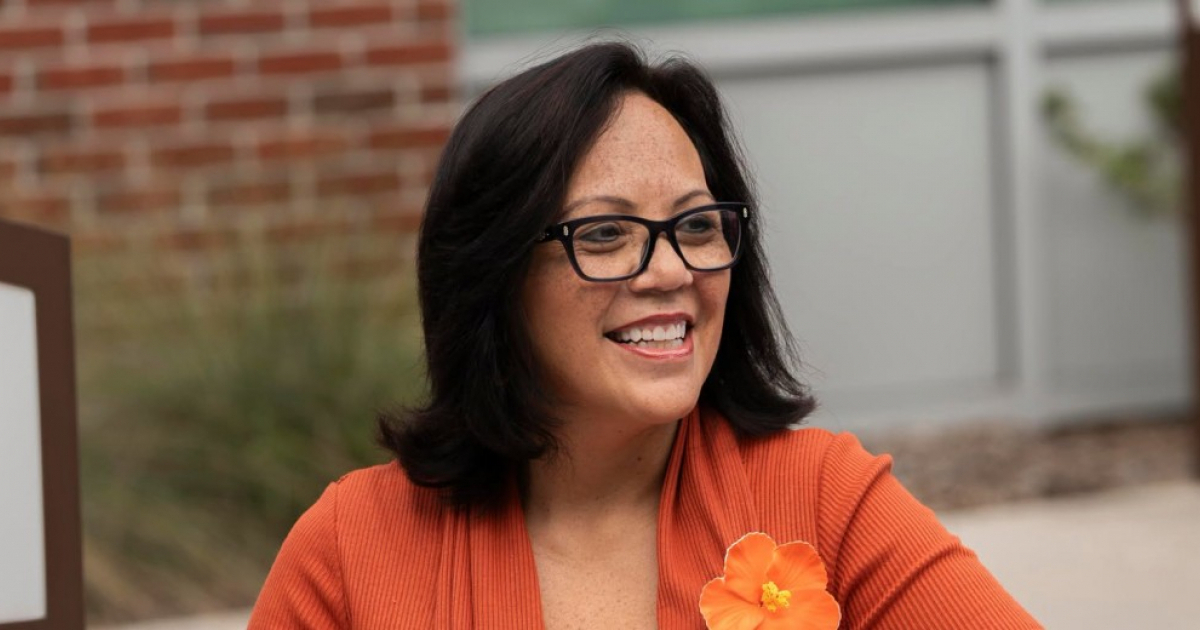
Jackie Espinosa, the mayor of Kissimmee, a city in Osceola County, Florida, has been taken into custody on charges of grand theft and an organized scheme to defraud. State authorities allege that she redirected funds from a COVID relief program to businesses connected to her family.
Florida Attorney General James Uthmeier, alongside State Chief Financial Officer Blaise Ingoglia, unveiled these charges during a press conference in Orlando, with Florida Department of Law Enforcement (FDLE) Commissioner Larry Keefe also present.
An official statement revealed that a routine audit by the Department of Financial Services uncovered that Espinosa allegedly used her position to sway the allocation of grants from the Business Boost 2.0 program, which was funded federally to aid small businesses impacted by the pandemic.
Seven businesses situated on properties owned by her family were awarded a total of $90,000: $50,000 went directly to the mayor's own companies, while $40,000 was distributed to tenants in her buildings.
Authorities further noted that Espinosa submitted three applications on the very day the program commenced in September 2025, despite warnings that her involvement was prohibited.
"Public officials can't write the rules and then cut themselves a check," Uthmeier stated. "The mayor exploited her position to promote a COVID grant program and subsequently pocketed $50,000 for her family's businesses, even after being warned against it. Florida taxpayers funded that money to aid small businesses in recovery, not to enrich the mayor overseeing it."
Ingoglia echoed this sentiment: "Public service is named so for a reason; it's not self-service. Jackie Espinosa betrayed that trust and profited at the taxpayers' expense."
The formal charges include grand theft—a second-degree felony for amounts ranging from $20,000 to $100,000—and a scheme to defraud totaling $50,000 or more, a first-degree felony. If convicted, Espinosa could face up to 30 years in prison. Osceola County Jail records indicate she was held without bail.
The defense has vehemently denied the charges. Attorney Migdalia Pérez argued that "this case involves a publicly approved grant program managed by municipal staff, not a covert scheme to steal taxpayer money," asserting that the prosecution cannot prove criminal intent.
"There is a fundamental difference between an alleged ethical violation and a criminal offense," Pérez added, announcing plans to contest the charges in court.
The arrest marks the most severe point in a series of legal troubles for Espinosa, who was elected mayor in November 2024. Just last August, the Kissimmee City Commission deadlocked on her impeachment with a tie vote. Weeks later, the Florida Ethics Commission censured her and recommended a fine of $2,000.
Jackie Espinosa, 58, is a Puerto Rican-born politician and real estate investor from New Jersey. According to Ballotready, she graduated with a degree in Legal Studies in 1989 and, after obtaining real estate and mortgage management licenses, founded several firms in the city.
Her case resonates deeply in Kissimmee, a city with approximately 85,000 residents where about 68% are Hispanic, including thousands of small business owners who sought similar aid during the pandemic. Osceola County is also home to around 16,900 Cuban-American residents.
As of this edition's closing, Governor Ron DeSantis had not issued a suspension order. Should he do so, Deputy Mayor Angela Eady would assume the role on an interim basis until the judicial proceedings are resolved or Espinosa's term concludes in November 2028.
Legal Implications of Mayor Espinosa's Arrest
What charges does Mayor Jackie Espinosa face?
She faces charges of grand theft, a second-degree felony for amounts between $20,000 and $100,000, and a first-degree felony for a scheme to defraud totaling $50,000 or more.
How much money is involved in the alleged fraud?
The alleged fraud involves a total of $90,000, with $50,000 going directly to Espinosa's businesses and $40,000 to tenants in her family-owned properties.
What are the potential consequences if she is convicted?
If convicted, Espinosa could face up to 30 years in prison.