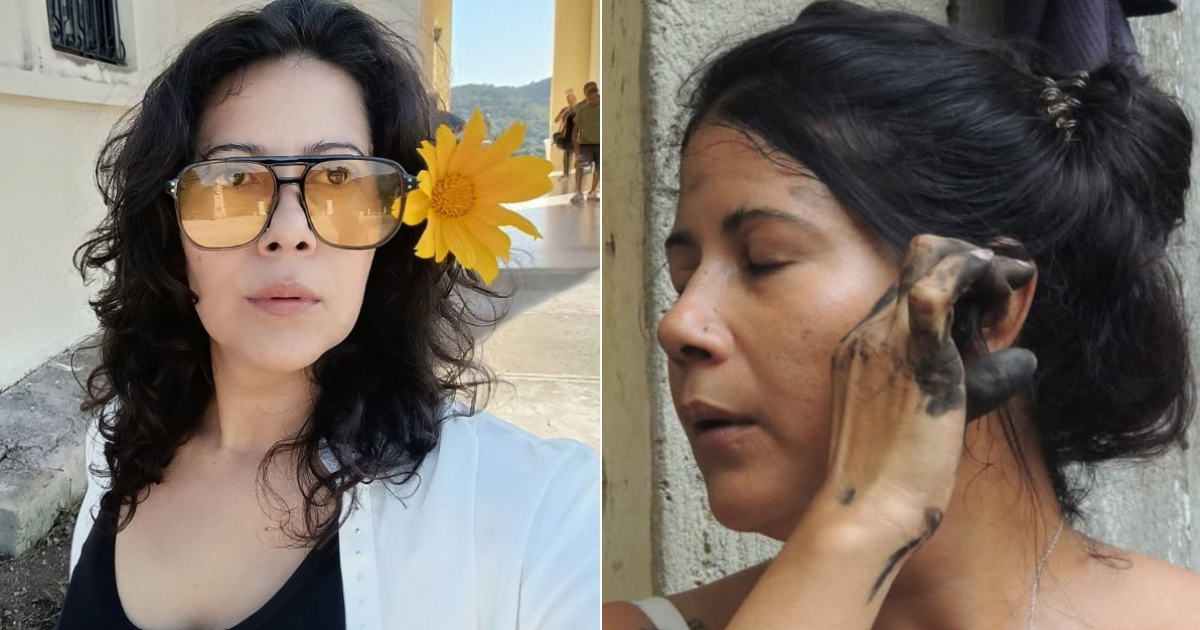
Every morning at six, a mother from Camagüey begins her day by lighting charcoal with nylon and paper to make breakfast for her son. This daily ritual, shared on Facebook, captures the harsh reality faced by millions of Cubans.
The account, penned by actress and social activist Daily Fortún Sosa and shared through the podcast "En la Voz de Ellas," offers an unflinching look at the everyday battle for survival on the island.
"My day starts with lighting charcoal using nylon, notebook paper, and a lot of blowing. At six in the morning, I'm hunched over the fledgling embers, with blackened hands, preparing my son's breakfast," she writes.
Once considered a last resort, charcoal has now become the primary fuel for countless Cuban households due to the chronic shortage of liquefied gas. A sack of charcoal could cost between 3,200 and 5,000 pesos by June 2026, a stark increase from 900-1,400 pesos in December 2024, taking up nearly half a month's salary.
The Elusive Quest for Fuel
Even charcoal is not always available. "When it rains, you can't buy charcoal because who would buy wet charcoal?" explains Fortún Sosa, who occasionally resorts to buying pizzas, though she admits it's "a luxury I can't afford every day."
Liquefied gas is even more elusive. "It's a privilege. A small seven-kilo cylinder costs 109 dollars in the provinces. With the dollar trading at 800 pesos on the street in October 2026, that's 87,200 pesos. According to the ONEI, the average national salary in 2025 was 6,930 pesos—less than nine dollars a month. A gas cylinder costs more than a year's salary," Fortún Sosa details.
In July, the Cuban government set new prices for liquefied gas, yet in some provinces, cylinders on the informal market reached up to 70,000 pesos. In April, more than 834,000 out of 1.7 million registered customers couldn't purchase gas through state distributions.
Infrastructure Breakdown and Survival Tactics
The testimony also highlights the failing electrical infrastructure. "It's common to see rotten utility poles teetering on the brink of collapse. Today I passed one leaning at an unnatural angle, surrounded by garbage obscuring the break at its base. Children were playing underneath," she recounts.
Fortún Sosa bluntly states that in Cuba, "those who survive have someone abroad, someone living across the sea." This is the only way to receive a food package, purchase a gas cylinder, or secure medicine.
Touching on demographics, the activist notes that Cuba officially has fewer than 9.5 million inhabitants according to the ONEI, although demographer Juan Carlos Albizu-Campos estimates the actual population to be around eight million, excluding those who have emigrated but remain on record.
"Many leave or dream of leaving. Others stay, not for lack of reasons to go—this is our country, and it's not the land that's killing us. It's unlivable here. Yet tomorrow, at six, I'll be back at the charcoal stove, blowing the embers to prepare my son's breakfast," she concludes.
Understanding Cuba's Current Challenges
Why is charcoal the main fuel for Cuban households?
Charcoal has become the primary fuel due to the severe shortage of liquefied gas in Cuba. The scarcity has forced many families to rely on charcoal, which was previously considered a backup option.
How does the cost of gas in Cuba compare to average salaries?
A small gas cylinder costs around 109 dollars, which translates to 87,200 pesos at the current exchange rate. With an average monthly salary of 6,930 pesos, the cost of gas is equivalent to more than a year's income for most Cubans.
What role does the informal market play in Cuba's economy?
The informal market in Cuba often provides goods that are otherwise inaccessible through official channels, such as liquefied gas cylinders. However, prices in this market can be exorbitant, reflecting the scarcity and high demand.