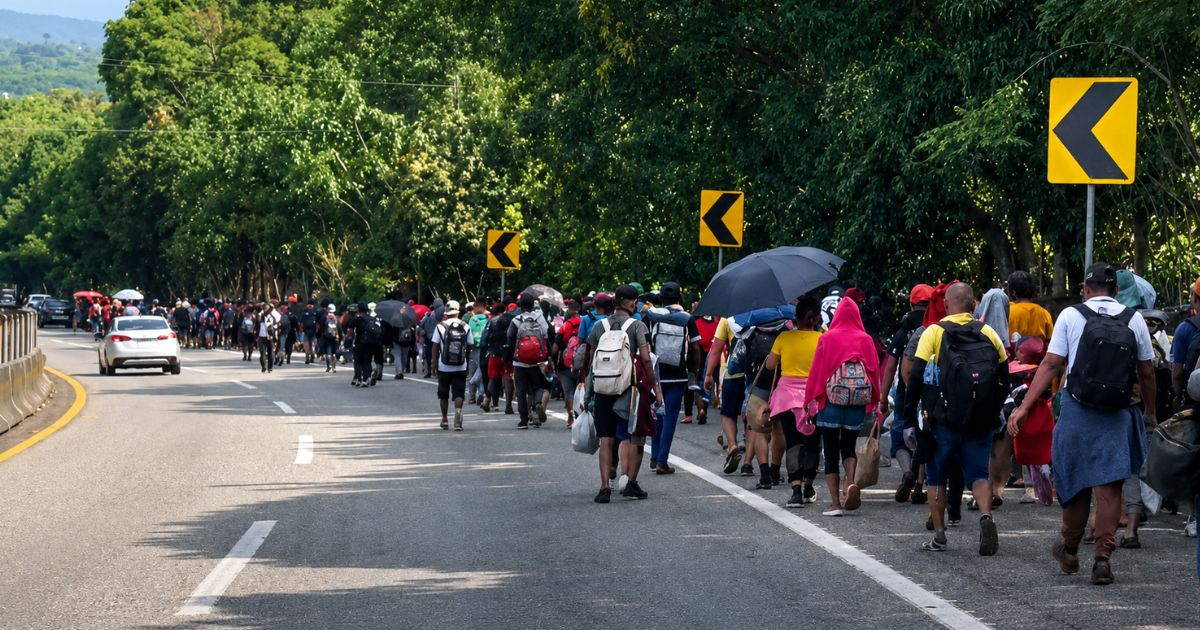
A new wave of migrants, including Cuban nationals, embarked on a journey from Tapachula, Chiapas this Tuesday, aiming to move towards central and northern Mexico.
Many participants are hopeful for a Democratic victory in the upcoming U.S. legislative elections, anticipating potential changes in the nation's immigration policies.
The caravan, primarily composed of individuals from Honduras, El Salvador, Guatemala, and Nicaragua, also features migrants from Cuba, Haiti, and Venezuela. This information was reported by Breitbart News based on Mexican press coverage of the event.
Estimations on Migrant Numbers
Different sources have reported varying numbers regarding the caravan's size. The Mexican newspaper Milenio mentioned that around 400 migrants were ready to proceed, while a report from Diario del Sur, as referenced by Breitbart, estimated approximately 700 participants after leaving Tapachula.
This movement comes just weeks before the November U.S. legislative elections, where seats in both the House of Representatives and part of the Senate will be contested.
Hopes for a Political Shift
Independent journalist Julio Rosas, who focuses on migration and border issues, spoke with some caravan members. They expressed hope that a Democratic win could lead to a more favorable political climate for migrants, contrasting with the stricter border and deportation policies enacted during former President Donald Trump's administration.
Diverse motivations drive this group. While some aim to reach the U.S. border, others intend to stay in Mexico, seeking immigration protection and job opportunities.
Economic Hardships and Migration
Economic struggles, unemployment, and lengthy processes to regularize their status have prompted many to join the caravan. According to Milenio, some consider settling in states like Oaxaca and Nuevo León, particularly in Monterrey, where they hope to find stable employment and living conditions for their families.
The migrants gathered at Tapachula's Bicentennial Park, remaining there for several days as they awaited other groups from Central America.
Challenges Along the Journey
The caravan resumed its march Tuesday afternoon along Chiapas's coastal highway. According to La Jornada, participants had arrived in Tapachula from various Central American locations and began a new phase towards other Mexican regions.
The travelers, including families with children, have faced long journeys on foot, enduring rain, financial constraints, and limited access to food and essential supplies.
A Salvadoran migrant told Milenio that some suffered foot injuries, while several children experienced dehydration and fainting. Religious organizations provided food and hygiene products as the group passed through Guatemala and stayed in Tapachula.
Migrant Caravans and Their Impact
The organization of such caravans allows migrants to travel in groups, drawing attention to the challenges they face in obtaining immigration documentation in Mexico. However, participating does not guarantee asylum, transit permits, or entry authorization into the United States.
This latest movement follows a previous intervention by Mexican authorities in another caravan that had traveled through Chiapas for several weeks. On October 12, La Jornada reported that the "Faith and Hope with God" caravan was disbanded near the Chiapas-Oaxaca border after authorities offered documents for participants to continue their journey by other means.
That earlier caravan departed from San Pedro Sula, Honduras, on September 20, with migrants seeking either to reach the United States or find alternatives to settle in Mexico.
Cuban presence in these caravans crossing Mexican territory has been documented on several occasions during 2026. In August, another movement originated from Tapachula while thousands of Cuban citizens were stranded there due to migration process delays and difficulties finding employment.
At the time, this outlet cited a report estimating between 20,000 and 25,000 Cuban migrants in Tapachula, though this was an August estimate and not an updated count for the October caravan.
Mexican Refugee Assistance Struggles
The Mexican Commission for Refugee Assistance (Comar) faced a high number of requests for refugee status recognition, with foreigners claiming they had waited months or even over a year for responses.
Earlier, in March, a Cuban who had been unable to regularize his status for over a year joined the "Genesis 2026" caravan, composed of about 500 migrants. He faced challenges obtaining documents and finding work.
Migrant Caravans and U.S. Election Influence
What is the goal of the migrant caravan leaving Tapachula?
The goal is to travel towards central and northern Mexico, with some participants hoping to eventually reach the United States.
Why are migrants hopeful for a Democratic win in the U.S.?
Migrants hope a Democratic victory might lead to more favorable immigration policies in contrast to the strict measures under the Trump administration.
What challenges do migrants face in these caravans?
Migrants face long journeys, financial difficulties, lack of access to food, and adverse weather conditions.