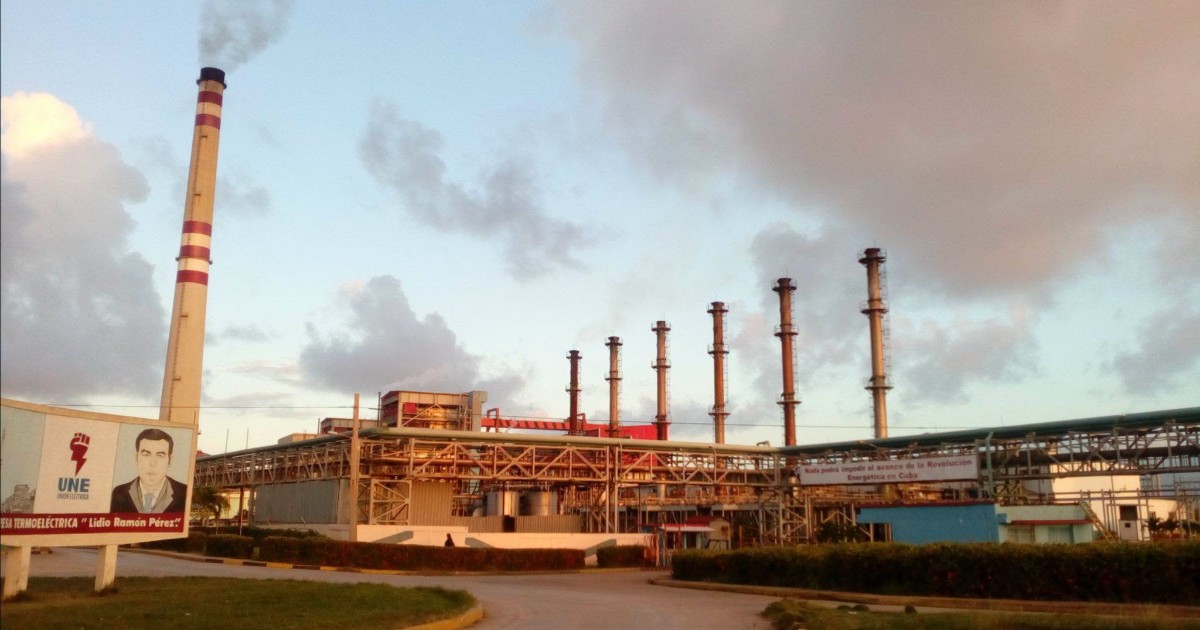
The "Lidio Ramón Pérez" Thermoelectric Plant, situated in Felton within the Mayarí municipality of Holguín, has reported a significant drop in electricity production, generating only 110 MW for the National Electroenergetic System (SEN). This output is far below the 260 MW installed capacity of its Unit 1.
The plant has acknowledged that the root cause of this decline is the buildup of grime in the boiler. This technical issue hampers heat transfer and subsequently reduces production. Prior to this limitation, Unit 1 had been operating continuously for 84 days without any interruptions.
Exacerbating the situation is the fact that Unit 2 of the Felton plant remains out of service due to a malfunction, as stated in the official report from the Electric Union on October 21. This leaves the facility functioning at a mere fraction of its total installed capacity, which is approximately 510 MW.
Unit 2 has suffered from severe deterioration over time. It caught fire during a restart following maintenance in 2022, and the Cuban government has admitted that its rehabilitation will not be completed until late 2027 or early 2028.
Unit 1 has also faced instability over the past year. In August, it was shut down to repair a crack near the boiler dome, which involved cleaning internal deposits, fixing the reheater, and addressing over a hundred detected anomalies. On October 10, it went offline again due to a leak in the boiler, and by October 16, the plant was entirely out of operation, intensifying the electrical crisis in eastern Cuba.
The national power situation on Wednesday was dire. The Electric Union reported that at 6:00 a.m., the SEN's availability was 1,017 MW, while demand stood at 2,300 MW, leaving 1,292 MW of the grid affected since the early morning hours.
During the peak evening hours, the scenario worsened, with an anticipated demand of 2,950 MW and a shortfall of 1,933 MW, leading to a maximum predicted impact of 1,963 MW.
Tuesday's situation was similarly bleak. According to the UNE's report, the most severe capacity deficit occurred at 7:50 p.m., reaching 1,942 MW, with continuous disruptions throughout the day and night.
In addition to Felton, multiple units from other plants are currently out of service: Unit 8 of the Mariel Thermoelectric Plant, Units 1 and 2 of the Santa Cruz Thermoelectric Plant, and Units 3 and 6 of the Renté Thermoelectric Plant are all experiencing failures. Restrictions in thermal generation contribute to a total shortfall of 518 MW.
Amidst these challenges, the reconnection of the Antonio Guiteras thermoelectric plant to the SEN at 4:36 a.m. on Wednesday brings some relief, though the Matanzas plant has encountered at least 17 unplanned shutdowns in 2026 so far, including a connection that lasted a mere five minutes the previous evening.
Solar photovoltaic energy contributed 3,752 MWh on Tuesday, reaching a peak output of 591 MW at noon. However, this generation does not compensate for the nighttime demand peaks, which is when power outages significantly impact the Cuban population.
Crisis in Cuba's Energy Sector: Key Questions Answered
What is causing the reduced power output at the Felton thermoelectric plant?
The buildup of grime in the boiler is impeding heat transfer, leading to decreased electricity production at the plant.
How long will it take to rehabilitate Unit 2 of the Felton plant?
The rehabilitation of Unit 2 is projected to be completed by late 2027 or early 2028, according to the Cuban government.
What is the current state of Cuba's national electricity grid?
As of the latest reports, Cuba's electricity grid is facing a critical shortage, with significant deficits in power generation compared to demand.