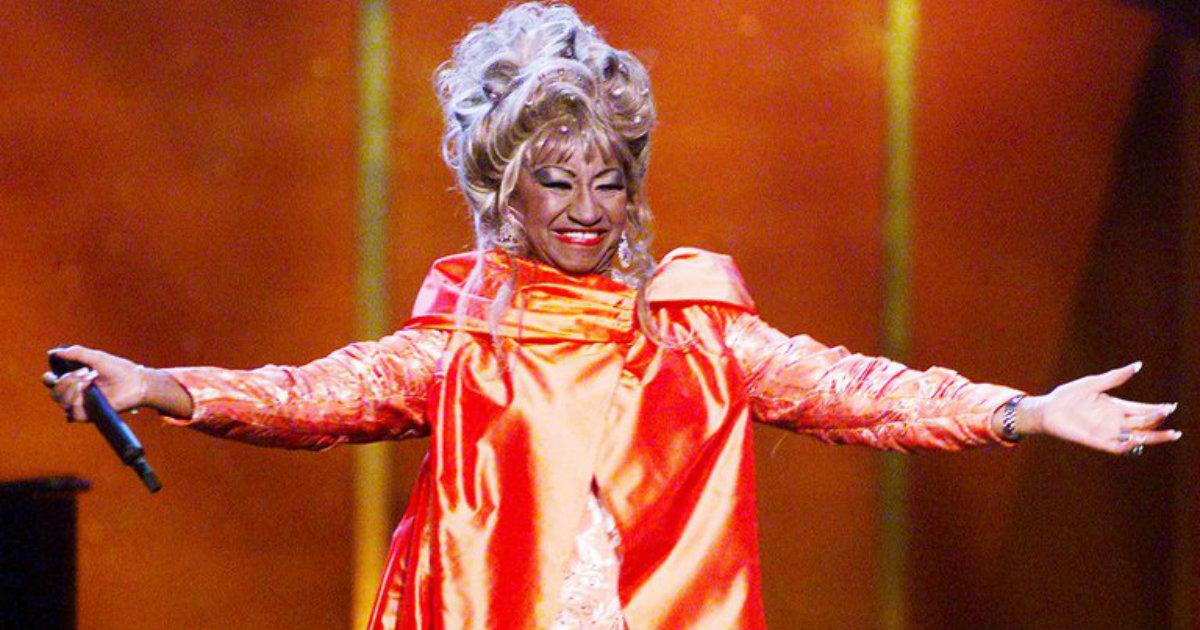
In a tribute to the legendary Cuban singer Celia Cruz, Miami has announced plans to create a plaza in her honor located in the heart of Little Havana. This announcement coincides with what would have been Cruz's 101st birthday on Wednesday, October 21.
The new space will be named "Plaza Azúcar," a nod to the iconic expression that helped cement Cruz's status as a legendary figure in Latin music. The City of Miami announced the project, as reported by EFE, and the plaza will take shape along the famous Calle Ocho, a key area representing the Cuban exile community in the United States.
By establishing this cultural space, the city aims to preserve the memory of the Queen of Salsa and celebrate her artistic legacy. One of the main attractions of the upcoming plaza will be a large-scale sculpture designed by Alex Kaufman, an artist known for his monumental works.
This announcement comes alongside a special event planned for Wednesday night, where the project will be unveiled, and attendees will experience a recreation of Celia Cruz's voice using artificial intelligence technology.
Omer Pardillo Cid, the executor of Cruz's artistic estate and a key figure in preserving her legacy, will be present at the event. For years, he has actively worked to ensure that Cruz's contributions remain alive and accessible to new generations.
As part of the celebration, attendees will also receive U.S. quarters featuring Celia Cruz's image. These coins are part of the American Women Quarters program, which honors significant female figures in American history and culture.
In August 2024, Cruz became the first Afro-Latina artist to be depicted on a U.S. quarter, highlighting her impact on music and her influence on American culture.
The announcement comes at a poignant time for Little Havana, as a mural depicting Celia Cruz alongside other salsa legends was recently removed from a wall at the intersection of Calle Ocho and 19th Avenue. This mural, created by Venezuelan artist Pedro Aguiar and Walter Santiago of the KCULL Life Foundation, was erased amid administrative and financial disputes involving the building's owner, Santos Campaneria.
In response, City Commissioner Rolando Escalona expressed a willingness to find ways to restore the mural, whether at its original location or elsewhere on Calle Ocho.
Celia Cruz, born Celia de la Caridad Cruz Alfonso in Havana on October 21, 1925, began her artistic journey in Cuba and rose to international fame with La Sonora Matancera before establishing a successful career in the United States. She left Cuba on June 15, 1960, with the band, intending to fulfill commitments in Mexico, and never returned to her homeland. By 1961, she had settled in the U.S., where she became a prominent voice among Cuban exiles, vocal in her opposition to Fidel Castro's regime.
Her stance against the Cuban authorities came with personal sacrifices, including her inability to return to Cuba to say goodbye to her mother, who passed away on April 7, 1962. In an interview with Colombia's El Tiempo, Cruz recounted her unsuccessful attempt to return for her mother's funeral, a painful memory she carried throughout her life.
Cruz was also vocal about the censorship of her music by the Cuban government. In a 1995 interview with Brazil's Folha de S.Paulo, she explained that her records were banned, and she was prohibited from returning to Cuba.
Despite her physical absence from Cuba for over four decades, Cruz maintained a deep connection to her homeland's musical traditions, which were evident in her recordings, performances, and collaborations with international salsa artists. She passed away on July 16, 2003, at the age of 77, never having returned to her native land.
In the United States, her legacy is celebrated through numerous public tributes, including the Celia Cruz Way in Miami Beach, inaugurated on October 11, 2023, and the Celia Cruz Park in Union City, New Jersey, which features a walkway dedicated to Latin music icons.
Celia Cruz's Legacy and Impact
Why is Celia Cruz significant to both Cuban and American cultures?
Celia Cruz is a pivotal figure in both Cuban and American cultures due to her role in popularizing salsa music and her outspoken opposition to the Cuban regime. Her influence extended beyond music, symbolizing the struggles and triumphs of the Cuban exile community.
What is the significance of the 'Plaza Azúcar' in Miami?
'Plaza Azúcar' serves as a cultural landmark in Miami's Little Havana, honoring Celia Cruz's legacy and offering a dedicated space to celebrate her contributions to music and her lasting impact on the Cuban exile community.
How did Celia Cruz become the first Afro-Latina on a U.S. quarter?
In 2024, Celia Cruz was honored as part of the American Women Quarters program, acknowledging her significant contributions to music and culture, making her the first Afro-Latina artist to be featured on a U.S. quarter.