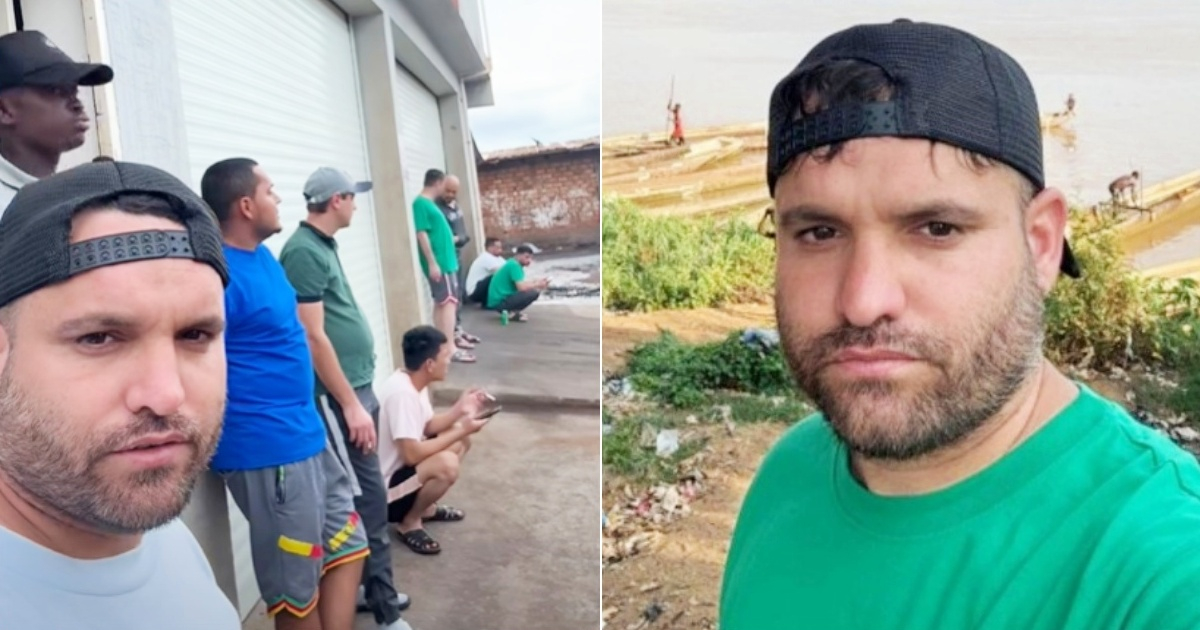
Yasmany Moreno de Armas, a 32-year-old Cuban deported by the United States to the Central African Republic, has urged the Latino vote to penalize former President Donald Trump in the 2026 midterm elections.
Moreno de Armas expressed this sentiment after previously supporting Trump in the 2024 presidential race, only to find himself stranded in Africa. He has since voiced his struggles with disease, hunger, and harsh conditions.
"I hope the Latino vote punishes him this election; he deserves it. Many of us end up deported, like here in Africa. I wonder what we did wrong. If I had known, I would rather have returned to Cuba. This is a significant trauma for us," he said in an interview with Univision.
Before his detention, Moreno lived in Florida and felt betrayed by the Republican leader, whom he and others supported due to his promises concerning Cuba.
The Feeling of Betrayal Among Cubans
"Cubans feel betrayed by Trump. Many supported him in Florida, and what did he do? He deported us to Africa. That's his solution. He promised to free Cuba, but instead, he just deported and arrested innocent people. He sent us to hell," Moreno expressed.
Having arrived in the U.S. by raft in 2016, Moreno was granted humanitarian parole under the "wet foot, dry foot" policy, which was in effect at the time. He later applied for permanent residency through the Cuban Adjustment Act, but his application was denied because it was submitted after his parole expired.
Deportation and Struggles in Africa
Detained by Immigration and Customs Enforcement (ICE) on May 11, 2025, Moreno spent over a year in custody before being deported on July 30, 2026. He was taken in shackles, unaware of his destination until he arrived in Bangui, the capital of the Central African Republic, a place where he had no personal or family ties.
Moreno also fears returning to Cuba due to a prior imprisonment for "illegal departure from the national territory" during an earlier attempt to emigrate. His case highlights the Trump administration's policy of deporting immigrants to third countries, away from their homelands.
ICE defended Moreno’s deportation, citing his record of five traffic violations, including driving with a suspended license. The agency asserted that he had received due process and that a removal order had been issued on April 27, 2026.
Survival in Dire Conditions
Since arriving in Bangui, Moreno has reported the dismal conditions faced by dozens of migrants deported from the U.S. He described how around 60 people of various nationalities are held in six centers, lacking passports, with restricted movement, and struggling to obtain food and medical care.
"Almost everyone has malaria due to mosquitoes. We've had fevers and symptoms, and not everyone can afford medication," he recounted.
Moreno, who also suffers from diabetes and asthma, has been waiting over a month for blood test results, criticizing the inadequate healthcare services. "There are no hospitals or doctors here, just like in Cuba. They pretend to treat you, give you some medicine, but the symptoms persist," he lamented.
He further claimed to have been detained twice by local security forces who allegedly demanded money for his release. "I've been in jail here; I wouldn't wish it on anyone. We're practically kidnapped and then asked for a ransom for freedom," he shared.
Moreno's family in the U.S. has been financially supporting him, sending about $500 weekly to cover his needs and assist other deportees lacking resources.
Legal Challenges and Future Prospects
The deportation to the Central African Republic occurred under an agreement between Washington and Bangui, involving $85 million for operations by the International Organization for Migration. At least 92 people were sent there in three flights between June and August 2026.
The legality of these deportations remains under judicial review in the U.S., with the Supreme Court temporarily allowing the transfers while the case is resolved. Hearings are set for December.
Meanwhile, another deportee, Arístides Fernández García, managed to leave Bangui for Bolivia on October 19, after nearly three months. Moreno mentioned a fellow deportee, Yasiel Reina, who reportedly obtained a humanitarian visa to travel to Bolivia.
Lawyers are exploring options to relocate deportees to Latin American countries while they continue their U.S. immigration processes. Costa Rica has been mentioned as a potential destination, though no confirmed solution exists for the entire group.
Moreno's lawyer informed him of potential negotiations for his return to a U.S. detention center while his case proceeds. "I'd rather spend a few months in detention than remain deported in Africa," he stated.
Humanitarian Visas: A Ray of Hope?
In a recent social media update, Moreno claimed a person linked to the U.S. government is working on securing temporary humanitarian visas to move deported Cubans to Latin American countries, where they can await the outcomes of their immigration proceedings.
Possible destinations include Costa Rica, Panama, Guyana, and Brazil, though he offered no guarantees about which nations would accept them.
Moreno urged the families of deportees still in Liberia, Equatorial Guinea, Eswatini, and the Central African Republic to contact him privately to provide information about their loved ones, which he said he would pass on to the supposed government intermediary.
However, the U.S. government has not officially confirmed these efforts.
Understanding the Deportation Policy and Its Impacts
What prompted Yasmany Moreno’s deportation to Africa?
Moreno was deported as part of the Trump administration’s policy of sending immigrants to third countries. His deportation followed a series of traffic violations and a removal order issued in 2026.
What are the living conditions like for deportees in Bangui?
Deportees in Bangui face harsh conditions, including restricted movement, lack of access to food and medical care, and rampant malaria due to mosquitoes.
Are there any legal challenges against these deportations?
Yes, the legality of these deportations is currently being challenged in the U.S. judicial system, with the Supreme Court allowing them to continue temporarily while the case is pending.
What are the prospects for deportees seeking to relocate to other countries?
Lawyers are exploring options for deportees to move to Latin American countries, with potential destinations including Costa Rica, Panama, Guyana, and Brazil, though no confirmed solutions exist yet.