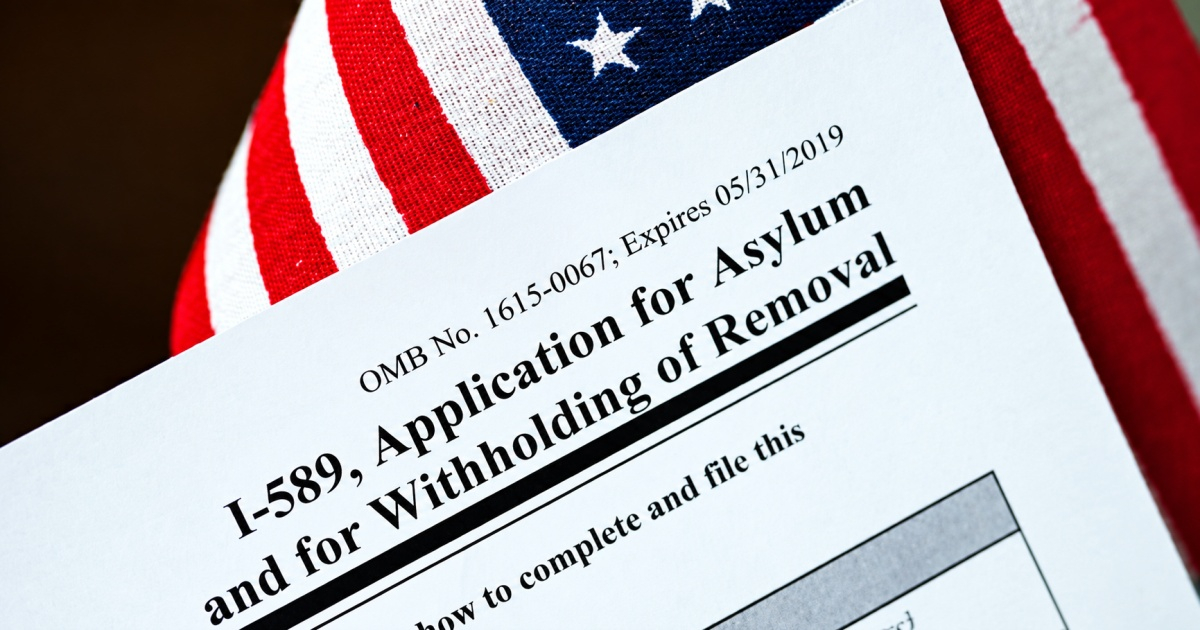
If you've been in the United States for over a year and haven't yet applied for asylum, it's not necessarily too late. U.S. law generally requires asylum applications to be submitted within the first year of your most recent arrival, but there are two key exceptions: changes in circumstances and extraordinary circumstances. If you can prove one of these and file your case within a reasonable timeframe, your application may still be considered.
One critical exception for many Cubans involves having been in the U.S. under parole or with a legal status. This is explicitly recognized in federal regulations. However, it's crucial to apply for asylum shortly after such parole or status ends, rather than waiting for a convenient time.
This guide outlines how the one-year rule is calculated, what exceptions exist, how to demonstrate them, what happens if your exceptions are not accepted, and what to review if you have an I-220A.
Understanding the One-Year Deadline
The rule is contained in 8 CFR 208.4 of the Code of Federal Regulations. Key points include:
The one-year period starts from your last entry into the U.S. If you left and returned, it counts from your most recent arrival. You must present clear and convincing evidence that you applied within the year—this includes keeping your I-94, entry stamps, tickets, or any document verifying your entry date. If the last day falls on a weekend or holiday, the deadline extends to the next business day. In immigration court, the application is considered filed when the court receives it. If it was mailed within the deadline but arrived late, documented proof of mailing counts as the submission date. The application is made using Form I-589, valid for both asylum and withholding of removal as per 8 CFR 208.3.
First Exception: Changes in Circumstances
The regulations accept changes significantly affecting your asylum eligibility. Here are examples:
- Changes in conditions in your home country, such as increased persecution against a group you belong to.
- Changes in your personal situation, including new U.S. laws or activities undertaken outside the country where you fear persecution. For a Cuban, this might include anti-regime activism, participation in protests, or public denunciations that could lead to reprisals.
- Loss of dependent status, such as divorce, death of the principal applicant, or turning 21 if you were included in a parent's or spouse's application.
Applications must be submitted within a reasonable time after such changes. The Board of Immigration Appeals (BIA) clarified in Matter of T-M-H- & S-W-C- (2010) that a change in circumstances doesn't automatically grant an additional year. Each case is evaluated based on the reasons for any delay.
Second Exception: Extraordinary Circumstances
These are events directly related to your inability to file on time. You must show these were beyond your control and that any delay was reasonable. Examples include:
- Serious illness or disability during the first year, including effects of persecution or violence experienced.
- Legal incapacity, such as being an unaccompanied minor or having mental health issues.
- Ineffective assistance of counsel, requiring a detailed affidavit of the agreement with your attorney, informing them of the accusation with a chance to respond, and explaining if a disciplinary complaint was filed.
- Maintaining TPS, legal immigrant or non-immigrant status, or parole until shortly before filing.
- An application filed on time but rejected for form defects, if resubmitted promptly.
- Death, serious illness, or incapacity of your legal representative or an immediate family member.
Regarding parole, the clock starts when parole ends. This exception is crucial for Cubans who entered under the CHNV program, with humanitarian parole, or at the border. However, it's not a blank check. When the Department of Justice approved these rules, it emphasized that asylum should be sought as soon as possible after losing status. Waiting six months or more after status expiration is generally not considered reasonable. Shorter periods are assessed on a case-by-case basis.
The BIA referenced this in Matter of T-M-H- & S-W-C-, stating that delays of a year or more are justified only in exceptional cases. Practically, if your parole expired months ago, every week counts. If you're in this situation, also review our guide on what to do if your parole has expired.
Special Considerations for I-220A Holders
The regulations refer to parole, and the BIA ruled in Matter of Cabrera-Fernández (2023) that release under I-220A is legally different from humanitarian parole. Thus, those with an I-220A shouldn't assume they can use the parole exception for late asylum justification.
Many Cubans with I-220A have already filed for asylum in immigration court. If you haven't, your case urgently needs legal review to determine if another exception applies. We explain the I-220A in detail and why it isn't parole.
Consequences of Exception Denial
The outcome depends on where your case is:
- Before USCIS (affirmative asylum): According to 8 CFR 208.14, if asylum is not granted and you lack valid legal status, the case is referred to an immigration judge, initiating deportation proceedings. If you have valid status or parole, the application is denied.
- In immigration court: The judge can deny asylum due to the deadline, but the one-year rule only applies to asylum. 8 CFR 208.4 clarifies it doesn't extend to withholding of removal, which the judge may still consider.
However, withholding is a different protection with its own requirements, so avoiding losing asylum due to the deadline is advisable if possible.
Asylum Application Costs
According to a Federal Register notice on October 1, initial asylum applications (I-589) cost $100 starting October 16. If the case remains pending for over a year, an annual fee of $105 is also required. See our guide on new USCIS fees for Cubans for full details.
Next Steps
- Calculate your dates. Note your last entry date and, if applicable, when your parole or status ended or was canceled.
- Gather evidence of your exception. Include copies of your I-94, parole documents, cancellation notices, medical reports, or evidence of activism or personal changes.
- Explain any delay. It's your responsibility to prove the exception. Truthfully explain why you didn't file on time and support it with documents.
- Don't wait for perfection. If you're nearing six months since your parole ended, timely filing may weigh more than adding evidence later.
- Seek legal advice now. An attorney or accredited representative can determine which exception best fits your case.
Legal Notice: This article provides general information for informational purposes only and does not constitute legal advice. U.S. immigration laws and policies change frequently. For personal case evaluation, consult a licensed immigration attorney or an accredited representative by the Department of Justice.
Key Questions About Asylum for Cubans
What are the exceptions to the one-year asylum filing deadline for Cubans?
The exceptions include changes in circumstances affecting asylum eligibility and extraordinary circumstances preventing timely filing.
How can a Cuban demonstrate a change in circumstances for asylum purposes?
Cubans can show changes in their home country's conditions, personal situation, or loss of dependent status, with evidence such as legal changes or activism.
What should I do if my parole has expired and I haven't applied for asylum?
If your parole has expired, you should act quickly to file for asylum, gather necessary evidence, and consult with a legal expert to determine applicable exceptions.