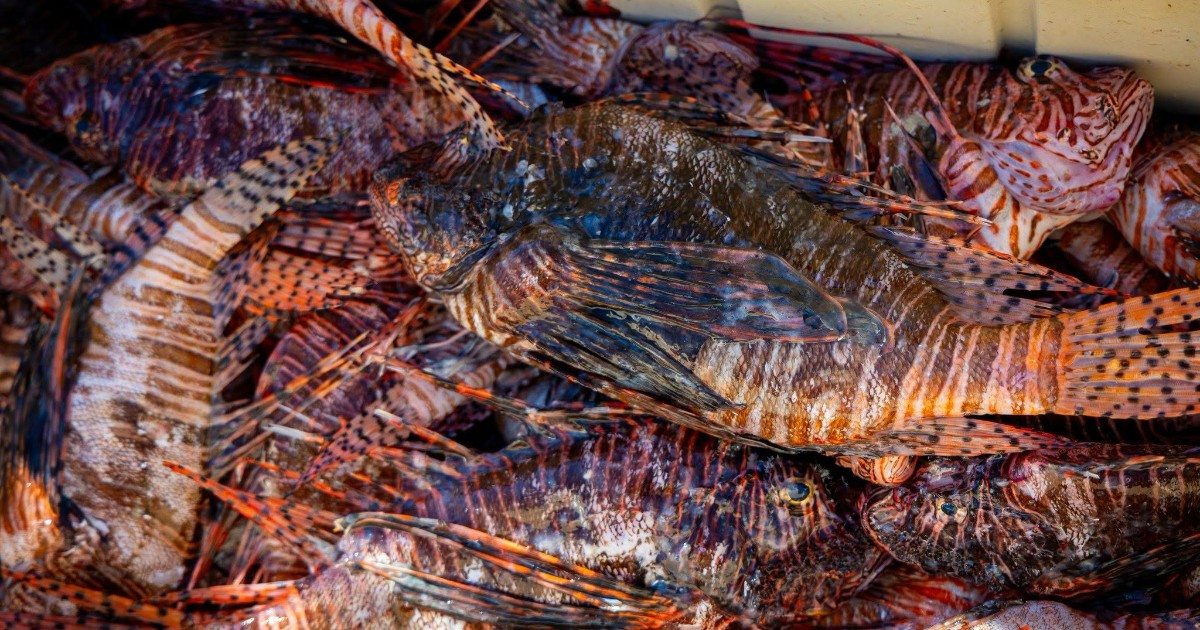
In a significant victory against invasive species, Florida has achieved a new milestone in its battle against the lionfish, a predator threatening coral reefs and marine biodiversity.
The 2026 Lionfish Challenge saw 533 participants removing a staggering 36,187 lionfish from Florida's waters. This unprecedented figure surpasses the previous year's count by over 5,000, marking a momentous achievement since the program's inception.
On Monday, the Florida Fish and Wildlife Conservation Commission (FWC) revealed that the competitors undertook 1,468 diving expeditions during the event, aimed at diminishing the presence of this invasive predator in marine ecosystems.
The FWC highlighted the record-breaking results in both participation and lionfish removal, indicating a growing enthusiasm among recreational divers and commercial fishermen to assist in controlling this species.
"The record-breaking success of the Lionfish Challenge showcases the powerful impact of collective action in conservation efforts," stated Rodney Barreto, the FWC chairman.
Barreto elaborated that removing thousands of lionfish helps alleviate pressure on native species and safeguards underwater ecosystems from further damage.
Diverse Participation and Expanded Recognition
Spanning from May 22 to September 14, the competition welcomed divers from various regions of Florida. This year's edition included expanded award categories, recognizing six winners, encompassing recreational divers, commercial fishermen, youth, and military veterans.
Hunter Ledbetter from Monroe County earned the title of "Lionfish King" by capturing 1,541 lionfish, also winning the category for military veterans, owing to his U.S. Marine Corps background. Meanwhile, Helen Rodney of Broward County was named "Lionfish Queen" for her haul of 1,488 fish, with just a 53 fish difference highlighting the high individual capture rates.
In the commercial division, David Garrett from Volusia County triumphed by removing 1,136 pounds of lionfish, approximately 515 kilograms. The youth category was claimed by Meagan Huffman of Texas, with 185 captures.
Pensacola's Dive Pros establishment was honored as the primary checkpoint, processing over 5,000 lionfish tails submitted by participants. These tails are essential for catch verification, while commercial fishers must provide appropriate operation documentation.
Collaborative Efforts in Conservation
Jessica McCawley, head of Marine Fisheries Management at the FWC, expressed gratitude for the involvement of divers, partner businesses, and engaged communities.
"We are incredibly thankful for the support of our staff, sponsors, and community contributors to this achievement," she conveyed.
McCawley emphasized that the 2026 edition underscored the importance of cooperation between recreational divers and commercial marine species extractors.
The Lionfish Challenge, an annual event, rewards participants based on the number of lionfish captured and their respective competition categories. Unlike other Florida invasive species control contests, the Lionfish Challenge offers free registration, according to the FWC. Participants must meet program conditions and conduct captures in Florida waters.
Regional and Global Implications
Florida's efforts to control lionfish have a longstanding history. In May 2019, Florida launched another Lionfish Challenge to encourage lionfish capture with prizes for participants meeting certain extraction volumes. This initiative aimed to raise awareness about lionfish-induced damage and foster diver collaboration with environmental authorities.
The lionfish issue also impacts Cuba and other Caribbean territories. In September 2022, Cuban authorities initiated a campaign to promote lionfish capture, involving fishing activities and culinary contests to utilize the species. The invasive presence on both sides of the Florida Straits highlights the regional scope of an environmental problem extending beyond U.S. waters.
Native to the Indian and Pacific Oceans, lionfish have become an environmental concern in the western Atlantic, Gulf of Mexico, and Caribbean. Their rapid spread is alarming due to their diet of small fish and crustaceans—many juveniles of crucial reef species—and their venomous spines that pose handling challenges, although trained specialists and fishers manage to capture them.
Their reproductive capacity, coupled with a lack of natural predators, facilitates their rapid expansion in invaded areas. Abundant lionfish can disrupt underwater food chains and increase pressure on local species already threatened by reef degradation. Consequently, Florida authorities continue extraction programs to curb their numbers, but eliminating thousands doesn't equate to total eradication.
Understanding the Lionfish Challenge and Its Impact
What is the Lionfish Challenge?
The Lionfish Challenge is an annual competition in Florida where participants remove lionfish from local waters, competing for recognition and prizes based on the number of captures.
Why is controlling the lionfish population important?
Controlling lionfish is crucial because they are invasive predators that threaten marine biodiversity, particularly coral reef ecosystems, by preying on juvenile fish and crustaceans.
How do lionfish affect local marine ecosystems?
Lionfish impact marine ecosystems by disrupting food chains, consuming significant numbers of small fish and crustaceans, and exerting pressure on already threatened species due to reef degradation.
What measures are in place to manage lionfish in Florida?
Florida employs extraction programs and competitions like the Lionfish Challenge to reduce lionfish numbers and raise awareness about their environmental impact.