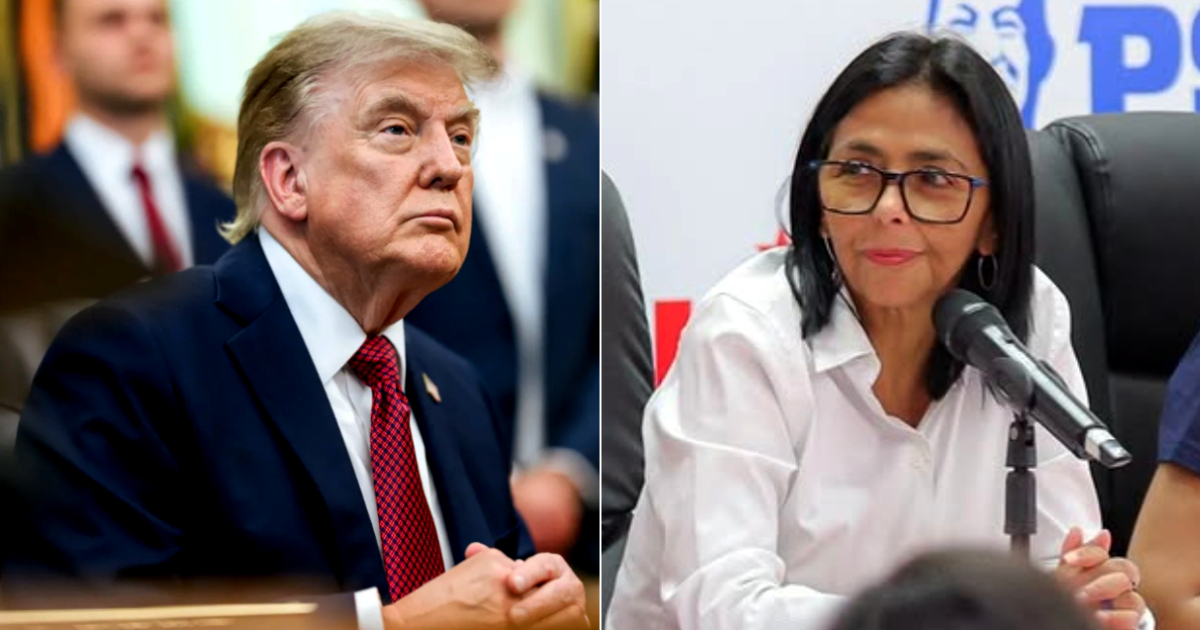
The United States is embarking on a fresh phase of its involvement in Venezuela, characterized by three concurrent efforts: a reorganization of the interim cabinet led by Delcy Rodríguez, the allocation of major oil fields to multinational corporations, and the extradition of prominent Chavista officials to American justice. This development was unveiled by journalist David Alandete in his weekly column for ABC Spain on Monday.
This initiative is part of a strategic three-phase plan that Secretary of State Marco Rubio presented to the Senate on January 7, 2026, shortly after Nicolás Maduro was apprehended. The plan includes institutional stabilization, economic recovery with priority access for U.S. businesses, and ultimately, a political transition toward free elections.
Revamping Venezuela's Cabinet
Alandete's sources suggest that factions within the Trump administration are pushing to replace ministers with strong ties to Maduro's political apparatus with more technical profiles. "Washington aims to diminish the influence of those most loyal to the regime and replace them with managers. Delcy would remain at the helm, albeit with a refreshed team," the source noted.
This task is daunting; Venezuela has 34 ministries, with at least ten ministers having held roles under Maduro, including Diosdado Cabello—wanted in the U.S. since 2020 for narcoterrorism, with a $25 million bounty on his head.
Other persistent Chavista figures in the government include Héctor Rodríguez, Ricardo Menéndez, Yván Gil, Vladimir Padrino López, and Gustavo González López, the current Defense Minister and former SEBIN chief. Daniella Cabello, Diosdado's daughter, remains as the Minister of Tourism.
Oil Sector Developments
Meanwhile, the U.S. Department of Energy is planning an event in January 2027, marking one year since Maduro's capture, to announce the detailed distribution of oil fields among international companies.
This would follow the agreement announced in August by Trump with North American Blue Energy Partners (NABEP), a company owned by Venezuelan Alejandro Betancourt, granting them a century-long exploitation right over 17 oil fields with an estimated 65,000 million barrels of reserves. Preparations are in the early stages, and no official confirmation has been made.
From Panama, opposition leader María Corina Machado emphasized in an interview with Fox News that she would uphold these agreements if she comes to power: "Absolutely. Every agreement signed in accordance with the law will be respected," she affirmed. She added that the U.S. would be "Venezuela's strongest and most important ally," but stressed that long-term investments require democratic institutions and free elections.
Judicial Extraditions and Political Moves
On the judicial front, Washington is preparing to extradite Tareck El Aissami, Maduro's former vice president, and Alexander Granko Arteaga, head of special operations at DGCIM, to face justice in the United States.
Maikel Moreno, who led the Supreme Court from 2017 to 2022, is reportedly under some form of detention, as reported by Bloomberg and ABC. However, none of these extraditions have been officially confirmed.
Several high-ranking oil executives have urged the Trump administration to also engage with Machado and her party, arguing that the opposition won the previous presidential elections—though widely contested—and could prevail again in free elections, albeit uncertainly.
Key Aspects of U.S. Strategy in Venezuela
What are the main components of the U.S. plan in Venezuela?
The U.S. plan in Venezuela consists of three phases: institutional stabilization, economic recovery prioritized for U.S. companies, and a political transition towards free elections.
Who is Delcy Rodríguez and what role does she play?
Delcy Rodríguez is the interim leader whose cabinet is undergoing a reorganization to replace ministers aligned with Maduro with more technical profiles.
What is the significance of the oil field distribution?
The distribution of Venezuela's oil fields to multinational companies is a key part of the economic recovery phase, aimed at tapping into the country's vast oil reserves.
How does María Corina Machado view the U.S. involvement?
María Corina Machado supports the agreements made with the U.S. and sees the U.S. as a crucial ally for Venezuela, emphasizing the need for democratic institutions.