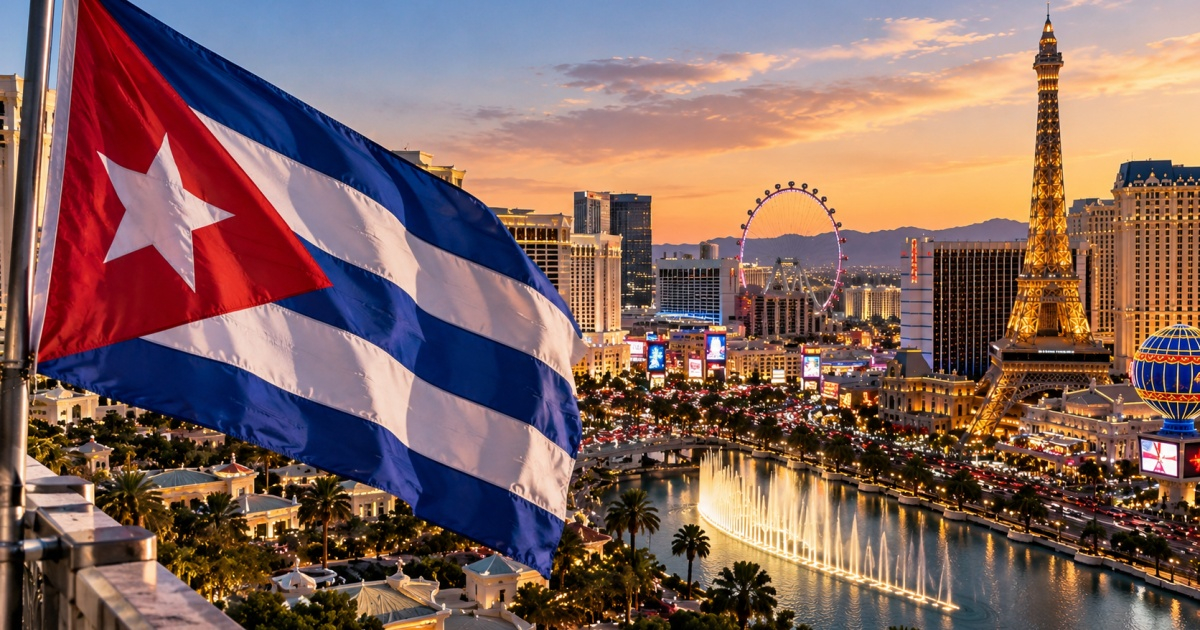
A recent analysis by The Nevada Independent highlights a growing trend: Nevada now ranks second, only after Kentucky, in the percentage of Cuban migrants settling in the state compared to other parts of the United States.
This represents 41% of those who declared Nevada as their destination upon crossing the U.S.-Mexico border. The data, sourced from the Associated Press via a Freedom of Information Act request to the Customs and Border Protection (CBP), covers self-declared destinations of 4.5 million migrants crossing the border from October 2018 to September 2025.
It's important to note that these are intended destinations at the time of crossing and not actual residency data.
Las Vegas: A New Cuban Diaspora Hub
The Cuban community in Nevada is primarily concentrated in the southern region of the state. Cubans account for over half of the migrant population in Las Vegas and nearly 45% in Henderson.
Valerie Lacarte, a senior analyst at the Migration Policy Institute with a focus on Cuban migration, points out that shifts in U.S. immigration policy have redirected Cuban migration towards the southwest, moving away from traditional destinations like Miami.
"Economic decline in Cuba was coupled with political dissatisfaction, prompting Cubans to leave for the broader region," Lacarte explained.
The repeal of the "wet foot, dry foot" policy in January 2017 marked a substantial shift. By ending the preferential treatment that allowed Cubans who reached U.S. soil to stay and apply for residency, migration routes shifted from Florida's coasts to the U.S.-Mexico land border, diversifying arrival destinations.
Lacarte further notes that many recent Cuban migrants lack strong ties to Florida's established Cuban communities, making them more open to opportunities in other states. The relatively lower cost of living in Las Vegas compared to Miami is another draw, although Las Vegas is not as inexpensive as it may seem from the outside.
Cuban Entrepreneurship: The Story of Cubanidad 1885
Dennis Martínez Miranda’s journey is a testament to why many Cubans are drawn to Nevada. Arriving in the U.S. in the early 2010s due to the island's political crises, he initially settled in Miami but found partners in Las Vegas who helped him start his own restaurant.
"About eight years later, I moved to Las Vegas because I met my business partners. It was a challenge, but it was truly an opportunity to thrive, as we Cubans like to say," Martínez Miranda, 47, shared in an interview with The Nevada Independent.
His restaurant, Cubanidad 1885, now operates three locations in the Las Vegas metropolitan area and has catered for the Las Vegas Raiders. "I’ve been surprised," he said of the city, "there's a significant Cuban community here."
This entrepreneurial spirit has deep roots in Nevada. The Latin Chamber of Commerce, founded in 1976 by Cuban entrepreneur Otto Mérida, aimed to bolster the economic influence of the Latino community in Clark County. Current president Peter Guzman, who also emigrated from Cuba as a child, envisions a future where the Chamber continues to support a dignified life for all immigrants striving for the American dream.
The Evolving Cuban Migration Landscape
The Las Vegas phenomenon is part of a broader transformation in Cuban migration patterns within the U.S., with cities like Louisville, Houston, and Las Vegas absorbing a growing share of the influx between 2021 and 2024. Meanwhile, nearly one in three Cubans from this period settled in the Miami metropolitan area.
Kentucky, leading Nevada in Cuban population proportion, hosts about 30,000 Cubans in Jefferson County, with over 15,000 having arrived since 2021, illustrating the rapid growth of Cuban communities outside Florida.
The migration of Cubans to states like Nevada reflects a continually shifting landscape. Stay informed on U.S. immigration developments to understand the statistics, policies, and updates impacting the Cuban community.
Cuban Migration Trends and Insights
Why are more Cubans choosing Las Vegas over Miami?
Changes in U.S. immigration policy and the relatively lower cost of living in Las Vegas compared to Miami have made it an attractive destination for Cuban migrants.
What impact did the end of the "wet foot, dry foot" policy have on Cuban migration?
The policy's end in 2017 shifted Cuban migration routes from Florida to the U.S.-Mexico land border, diversifying the destinations of Cuban migrants in the United States.
How has Cuban entrepreneurship evolved in Nevada?
Cuban entrepreneurs like Dennis Martínez Miranda have found success in Nevada, establishing businesses such as Cubanidad 1885 and contributing to the region's economic diversity.