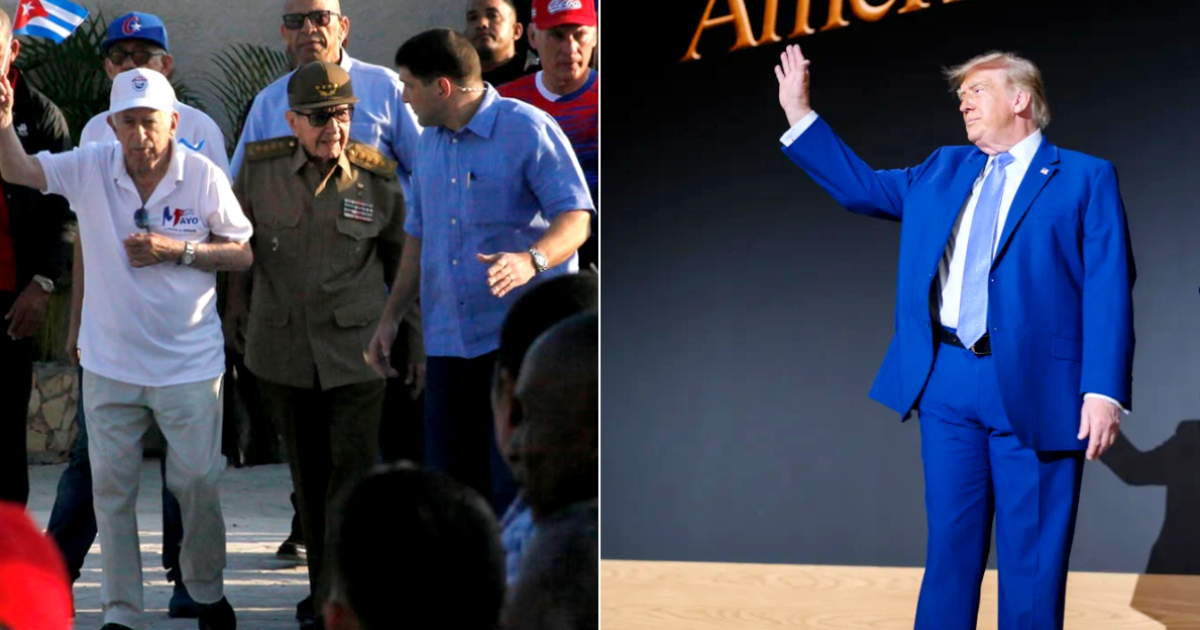
The recent arrest warrant issued for Raúl Castro by Florida Attorney General James Uthmeier has stirred significant discussion. Announced on Monday, the warrant is based on solid judicial grounds, accusing the former Cuban leader of involvement in the conspiracy behind the 1996 shootdown of two Brothers to the Rescue planes.
Yet, the timing of this announcement—just two weeks before the upcoming U.S. midterm elections—raises questions of political intent: Could this indictment serve as a campaign strategy for Republicans amidst growing criticism of Donald Trump among segments of the Cuban exile community?
Signed on October 16 by Judge Ariana Fajardo Orshan, the warrant supplements federal charges brought forth in May concerning the same incident. Uthmeier announced the warrant at Florida International University in Miami, addressing the families of the four victims of the attack.
Political Timing or Genuine Effort?
While the proximity to the elections might suggest a partisan agenda, the investigation began months ago, rooted in activities attributed to Cuban spies operating in Florida. A legal initiative can have legitimate grounds while also potentially offering political advantages to those who publicize it.
Among Cuban Americans, there's support for increased pressure on Cuba, but at the same time, Trump's other policies face scrutiny. A survey by Bendixen & Amandi International and The Tarrance Group for the Miami Herald in April revealed that 67% of South Florida's Cuban and Cuban American population supported Trump's Cuba policy. However, only 46% approved of direct negotiations with the communist regime, and 79% favored a U.S. military intervention in Cuba.
Shifting Cuban American Support for Trump
Immigration policies under the Trump administration have caused significant rifts. The same survey showed 68% opposed the increased deportations of undocumented Cubans without criminal records, while 81% supported legal immigration pathways for their compatriots.
This dichotomy highlights a crucial point: many in the community endorse measures against Havana but resist policies that harm Cubans seeking refuge in the U.S.
On a national scale, Trump's popularity with Hispanics has waned. A Pew Research Center survey released October 16 indicated his approval among registered Latino voters had plummeted to 24%, down from 38% in February 2025. Among Latinos who voted for him in 2024, support fell from 93% to 57%.
These statistics might not specifically reflect Cuban American sentiments, whose relationship with the Republican Party has unique nuances.
Deportations and Unfulfilled Promises
The discontent isn't limited to surveys. NPR research gathered by CiberCuba earlier in October captured the dissatisfaction of Miami's Cuban Americans over immigration raids and deportations initiated by the Trump administration.
ICE operations have targeted Cuban-dense neighborhoods, including Little Havana. The controversy has reached Republican leaders like María Elvira Salazar, who criticized the treatment of immigrants without criminal records.
Analysis by Guillermo Grenier connected to the FIU Cuba Poll suggested that disenchanted Cuban American Republicans might abstain from voting rather than support the Democratic Party.
The capture of Nicolás Maduro in Venezuela on January 3 raised hopes among exiles for similar action against Cuban leaders, bolstered by Trump's and Marco Rubio's subsequent warnings.
However, the lack of follow-up intervention and reports of U.S. negotiations with Raúl Guillermo Rodríguez Castro, known as 'El Cangrejo,' have fostered distrust among those opposing any deals that prolong the regime's hold.
Controversy Over U.S.-Russia Relations
Another source of contention is Trump's policy towards Russia. While the U.S. tightens its energy sanctions on Cuba, Trump announced a deal with Vladimir Putin to facilitate Russian diesel trade, drawing criticism for potentially benefiting Moscow economically amid its ongoing war against Ukraine.
Cuban voices like boxer Yordenis Ugás have criticized Trump for economically aiding Russia while the Kremlin wages war on Ukraine.
This issue adds complexity to the Cuban debate: Russia remains a key ally of Havana. The energy deal between Washington and Moscow contrasts with the U.S. pressure on the Cuban regime and could raise doubts about the consistency of these policies.
There are no polls measuring how this matter affects Cuban American electoral preferences. Statements from Ugás and others highlight specific criticisms but don't establish them as the majority viewpoint within the exile community.
Electoral Motivations Behind the Warrant?
Skepticism also surfaces among CiberCuba readers. Many comments on the arrest warrant question whether Castro, aged 95 and residing in Cuba, will ever face arrest.
On CiberCuba's Facebook page, some labeled the announcement a "circus" or "theater," explicitly linking it to the midterm elections. Others expressed frustration with Trump over his Cuba promises and immigration policy, while some supported the judicial pursuit or demanded more decisive actions.
These reactions don't represent a statistically valid sample of the electorate but do reveal a sense of disbelief and fatigue among commentators toward announcements perceived as political gestures without practical outcomes.
The warrant's presentation in Miami, with extensive media coverage and statements from state and federal officials, once again places Cuba policy at the forefront of public discourse in South Florida.
During the press conference, Uthmeier declared, "There can be no future for Cuba that includes the Castros." The Florida Department of Law Enforcement's official statement underscored the collaboration between state and federal authorities in pursuing accountability for the Brothers to the Rescue shootdown.
This case holds its legal significance. As a state accusation, a potential presidential pardon for federal offenses wouldn't nullify Florida's proceedings. Although Castro remains in Cuba, and his arrest is unlikely under current circumstances, the new warrant opens another avenue for accountability for the deaths of four individuals.
The victims' families have sought justice for nearly three decades. Their pursuit, along with the investigation's foundations, persists despite the election's proximity. There is no public evidence that the announcement's timing was electorally motivated.
Yet, the legal merit of the measure does not preclude its potential political exploitation. The warrant allows Republicans to showcase a tangible action against a historic figure of the Cuban regime at a time when the exile community questions the effectiveness of pressure on Havana and the outcomes of other Trump policies.
The question remains whether this display of resolve will restore trust among the disenchanted or be perceived as another announcement with no immediate impact.
For now, the warrant against Raúl Castro rests on documented judicial grounds. Its potential electoral use remains speculative, though its timing and the reactions it has triggered warrant further examination.
Key Questions About Raúl Castro's Arrest Warrant
What are the legal grounds for Raúl Castro's arrest warrant?
The arrest warrant is based on Raúl Castro's alleged involvement in the conspiracy that led to the 1996 shootdown of two planes belonging to Brothers to the Rescue.
Is the timing of the warrant politically motivated?
While the timing close to the U.S. midterm elections raises questions, the investigation began months earlier, suggesting it is not solely politically driven.
How do Cuban Americans view Trump's policies?
Cuban Americans generally support pressure on Cuba but have mixed views on Trump's other policies, especially regarding immigration and negotiations with the Cuban regime.
What impact does U.S.-Russia relations have on Cuban American opinions?
Trump's deal with Russia contrasts with U.S. pressure on Cuba, raising concerns about policy consistency, though its impact on Cuban American opinions is not clearly measured.