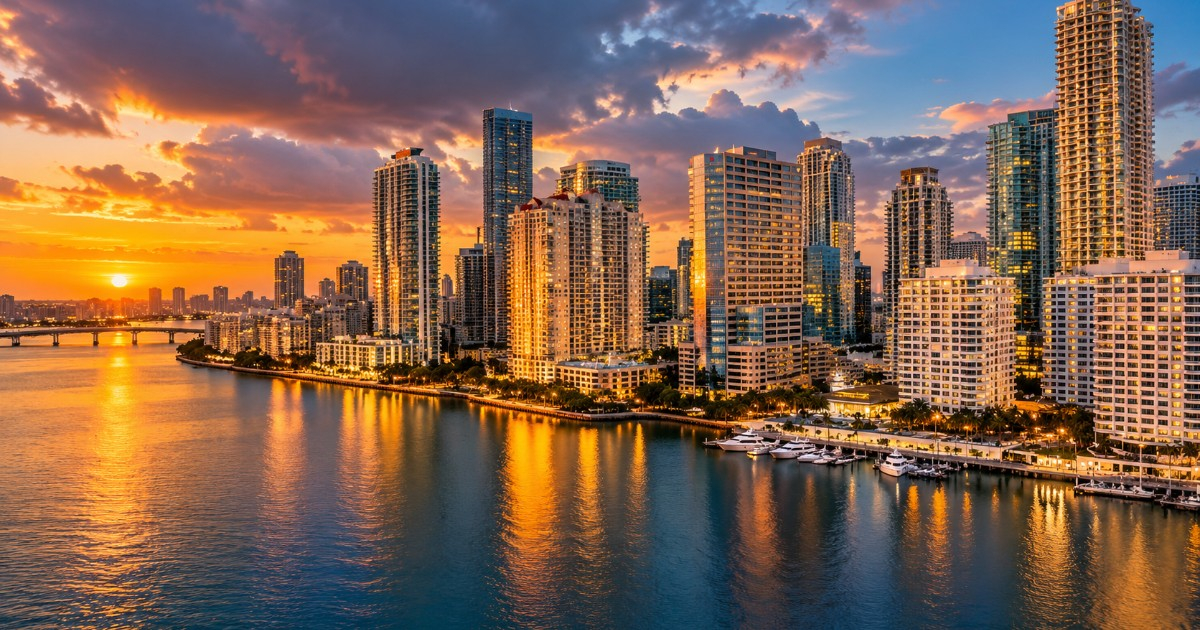
The Miami coastal real estate market closed the third quarter of 2026 with an increasingly noticeable divide: single-family homes are rising sharply due to limited supply, while mainland condominiums see a slight price drop, offering an opportunity for some buyers.
This trend was highlighted in Corcoran's quarterly report for the third quarter of 2026, released on October 15. The report focuses solely on Miami Beaches and the Coastal Mainland, excluding the entire county.
In the coastal areas—Miami Beach, Sunny Isles Beach, Bal Harbour, Surfside, and Fisher Island—the median price of single-family homes reached $3.3 million, marking a 17% increase over the previous year. The average price surged by 28% to $7.7 million, with 95 sales completed—20% more than the same period in 2025, marking the best third quarter in five years. The luxury segment was the driving force, with transactions over $5 million growing 72% year-over-year.
On the Coastal Mainland, the median single-family home price increased by 19% to $2.1 million, with 232 transactions marking the sixth consecutive quarter of annual gains. The inventory of homes decreased by 27% in the beaches and 30% on the mainland, directly contributing to the price pressure: more buyers are chasing fewer properties.
Pamela Liebman, President and CEO of Corcoran, emphasized that demand isn't restricted to luxury: "Miami isn't solely reliant on luxury buyers to drive activity. We're witnessing demand across all segments, reflecting the city's transformation into a place where people plant roots, not just buy second homes."
The Condo Market: A Closer Look
Condos present a different picture, worth special consideration for those seeking a more accessible market entry. In Miami Beaches, condo prices increased by 6% to an average of $630,000. Conversely, on the Coastal Mainland, the average dropped by 5% to $564,000, while sales grew by 8%. Though this price decrease might seem like an opportunity, several factors complicate the equation.
Since January 2026, new legislation enacted following the Champlain Towers South collapse in Surfside mandates that condo associations for buildings with three or more floors maintain required reserves for structural components, raising the minimum from 10% to 15% of the annual budget. This translates to HOA fees ranging from $350 to over $1,200 monthly, with potential special assessments between $5,000 and $200,000 per unit. As highlighted in our mid-October analysis of the Miami-Dade market, "more units on the market don't necessarily mean a good deal for all."
Additionally, since August 2026, Fannie Mae and Freddie Mac have removed the streamlined review for most condos, requiring full documentation of reserves, insurance, and structural status. Securing financing for a condo has become more challenging, just as 30-year mortgage rates hover around 7.46%.
Understanding the Scope of the Corcoran Report
It's crucial to note that Corcoran's figures pertain to affluent coastal areas and aren't applicable to neighborhoods like Hialeah, Kendall, Doral, or Westchester, where much of Miami-Dade's Cuban community resides. For the entire county, the median price for single-family homes stood at $692,000 in September, according to MIAMI REALTORS data released on October 16, with 38.3% of purchases made in cash, further challenging those reliant on loans.
For homeowners facing difficulties, Miami-Dade offers a mortgage relief program providing up to $3,500 per household to cover overdue mortgage payments, HOA fees, or insurance, targeted at families not exceeding 140% of the area's median income.
Key Insights on Miami's Real Estate Market
Why are single-family home prices rising in Miami?
Single-family home prices in Miami are increasing due to limited inventory and heightened demand, with more buyers pursuing fewer available properties.
What factors contribute to the decline in mainland condo prices?
Mainland condo prices have decreased due to changes in legislation requiring higher reserve funds and more comprehensive documentation for financing, making it harder to secure loans.
How has the legislative change after the Champlain Towers collapse affected condo owners?
The legislative change mandates higher reserve funds for structural components, resulting in increased HOA fees and potential special assessments for condo owners.
What assistance is available for Miami homeowners struggling with mortgage payments?
Miami-Dade offers a mortgage relief program that provides up to $3,500 per household for overdue payments, targeting families below 140% of the area's median income.