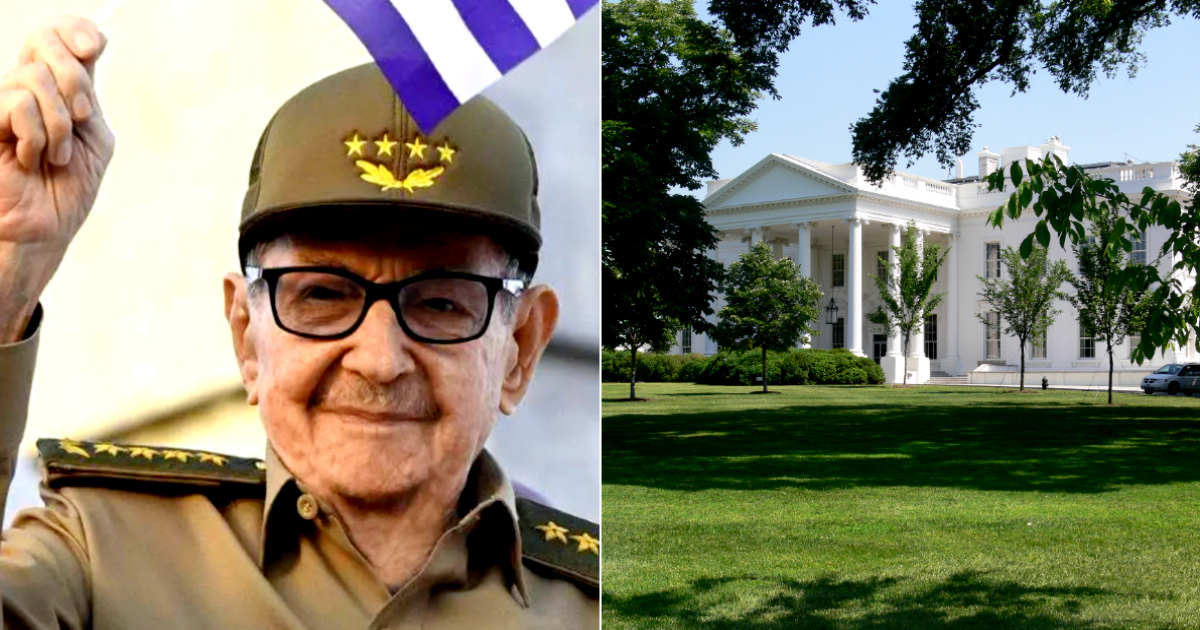
Florida's recent move to issue an arrest warrant for Raúl Castro on charges of conspiracy to commit first-degree murder carries significant legal implications beyond the repetition of charges related to the 1996 shootdown of the Brothers to the Rescue planes. This action ensures that no U.S. president could grant a pardon to the former Cuban leader for crimes prosecuted under state laws.
The investigation, spearheaded by Florida's Attorney General James Uthmeier, led to the issuance of an arrest warrant on October 16, signed by Judge Ariana Fajardo Orshan, head of the Eleventh Judicial Circuit. This development accompanies the federal indictment filed in May 2026 against Castro and five other former Cuban military officials.
The dual proceedings highlight a critical distinction: while the U.S. president has the constitutional power to pardon federal offenses, this authority does not extend to state crimes. Each state's competent institutions hold the power to grant state pardons, in accordance with their laws.
State Prosecution Independent of Federal Pardons
Uthmeier emphasized the significance of this legal distinction when presenting the new arrest warrant. According to reports from El País, Florida's prosecution stressed that the state-level action prevents any future U.S. administration from halting criminal proceedings through presidential pardon powers.
The U.S. Constitution permits the president to issue pardons for federal offenses, but not for violations of state criminal laws. In Florida, the authority to grant state pardons is vested in the governor, with the backing of at least two cabinet members, as outlined in Article IV, Section 8 of its Constitution and Article 940.01 of its statutes. Thus, while the case against Castro is not immune to clemency, it remains beyond the scope of a presidential pardon.
Link to 1996 Brothers to the Rescue Incident
This autonomy is particularly relevant as both proceedings stem from the same event: the February 24, 1996, shootdown of two civilian planes from Brothers to the Rescue over international waters, resulting in the deaths of Armando Alejandre Jr., Carlos Costa, Mario de la Peña, and Pablo Morales.
While the federal indictment includes seven charges against Castro and five other former Cuban military officials, the state warrant is based on a single charge of conspiracy to commit first-degree murder.
Florida's Jurisdiction and Cuban Spies
The state prosecution claims jurisdiction over the case because elements of the conspiracy unfolded in Florida through Cuban agents infiltrated in Brothers to the Rescue. According to the affidavit supporting the warrant, these spies relayed information about the organization's flights, monitored military facilities in Key West, and were instructed not to fly during the planned operation days.
One operative left Florida for Cuba on February 23, 1996, just one day before the attack. Judge Fajardo Orshan determined that these factors provided probable cause to implicate Castro in a criminal conspiracy partly conducted in Florida, as reported by the Miami Herald, which obtained access to the arrest warrant and affidavit.
Challenges in Executing the Arrest
This new order does not mean Castro will soon appear before a U.S. court. The former leader remains in Cuba, where U.S. authorities lack the means to execute an arrest warrant directly. The absence of an extradition mechanism between the two nations currently blocks the possibility of bringing him to the United States. However, the state warrant allows Florida to request his extradition if he is detained in another U.S. jurisdiction.
Furthermore, the order does not suggest that a possible federal pardon is on the table from the Trump administration. The significance of Florida's initiative lies in maintaining an independent legal pathway, unaffected by decisions from the White House, even under future administrations.
Three decades after the shootdown, Florida has initiated a process whose continuation does not hinge on presidential pardon powers. Nonetheless, its outcome will depend on the ability to apprehend Castro, the strength of the evidence, and the decisions of the courts.
Legal Implications of Florida's Arrest Warrant Against Raúl Castro
Why can't a U.S. president pardon Raúl Castro for state crimes?
The U.S. president lacks the authority to pardon state crimes; this power is reserved for state institutions. Each state has its own legal framework for granting pardons, independent of federal jurisdiction.
What event led to the charges against Raúl Castro?
The charges stem from the 1996 incident where two civilian planes from Brothers to the Rescue were shot down over international waters, resulting in four deaths.
How does Florida claim jurisdiction over the case?
Florida asserts jurisdiction because part of the conspiracy occurred within the state, involving Cuban spies who infiltrated Brothers to the Rescue and transmitted information about their activities.
What are the obstacles to executing the arrest warrant?
The primary obstacle is the lack of an extradition agreement between the U.S. and Cuba, which prevents U.S. authorities from executing the warrant directly. Florida can only request extradition if Castro is detained in another U.S. jurisdiction.