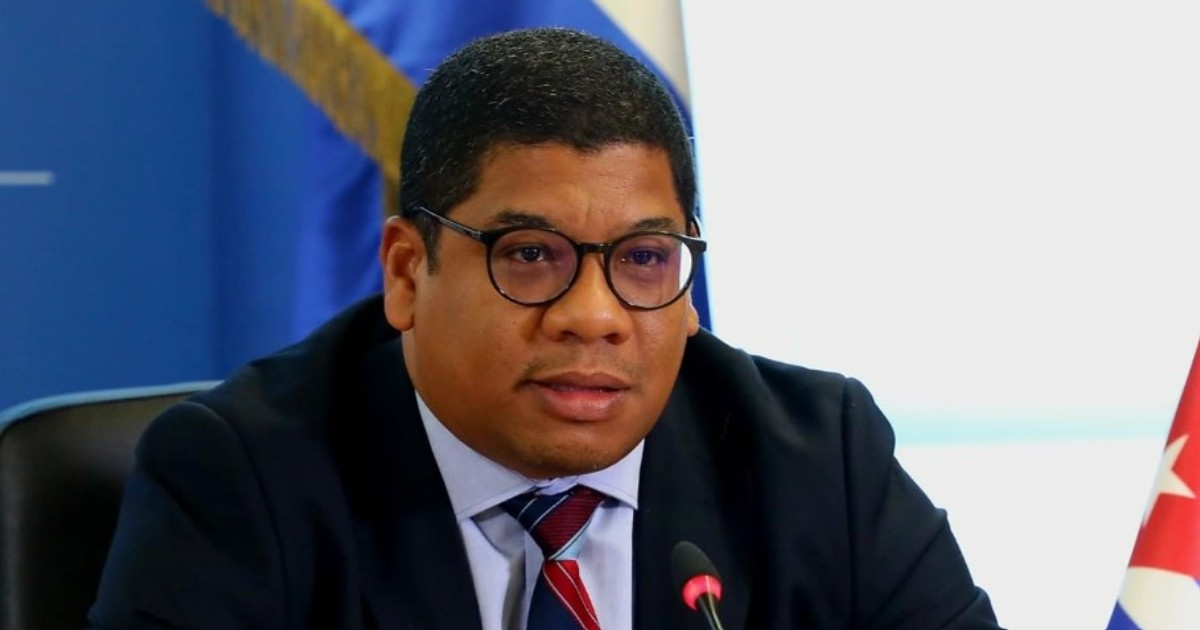
On Monday, Cuba's ambassador to Brazil, Víctor Manuel Cairo Palomo, sought to maintain a calm demeanor ahead of Brazil's upcoming presidential runoff on October 25. Flávio Bolsonaro is the leading contender against President Luiz Inácio Lula da Silva.
In an interview with the news outlet Metrópoles, the ambassador tactfully avoided questions about potential shifts in bilateral relations and expressed gratitude for the humanitarian aid from Lula's administration.
When questioned about the Cuban regime's apprehension regarding a possible shift in policy under a new government, Cairo Palomo dismissed the inquiry as "hypothetical," emphasizing the shared history between the two nations.
"Brazil and Cuba share a longstanding historical relationship. Our cultural ties are profound and enduring. Brazil's electoral process is solely a matter for the Brazilian people. The question remains hypothetical, as it assumes a situation that does not yet exist and is beyond our control, relying instead on Brazil's decision-makers. I believe our historical ties surpass any specific issue," he stated.
Earlier in October, organizations aligned with the Cuban regime openly endorsed Lula, accusing the United States and Israel of supporting Brazil's opposition. While the ambassador claims that Brazil's electoral process is the sole concern of its citizens, Cuban state entities openly campaign for the official candidate.
During Jair Bolsonaro's presidency, Brazil broke a 27-year tradition by not voting against the U.S. embargo on Cuba at the United Nations, left the embassy in Havana without a permanent head, and repeatedly threatened to sever ties. Flávio Bolsonaro, during his campaign, suggested Lula aims to transform Brazil into a Cuba-like state, highlighting the potential political shifts in the region.
In the first round of voting on October 4, Flávio Bolsonaro secured 47.03% of the votes, while Lula received 45.16%. Analysts predict that votes from eliminated candidates, predominantly from right and center-right parties, will favor Bolsonaro in the runoff. A win for Flávio could deprive the Cuban regime of its last significant ally in South America.
In the interview, Cairo Palomo acknowledged Lula's government for dispatching 48 tons of powdered milk in July, transported by the Brazilian Air Force. He also lauded the solidarity of Brazilian citizens who travel to Cuba with medicine and seeds. This assistance complements a humanitarian aid package announced by Brazil in March, which included 20,000 tons of food such as rice, black beans, and powdered milk.
Notably absent from the diplomat's remarks was the irony that while Lula provides aid, Brazil has yet to recover the $676 million debt that Cuba owes, tied to BNDES credits for the Mariel Port construction, with payments overdue since May 2018.
According to Brazilian diplomatic sources cited by Metrópoles, another shipment of rice and beans to Cuba could be formalized in November, contingent upon securing a vessel for transportation.
The ambassador described the U.S. embargo as a "collective punishment" against the Cuban people and characterized the situation in Cuba as a "humanitarian crisis." He also omitted the fact that nearly 17,000 Cubans sought asylum in Brazil between January and May 2026, averaging about 3,000 per month.
Understanding Cuba-Brazil Relations
How have Brazil-Cuba relations evolved under different Brazilian administrations?
Under Lula's administration, Brazil has maintained a supportive stance towards Cuba, providing humanitarian aid despite Cuba's debt issues. Conversely, during Jair Bolsonaro's presidency, relations were strained, marked by Brazil's shift in stance on the U.S. embargo and threats to sever diplomatic ties.
What is the significance of the humanitarian aid sent by Brazil to Cuba?
The humanitarian aid, including powdered milk and essential food supplies, underscores Brazil's commitment to supporting Cuba amidst its economic challenges. This aid reflects the historical and cultural ties between the two nations and underscores Brazil's role as a crucial ally.
How does the U.S. embargo impact Cuba according to the Cuban ambassador?
The Cuban ambassador, Víctor Manuel Cairo Palomo, categorizes the U.S. embargo as a "collective punishment" that exacerbates the humanitarian crisis in Cuba, impacting its people significantly.