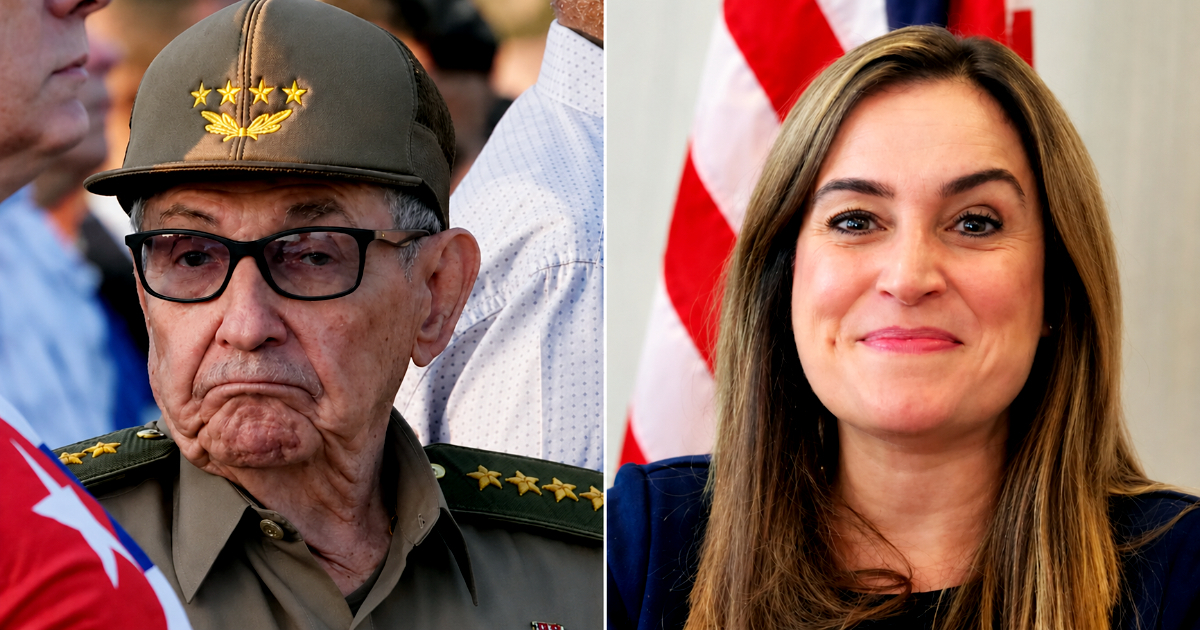
Ariana Fajardo Orshan, the chief judge of the Eleventh Judicial Circuit of Florida, has issued a state arrest warrant against 95-year-old Raúl Castro. He is accused of conspiracy to commit first-degree murder related to the downing of two Brothers to the Rescue planes on February 24, 1996. This warrant denies any possibility of bail.
Florida's Attorney General, James Uthmeier, made this announcement on Monday following an investigation initiated in March. The warrant was secured with the involvement of the Office of Statewide Prosecution and the Florida Department of Law Enforcement (FDLE).
According to the Miami Herald, which accessed the warrant and supporting affidavit, the judge found probable cause to believe that Castro collaborated with Cuban agents operating in Florida to orchestrate these murders.
Evidence of Conspiracy: Cuban Agents and Their Actions
The affidavit, submitted on October 16, establishes Florida's jurisdiction based on the activities of two Cuban agents who infiltrated Brothers to the Rescue in Miami and Key West. It reveals that weeks before the incident, these spies were instructed to report information about the organization's flights to Cuban authorities and to conduct surveillance on the Key West Naval Air Station.
The espionage network advised its infiltrators to avoid flying with Brothers to the Rescue between February 24 and 27, 1996. One agent left Florida on February 23 and returned to Cuba just a day before Cuban Air Force jets shot down the two civilian aircraft.
The affidavit asserts, "There is reasonable cause to believe that the defendant, Raúl Modesto Castro Ruz, conspired with others to commit first-degree murder against [...] individuals aboard the Brothers to the Rescue planes," as reported by the Miami Herald.
Investigators believe that the transmission of flight information and surveillance of U.S. military facilities are compelling indications that part of the alleged conspiracy occurred in Florida.
Florida's Legal Pursuit and Extradition Challenges
A statement from the state's Attorney General's office indicates that Castro and the Cuban regime used spies operating within Florida's Eleventh and Sixteenth Judicial Circuits. Their intelligence helped identify the Brothers to the Rescue planes as targets.
The warrant stipulates that Florida authorities should seek Castro's extradition if he is apprehended outside the state, potentially allowing for his transfer from another U.S. jurisdiction.
Parallel Federal Charges Against Castro
This state action is separate from federal charges filed by the U.S. Department of Justice on May 20, 2026. These charges accuse Castro and five other former Cuban military officials of seven counts, including four counts of individual murder, two of aircraft destruction, and one of conspiracy to kill U.S. citizens.
Among the evidence related to the downing is an audio recording from June 21, 1996, lasting 11 minutes and 32 seconds. In it, Castro is heard ordering, "Shoot them down at sea when they show up; and do not consult those who have the authority."
Journalist Wilfredo Cancio Isla, then with El Nuevo Herald, released the audio in August 2006. Its authenticity was verified by voice analysis experts and confirmed by Alcibíades Hidalgo, a former personal secretary to dictator Fidel Castro.
On February 24, 1996, Cuban MiG fighters shot down two Cessna 337 planes over international waters in the Florida Straits, killing Armando Alejandre Jr., Carlos Costa, Mario de la Peña, and Pablo Morales—three U.S. citizens and one legal permanent resident. Their bodies were never recovered.
Although the Cuban regime claimed the aircraft had breached its airspace, both the United States and a United Nations international investigation concluded the downing took place over international waters.
At the time, Castro was the Minister of the Cuban Revolutionary Armed Forces and has been considered a fugitive from federal justice since May 2026 for failing to appear in court.
The only individual currently in U.S. custody is Luis Raúl González-Pardo Rodríguez, a former lieutenant colonel in the Cuban Air Force, who was extradited to Miami in June 2026 and pleaded not guilty to the charges.
Relatives of the victims expressed measured relief at the announcement. "Justice has been served. Not completely, but it's some justice," one family member remarked. Another added, "My father fought for a free Cuba. That was the most important thing to him. It was all he cared about."
As long as Castro remains in Cuba, executing the state and federal arrest warrants faces legal and diplomatic hurdles, including the lack of an active extradition mechanism between Havana and Washington.
Key Questions About the Arrest Warrant Against Raúl Castro
What charges does Raúl Castro face in the state arrest warrant?
Raúl Castro faces charges of conspiracy to commit first-degree murder related to the downing of two Brothers to the Rescue planes in 1996.
Who announced the state arrest warrant against Raúl Castro?
The arrest warrant was announced by Florida's Attorney General, James Uthmeier.
What evidence supports the conspiracy charges against Raúl Castro?
Evidence includes an affidavit detailing activities of Cuban agents infiltrating Brothers to the Rescue and an audio recording of Castro ordering the planes to be shot down.
How does the state arrest warrant relate to federal charges?
The state arrest warrant is independent of federal charges, which accuse Castro and others of multiple counts of murder and conspiracy.