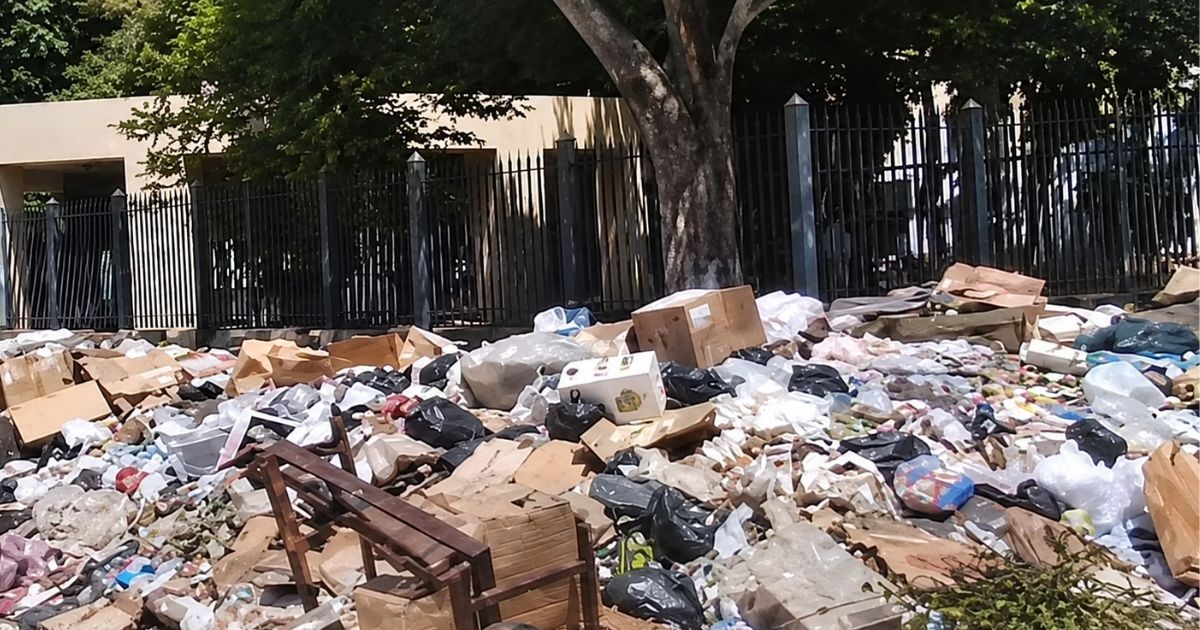
With piles of trash dominating the streets of Havana and the state-run service failing to ensure timely collection, the official newspaper Trabajadores has proposed a solution. The article suggests that Habaneros should pay 100 Cuban pesos for private waste removal.
The proposal is detailed in an article titled "One Hundred Pesos for a Clean Street," authored by the state-affiliated journalist Thalía Fuentes Puebla. She openly acknowledges the decline in urban hygiene and questions the authorities' inability to keep the capital's neighborhoods clean.
"When did it become normal for trash to be part of Havana's landscape?" Fuentes asks, describing overflowing bins and heaps of waste cluttering sidewalks. The article warns that the trash problem transcends aesthetics, posing health risks to residents exposed to foul odors, flies, mosquitoes, and rodents.
Fuentes points fingers at the state-run collection system, which she claims fails to maintain the required frequency for a city like Havana. She cites issues like fuel shortages, lack of spare parts, and broken-down collection trucks as contributing factors but insists these challenges should not justify the ongoing problem.
Exploring Private Sector Solutions
Fuentes suggests expanding private sector involvement in waste collection, citing existing initiatives in certain Havana districts. For example, some small businesses deploy their own vehicles and equipment in coordination with state entities in areas like Playa and Guanabacoa.
Independent workers who charge for waste removal and the local development project El Rampeño, which uses electric tricycles for door-to-door collection in Vedado, are also mentioned. Fuentes argues these models could be replicated in other communities where state services fall short.
"A hundred pesos for a pick-up is a modest sum compared to living surrounded by garbage," she argues, emphasizing the sanitary risks, pest infestations, and unpleasant odors faced by residents. However, she clarifies that this amount is not an officially sanctioned fee but a suggested example of what might be a reasonable charge for the service.
Challenges and Potential Solutions
Fuentes stresses the need for clear regulations, permits, and authorized disposal sites for private operators. She warns that simply removing trash from streets won't suffice if there's no suitable place to deposit it afterward.
While advocating for private sector involvement, she also acknowledges that these initiatives cannot completely replace state responsibilities, especially in matters directly affecting public health. State institutions must continue to regulate, coordinate, and provide services in areas lacking private alternatives.
However, some of the projects Fuentes references have already encountered significant challenges. In July, the El Rampeño project launched a pilot program using electric tricycles to collect waste from homes in Rampa. The initiative proposed a 100-peso monthly fee per household, and higher charges for businesses, with exemptions for vulnerable individuals.
The project initially planned for 30 electric tricycles and a solar-powered charging station, aiming to reduce reliance on conventional fuel. Yet, when the pilot began, only five vehicles were available. By August, Pedro Lizardo Garcés Escalona, president of the Rampa Council, admitted the project was not meeting its original goals.
Delays in completing the solar charging station and difficulties keeping vehicles operational were cited as obstacles. Although some institutions helped with recharging the tricycles, these efforts were insufficient to sustain the service as planned.
Community Efforts and Broader Implications
Elsewhere in Havana, residents have sought independent solutions to the absence of collection trucks. In May, a community initiative in the Casino Deportivo area of Cerro involved locals and delegates in removing trash, sparked by fuel shortages that halted regular truck services.
Outside Havana, private waste collection is also gaining traction. In August, a small business on the Isla de la Juventud launched a 100-peso monthly service, initially targeting select communities, with plans to expand its reach.
These efforts emerge amid a long-standing waste crisis degrading Havana's sanitary conditions. As of February 2026, data showed only 44 of the city's 106 collection trucks were operational, struggling to manage the 24,000 to 30,000 cubic meters of daily waste generated.
Despite official cleaning campaigns, the problem persists. In October 2025, authorities removed over 396,000 cubic meters of trash in a cleanup drive, yet acknowledged that much work remained. The lack of precise measurements of waste generation complicates route planning, equipment needs assessment, and campaign evaluations.
Addressing Havana's Waste Management Challenges
What is the proposed solution for Havana's garbage crisis?
The proposed solution involves expanding private waste collection services, where residents would pay 100 Cuban pesos for trash removal, supplementing the inadequate state-run system.
Why is Havana's waste management system failing?
Havana's waste management system struggles due to fuel shortages, lack of spare parts, and non-operational collection trucks, which hinder the frequency and reliability of trash collection services.
What role does the private sector play in waste collection?
The private sector is being considered to complement state services by using their own vehicles and equipment for waste removal in coordination with government entities, providing services in areas where state collection is insufficient.