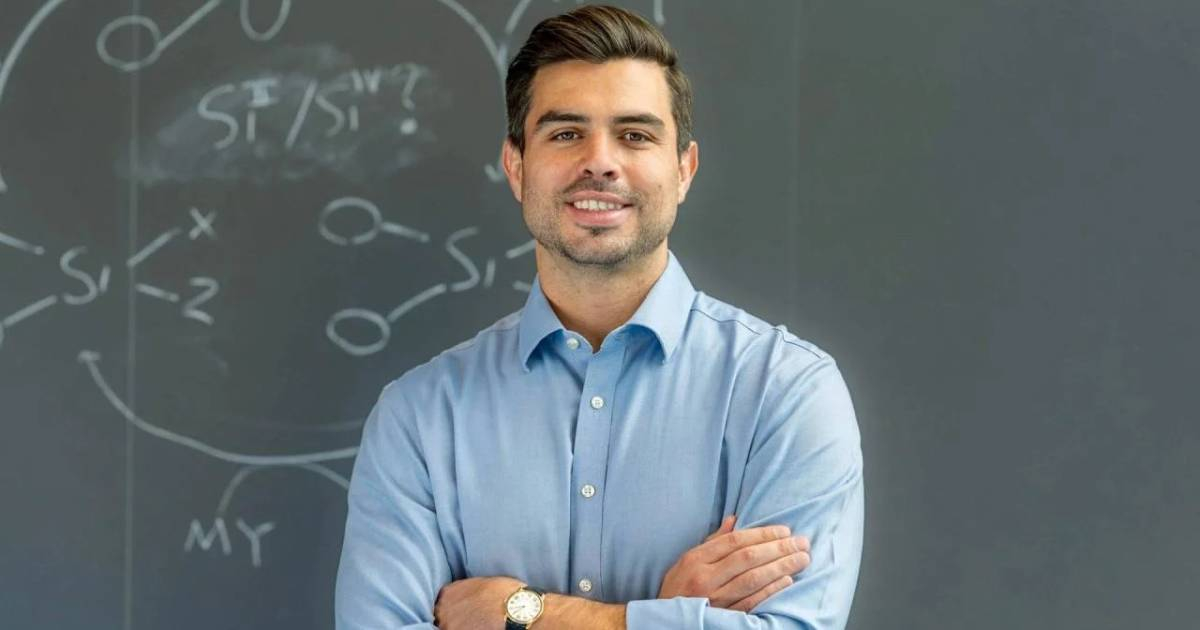
A Cuban scientist, José Roque, who serves as a Chemistry professor at Princeton University in the United States, has been granted a fellowship amounting to $985,834. This funding will support his research over the next five years, aiming to advance the development of pharmaceuticals, innovative materials, and more environmentally friendly technologies.
Born in Havana, Roque moved to the United States at the tender age of six. He is now among 20 scientists, mathematicians, and engineers selected in 2026 to receive the prestigious Packard Fellowship for Science and Engineering, awarded by the David and Lucile Packard Foundation.
Princeton University announced this accolade on October 15, highlighting that these fellowships rank among the most substantial private grants available to early-career researchers in the U.S.
Roque revealed that he learned about the award during a video call organized by Paul Chirik, his former postdoctoral mentor and the current head of Princeton's Chemistry Department. "For the first few seconds, I honestly thought I had misheard," he admitted.
For Roque, this award is not just a personal achievement; it is also a chance to propel the research he conducts alongside his students and collaborators.
Silicon: A Greener Alternative in Chemical Processes
The awarded project, titled "Metallomimetic Chemistry: Catalysis with Silicon," aims to explore innovative uses of silicon, a plentiful element in the Earth's crust, as a substitute for certain metals typically used in industrial processes.
Currently, many chemical reactions essential for producing pharmaceuticals, materials, and other goods rely on metals that can be costly, challenging to mine, or harmful to the environment. Roque's lab seeks to harness silicon found in sand to develop more cost-effective and sustainable catalysts.
Catalysts are substances that expedite chemical reactions without being consumed in the process, playing a crucial role in the manufacturing of countless everyday products.
According to Princeton, Roque's team's research could have future applications in creating next-generation drugs, advanced materials, solar energy conversion, and the removal of persistent pollutants.
The challenge lies in altering silicon's chemical properties to engage in reactions typically requiring other elements. While this technology is not yet ready for industrial use, it represents a promising research avenue that could enable more economical and eco-friendly chemical processes.
From Cuban Immigrant to Princeton Professor
José Roque was born in Havana and arrived in the U.S. at six years old, accompanied by his parents. His father worked as a mechanic, while his mother had been a physician in Cuba. Settling in Florida, his mother was unable to continue practicing medicine due to economic hardships and federal exam requirements.
In a March 2023 interview published by Princeton, Roque expressed pride in his mother, who later completed her nursing studies in the United States. Roque began his university education at Florida International University (FIU) in Miami, earning a Bachelor's degree in Chemistry in 2015. Initially, he did not plan to become a researcher.
He considered studying medicine but was deterred by his aversion to blood. He then contemplated pharmacy before laboratory experiences sparked his true passion for chemistry. Roque went on to earn a doctorate from the University of California, Berkeley, in 2020, followed by postdoctoral research at Princeton that same year.
In 2023, he joined Princeton as an assistant professor in the Chemistry Department, where he established his own lab specializing in catalysis and chemical synthesis. His career includes published research in leading scientific journals such as Science and Nature, along with other academic accolades.
A Fellowship Offering Greater Research Freedom
Established in 1988 by David Packard, co-founder of Hewlett-Packard, the Packard Fellowships are designed to support young researchers with innovative scientific projects. Unlike other funding sources, this program provides considerable freedom in resource allocation, enabling the pursuit of ambitious ideas and scientific risks not typically supported through traditional mechanisms.
The recipients are chosen from researchers at U.S. universities invited to nominate candidates. The Packard Foundation announced that the 20 scientists selected this year will each receive $985,834 over five years.
Understanding the Impact of Packard Fellowships
What is the significance of the Packard Fellowship?
The Packard Fellowship is significant because it provides substantial private funding to early-career researchers, allowing them to explore ambitious and innovative scientific projects with greater freedom and flexibility.
How might José Roque's research impact industrial processes?
José Roque's research could transform industrial processes by developing cost-effective and sustainable catalysts using silicon, reducing reliance on expensive and environmentally harmful metals.