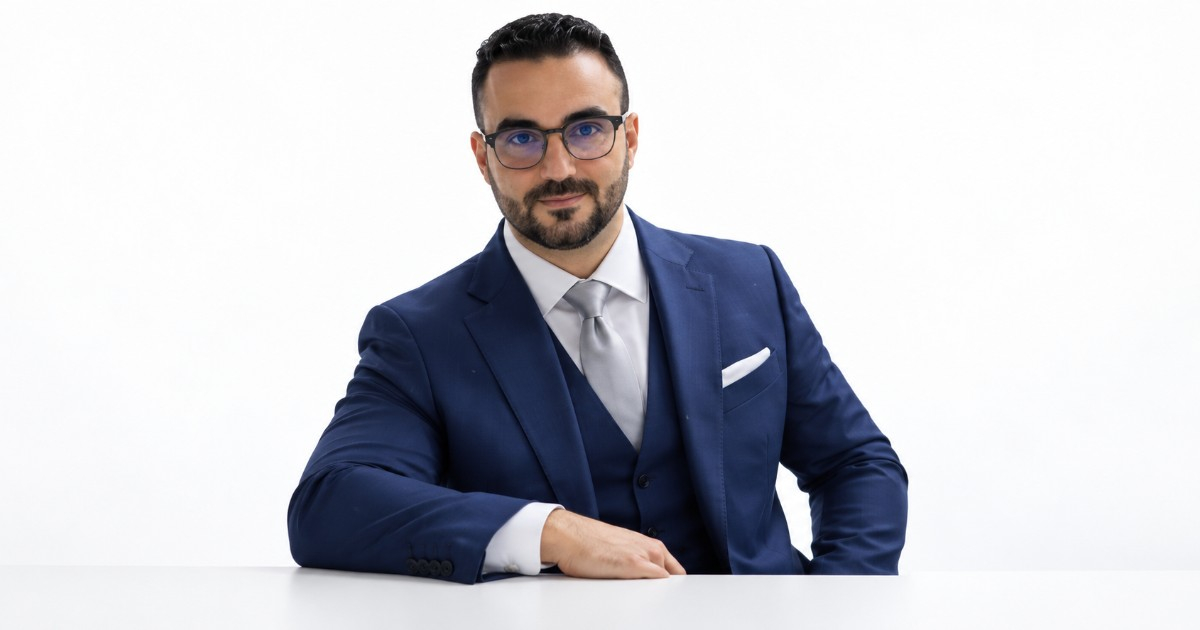
Manuel Guerra, a Cuban doctor who has sought asylum in the United States and aligns himself with the Republican Party, has voiced concerns about a potential defeat for his political party in the upcoming November 3 legislative elections. He holds former President Donald Trump accountable for a series of unfulfilled promises, questionable decisions, and the increasing dominance of the party by the president’s persona.
On his Facebook page, Guerra warned, "Mark my words: October 18, 2026," as he shared his worries about the political direction of the United States just weeks before the mid-term elections.
"I say this with a heavy heart because I am a Republican, I stand by Republican values, and I wanted my party to win. But I fear that on November 3, we will lose the House of Representatives and possibly the Senate as well," he expressed.
Concerns Over Trump's Leadership
Guerra attributes his fears to what he sees as a presidential administration that has strayed from the expectations that led many Republican voters to support Trump.
"The opportunities were there, but the administration has been marred by broken promises, questionable economic decisions, a contradictory immigration policy, embarrassing alliances with dictators, and a presidential arrogance that confuses leadership with personality cult," he stated.
He stressed that his identification with conservatism and the Republican Party does not mean he must accept all of Trump’s decisions without question.
"Being Republican doesn't mean being a subject of Donald Trump. A party's principles must be above the ego of any president," Guerra insisted.
The Cost of Blind Loyalty
Guerra emphasized that his concern is not a wish for a Democratic victory; rather, he hopes to see the United States thrive under Republican ideals.
"I hope I'm wrong. I truly want to see this country flourish under Republican values, not under the whims and blunders of Donald Trump, and certainly not under the progressive wing of the Democratic administration," he wrote.
He concluded with a warning to those who, in his view, have confused loyalty to conservative values with personal allegiance to Trump.
"But mark the date: if we lose Congress, we need to question how much it cost us to confuse loyalty to our principles with blind obedience to one man," he concluded.
A Voice from the Cuban Exile Community
Guerra's criticism stands out, especially coming from a Cuban exile who declares himself right-wing, anti-socialist, and a defender of Republican values but rejects the idea of turning loyalty to a leader into a political obligation.
He previously shared his disagreements with various policies of the Trump administration in a lengthy post titled "Being Republican Doesn't Mean Being Unconditional to Donald Trump." His decision to speak out came as a response to controversies within the Cuban exile community regarding Eliécer Ávila's views on Trump.
"I identify with the Republican Party and defend many of its historical values: individual freedom, private property, personal responsibility, constitutional respect, and opposition to totalitarianism," Guerra wrote.
However, he argued that sharing these principles does not mean ignoring economic missteps, diplomatic contradictions, and harmful political decisions.
Criticism of Economic and Diplomatic Policies
Among his criticisms were Trump's promises to lower living costs, rejuvenate American manufacturing through tariffs, avoid new wars, and swiftly resolve the Russia-Ukraine conflict.
Guerra noted that the administration's results have not met these expectations. He criticized the ongoing high costs of food, housing, insurance, and electricity facing American households, and questioned the economic impacts of tariffs on businesses and consumers.
He also expressed concern over U.S. foreign policy, particularly negotiations with Russia and decisions related to Venezuela.
Regarding Venezuela, Guerra acknowledged the importance of capturing Nicolás Maduro but questioned whether this event alone could represent complete democratic transition.
He voiced dissatisfaction with the continued presence of Chavismo figures in power and certain U.S. decisions on sanctions and economic relations with Caracas.
"We must not confuse a favorable agreement for Washington with the liberation of Venezuela," he warned.
Reflections on Cuban Freedom
Guerra dedicated a significant portion of his reflection to Cuba, from where he fled after facing harassment and reprisals for his critical stance against the regime.
He argued that Cubans themselves bear the primary responsibility for securing their freedom but rejected the idea of demanding an uprising without considering the oppressive and vulnerable conditions in which the population lives.
He also questioned the effectiveness of certain economic and energy pressures applied by Washington against the Cuban regime.
"What good is a policy of maximum pressure if it only ends up suffocating the population further without dismantling the dictatorship?" he asked.
Guerra clarified that he does not intend to justify the Cuban government's funding or blame Trump for not carrying out military intervention, but considers it legitimate to assess the humanitarian impact of U.S. measures.
"For me, the goal of any policy towards Cuba should be the freedom of the Cuban people, not simply increasing their misery," he expressed.
In his message, Guerra also drew a comparison between the personality cult imposed by Fidel Castro in Cuba and what he perceives as a tendency among certain exile sectors to treat Trump as an unquestionable political figure.
"Are we really going to reproduce that mentality in exile?" he asked, before rejecting the notion that any criticism of the U.S. president should automatically be seen as aligning with the left.
"I don't need to become a Democrat to criticize a Republican president," he asserted.
For Guerra, political discourse should allow recognition of a leader's achievements while questioning their mistakes without demanding unconditional personal loyalty.
"I don’t have to change my ideology to acknowledge that Donald Trump is making mistakes," he stated.
He concluded his reflection with a phrase summarizing his stance on freedom of thought and the Cuban exile experience: "I didn't leave Cuba to change masters. I left Cuba to be free."
Manuel Guerra is a Cuban doctor specializing in Obstetrics and Gynecology who became known for his denunciations of Cuba's healthcare situation and his confrontations with political authorities before leaving the country.
In November 2020, he was detained at his home in Holguín by State Security agents after publicly supporting the San Isidro Movement and denouncing restrictions on individual freedoms in Cuba.
During 2021, he participated in exposing the conditions of hospitals and the shortage of resources to combat the COVID-19 pandemic. His activism led to increased pressure from health and political authorities.
In October of that year, he was expelled from his job in the Cuban healthcare system, a decision he denounced as retaliation for his political positions.
In March 2022, Guerra arrived in the United States after traveling through several countries and crossing the border from Mexico, a journey he described as particularly challenging.
Once settled in the U.S., he took on various jobs while seeking to reenter the healthcare field. In April 2023, he announced obtaining a physician assistant license and securing employment at a clinic.
In October 2025, he again criticized the deteriorating state of Cuban healthcare, describing it as "a dying organism, corroded by misery," referring to hospital conditions, medicine shortages, and the emigration of professionals.
Key Questions about Republican Politics and Cuban Exile Views
What are Manuel Guerra's main criticisms of Donald Trump's presidency?
Manuel Guerra criticizes Trump's presidency for unfulfilled promises, questionable economic decisions, a contradictory immigration policy, and forming embarrassing alliances with dictators. He also faults Trump's leadership style, which he views as fostering a personality cult.
How does Guerra view the role of Cuban exiles in advocating for freedom in Cuba?
Guerra believes that while Cuban exiles should support the quest for freedom, it is primarily the responsibility of the Cuban people to achieve it. He criticizes calls for popular uprisings without considering the oppressive conditions under which Cubans live.
What does Guerra suggest about the U.S. policy towards Cuba?
Guerra questions the effectiveness of maximum pressure policies that may worsen conditions for the Cuban population without dismantling the dictatorship. He emphasizes that U.S. policy should aim at the freedom of the Cuban people rather than increasing their hardship.