Yoandri Marín, brother of Karildi Caridad Marín Lobaina—a young Cuban woman who vanished in Havana in December 2023—took to Facebook on Friday to urge families of missing individuals in Cuba to join forces and create a mutual support network.
His post marked his return to social media after a period of silence and was given a wider audience by the Observatorio de Género de Alas Tensas (OGAT), which shared the call to action to increase its visibility.
"I stepped away from social media for a while. The pain of not knowing anything about my sister made me withdraw, because some wounds are learned to be borne in silence, even if they continue to ache inside," Yoandri Marín wrote, explaining his absence.
The Lingering Mystery of Karildi's Disappearance
Karildi Caridad Marín Lobaina was just 24 when she left her home in Párraga, Arroyo Naranjo, on December 14, 2023, to attend a party in El Cerro. Her family hasn't heard from her since that evening.
The family reported her disappearance to the Capri police station, but 18 months later, the case remained stagnant, as Yoandri has repeatedly pointed out. Karildi's young daughter turned two in March 2025, still without her mother.
"Nearly three years without knowing anything about Karildi Caridad Marín Lobaina. Nearly three years of questions, uncertainty, and an absence that changed our lives forever," her brother lamented.
Building a Support Network from Scratch
The initiative lacks formal structure or funding at this time.
Yoandri Marín candidly acknowledges this: "Maybe we don't have an office, financial resources, or all the answers today. But we can start with what we do have: determination, solidarity, and the desire to ensure no family feels entirely alone."
His proposal aims to create a space for families to share experiences and receive guidance.
"I don't promise miracles. I promise to work towards building a support network, learning alongside other families, and seeking people willing to genuinely help," he stated.
"Meanwhile, disappearances continue, violence persists, and many families live through a nightmare few can understand unless they've experienced it themselves," Yoandri Marín added.
His message concluded with a direct invitation: "If you're going through something similar, or know a family that needs support, I'd like to hear from you. We can start together."
The Faces of a Crisis with No Government Response
The call comes as numerous Cuban families fight similar battles on their own.
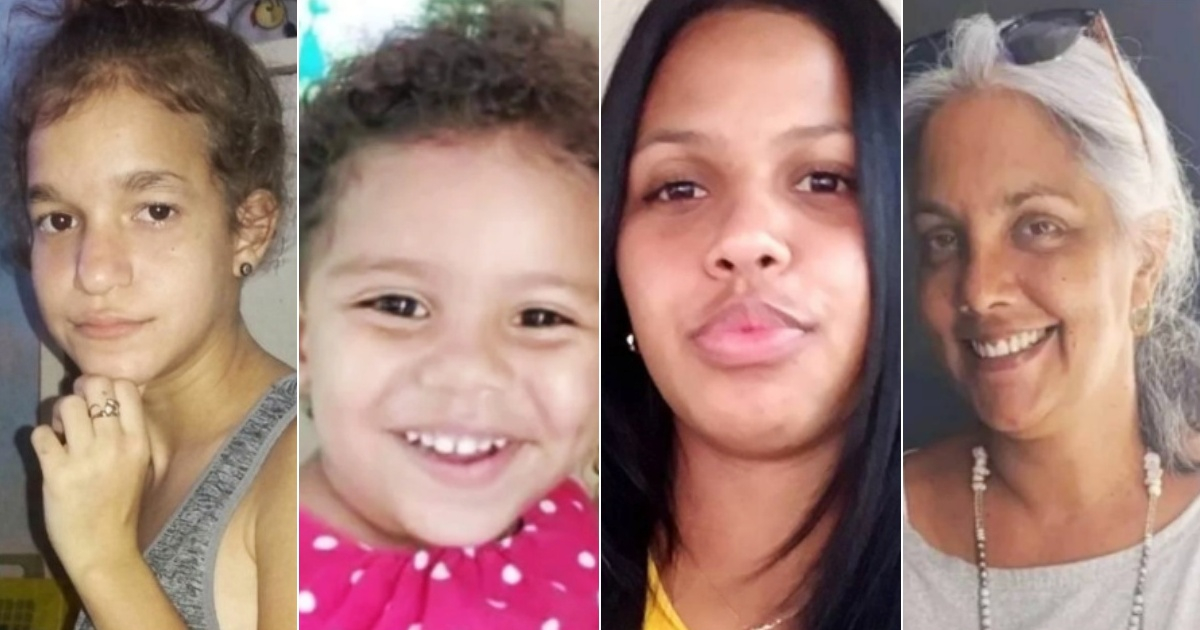
Four cases highlight the gravity of the issue:
Maydeleisis Rosales Rodríguez, 16, disappeared in May 2021 near Campanario and the Malecón, Centro Habana. More than five years later, her mother reported a possible crime after a man's testimony implicated her daughter's ex-partner. The police briefly detained the suspects but released them without charges.
Lali Paola Moliner Bosa, a three-year-old girl, vanished in February 2024 in Bahía, Habana del Este, the day after her mother's body was found with signs of violence near Cojímar. Two years after her disappearance, her aunt Valia Zaldívar Salazar decried the institutional neglect: "Our silence is not forgetfulness; it's pain, feeling forgotten by authorities who still have no answers."
Doraiky Águila Vázquez, 48, disappeared in March 2025 during a blackout in Lawton, Diez de Octubre. Her mother, Maura Vázquez, traveled this week to Cabaiguán, Sancti Spíritus, pursuing a lead that yielded no results after 19 months of searching.
Cuba's Lack of Missing Persons Register and Early Warning System
The OGAT has documented the absence of a public registry for missing persons and a national early warning system in Cuba.
In its 2025 annual report, the observatory recorded 40 disappearances of women, girls, and boys: 26 were found alive, six were found deceased, and eight remained missing by the end of the year.
Faced with this institutional gap, families rely on grassroots initiatives like the "No Me Olvides" campaign, the #AlertaYeniset for missing women, and the #AlertaMayde for missing minors, none of which have official support from the Cuban government.
Understanding the Disappearance Crisis in Cuba
What prompted Yoandri Marín to call for a support network?
Yoandri Marín was driven by the ongoing pain and uncertainty surrounding his sister Karildi's disappearance to propose a network that could offer mutual support to families facing similar situations.
What challenges do families of missing persons in Cuba face?
Families of missing persons in Cuba often confront a lack of official support, absence of a public missing persons registry, and no national alert system, leaving them to depend on community-driven initiatives.
How has the OGAT contributed to raising awareness of the issue?
The OGAT has played a crucial role in documenting cases of disappearances and highlighting the lack of institutional support, while also promoting community initiatives to address the crisis.