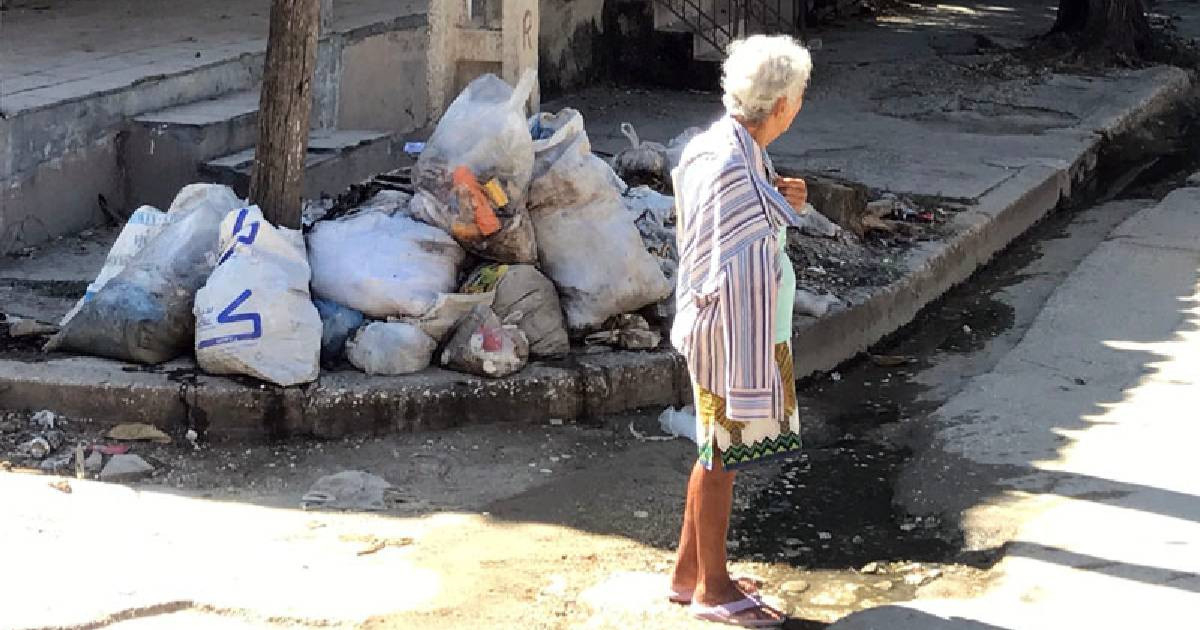
By the end of August, Cuba reported 883,446 individuals living in vulnerable conditions, marking an increase of 6,924 since April. Despite this, officials admit shortcomings in institutional care and emphasize the need for solutions beyond mere food distribution.
On Friday, the pro-government site Cubadebate reported that Deputy Prime Minister Eduardo Martínez Díaz highlighted the importance of addressing the needs of this demographic during a meeting of the National Commission on Social Policies. He called for a more comprehensive effort from institutions and local authorities.
The rise of nearly 7,000 vulnerable individuals over four months underscores the depth of the social challenges acknowledged by the government. However, the released data lacks details on the reasons for the increase or the specific situations faced by those affected.
Martínez stressed that state responses should not be limited to distributing food packages. He emphasized that institutions should actively seek out those in need and develop specific plans for each case.
He also suggested that all social institutions receive support from economic entities, aligning with their social responsibilities.
Meanwhile, the Minister of Labor and Social Security, Jesús Otamendiz Campos, announced the distribution of food packages to those identified as most vulnerable. These lists must be coordinated between municipal labor offices and the Supply Distribution Control Offices (Oficodas).
Deputy Prime Minister Inés María Chapman Waugh stressed the importance of directly engaging with communities. "We must go door to door, there's no other way," she insisted, advocating for greater empathy towards families' difficulties.
During the same meeting, Rolando Yero Travieso, head of the Department of Social Sector Attention at the Central Committee of the Communist Party of Cuba, criticized the performance of commissions handling these issues. "The commission's actions must cease being bureaucratic," he remarked, warning that "one cannot know of a problem and not seek a solution."
These official statements highlight the urgency of improving care for vulnerable populations while acknowledging the institutional response needs significant reform.
In a survey conducted by the Cuban Observatory of Human Rights (OCDH) between June 27 and July 29, covering 79 municipalities, it was found that 94% of respondents lived in extreme poverty.
Economist Pedro Monreal estimated that expanding coverage to all officially recognized vulnerable individuals would require approximately 24.3 billion pesos, which is 4.5 times the current social protection expenditure—a figure beyond the government's financial capabilities.
The implementation of the new system has already resulted in arbitrary exclusions. A public complaint highlighted the case of an elderly person from the Cabrera district in Contramaestre, Santiago de Cuba, who was denied a food package because his daughter lives in Brazil.
In Santiago de Cuba, more than 101,000 individuals have been identified as vulnerable, accounting for over 10% of its population. Similarly, Holguín reported 90,148 cases, representing one in ten residents of the province.
The minimum pension in Cuba is 4,000 pesos per month, roughly equivalent to five dollars at the informal exchange rate. According to the OCDH, 79% of people over the age of 70 cannot afford three meals a day.
Understanding the Challenges of Vulnerability in Cuba
What is the current number of vulnerable individuals in Cuba?
As of the end of August, Cuba reported 883,446 people living under vulnerable conditions.
What is the government’s proposed solution for addressing vulnerability?
The government suggests a comprehensive plan involving active outreach and specific case management, backed by economic support for social institutions.
How much would it cost to expand social protection to all vulnerable individuals in Cuba?
Economist Pedro Monreal estimates it would cost approximately 24.3 billion pesos, which is 4.5 times the current expenditure.