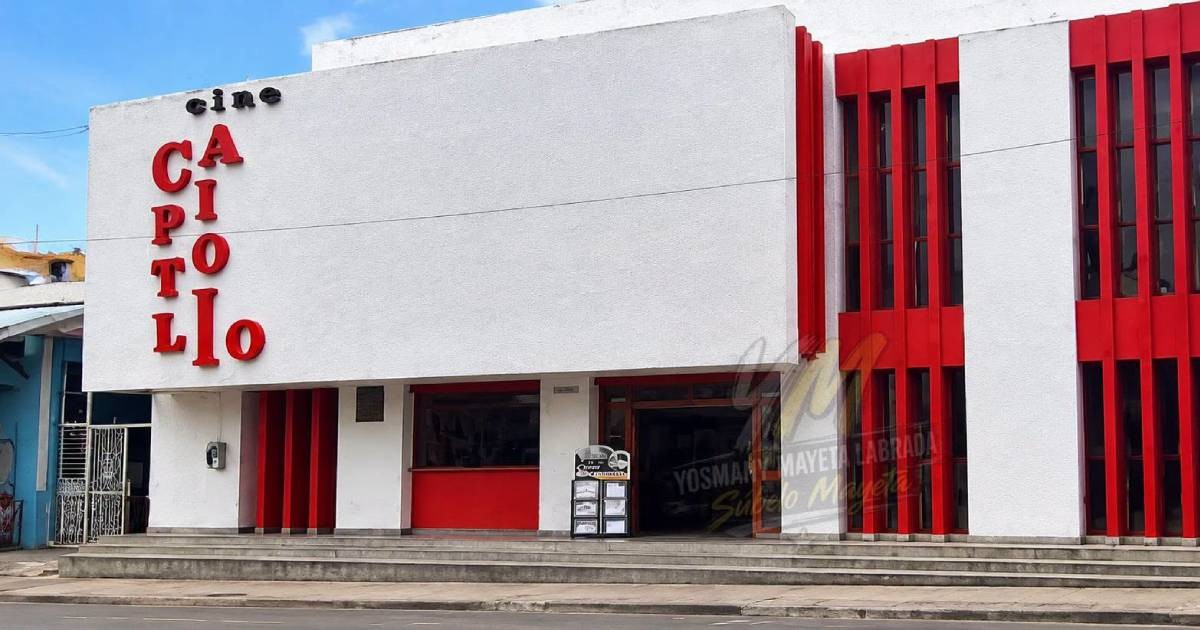
The Capitolio Cinema in Santiago de Cuba, a cornerstone of the city’s cultural heritage, was reportedly stripped in a brazen overnight theft on Saturday. According to independent journalist Yosmany Mayeta Labrada, the building’s front door was removed by unknown individuals.
This information was brought to light by a local resident who contacted the reporter. The account reveals that this is not the first instance of theft at the site; previous incidents have included the removal of zinc sheets from the roof.
Photographs released on Saturday depict the Capitolio Cinema's entryway completely exposed, with no official explanation or accountability from authorities regarding the security of the premises.
Historical Significance of Capitolio Cinema
Established in 1939 on Victoriano Garzón Avenue, the Capitolio was purpose-built as a cinema on a plot that previously housed a garage. Its modernist design, characterized by white walls, red accents, and tall, narrow windows, made it a notable part of the city's second major expansion of cinema houses, alongside theaters such as Cuba, Rialto, Maceo, and Fausto.
Following the Revolution, the building was nationalized and incorporated into the state-run film exhibition network. Over time, it ceased to function as a cinema and was repurposed as a cultural center under Artex, the Cuban state enterprise for artistic promotion, as noted in an academic study from the University of Havana's Alcance magazine.
Widespread Neglect of Cultural Heritage
This incident is not isolated. Just days earlier, Santiago residents were disturbed by the repeated theft of wooden planks from benches in the Plaza de Marte, allegedly used for firewood amid ongoing power outages.
In August, similar thefts of historical elements were documented in Matanzas, Holguín, and Las Tunas, including metal railings, a bronze star from the Calixto García mausoleum, and a bust of Antonio Maceo.
The decline of Cuban cinemas reflects a national trend. Approximately 80% of the nearly 398 cinemas that once existed in Cuba have closed over the past decades, according to a 2018 study by photographer Carolina Sandretto.
For instance, the XI Festival cinema in Alamar was found in a state of complete ruin as of April 2026. Meanwhile, the historic Payret cinema-theater in Havana has remained closed since 2008 amid controversial plans to convert it into a luxury hotel.
Mayeta Labrada voiced the frustration of many Santiago residents with a pointed question: "Who is safeguarding the historic buildings of a city where even the doors vanish?"
"A city loses more than just its buildings when they disappear," Mayeta wrote. "It also loses pieces of its history when it allows them to be dismantled piece by piece."
Understanding the Challenges Facing Cuban Cultural Sites
What happened to the Capitolio Cinema in Santiago de Cuba?
The Capitolio Cinema was reportedly stripped of its front door during an overnight theft, highlighting ongoing issues with the security and preservation of historic sites in Cuba.
Why is the theft from the Capitolio Cinema significant?
The theft is significant because it underscores the broader neglect and deterioration of Cuba's cultural heritage sites, which are losing their historical value and identity.
How have authorities responded to the Capitolio Cinema theft?
As of now, there has been no public explanation or accountability from authorities regarding the security breach at the Capitolio Cinema.