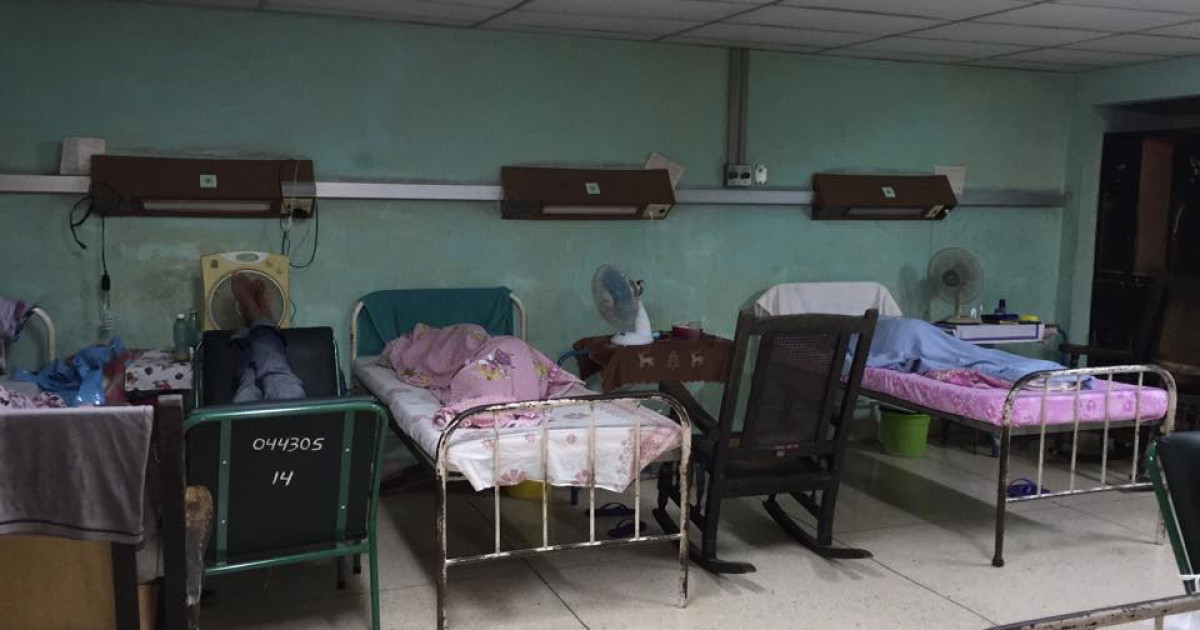
A CBS News team recently visited Havana, capturing the severe challenges faced by Cuba's citizens, including doctors struggling to find essential medicines for patients, retirees enduring long waits to collect pensions, and residents getting only a few hours of electricity each day.
In a report released on Friday by journalists Matt Gutman and Sarah Lynch Baldwin, the deterioration of critical services in Cuba is laid bare. At a pediatric hospital, doctors openly discussed the difficulty of securing vital medications for children. Parents, queued up for medical attention, had no assurance of receiving necessary treatments.
This reality starkly contrasts with the public healthcare image that the Cuban government has long promoted as a hallmark achievement of the 1959 revolution. Due to shortages, citizens are forced to seek alternatives beyond the state system. Retiree Sara Emilia Márquez showed CBS reporters the medicines she received through donations, as her monthly prescriptions are now only sporadically available. Others turn to the black market for basic goods absent from pharmacy shelves.
The health crisis predates recent U.S. sanctions. In August, President Miguel Díaz-Canel acknowledged that only 30% of essential medications were accessible, a mere 190 out of 651 drugs listed. Earlier, in February, Health Minister José Ángel Portal Miranda described the healthcare system as "on the brink of collapse" in statements to the Associated Press. Currently, 98,500 patients, including 12,000 children, are waiting for surgery, according to officials.
Electricity Crisis Compounds Challenges
The ongoing electricity crisis exacerbates the strain on hospitals and daily life. On Friday, 178 circuits in Havana experienced service disruptions, with some neighborhoods enduring power outages lasting from 24 to 37 hours. Hospitals are not immune to these challenges; this week, the Cárdenas hospital had to transfer intensive care patients to the Faustino Pérez hospital due to an electrical failure.
Alongside power issues, food prices soar, and purchasing power dwindles. An interviewee waiting in line for bread in one of Havana's more affluent areas lamented that bread prices had surged tenfold this year. With a state salary under $20 a month, she stretches each baguette to last at least two days. The report notes that, based on informal exchange rates, the national average monthly income equates to around nine dollars.
Political Tensions and Economic Realities
This report coincides with new U.S. measures targeting Cuba's financial system. Recently, the Trump administration sanctioned the Banco Internacional de Comercio de Cuba (BICSA) for its ties with Iran's Karafarin Bank. Cuban Foreign Minister Bruno Rodríguez condemned this as "collective punishment," asserting the bank's legitimacy. The U.S. Office of Foreign Assets Control set November 14th as the deadline for foreign entities to cease operations with BICSA.
U.S. Secretary of State Marco Rubio has advocated an economic strategy to block the Cuban government from evading sanctions, aiming to prevent the regime from finding financial "escape valves." Despite ongoing exchanges between Havana and Washington, no formal dialogue has been achieved. Tanieris Diéguez, the second chief of mission at the Cuban Embassy in the U.S., confirmed numerous interactions but acknowledged the lack of progress towards a "serious dialogue" in an interview with Spanish news agency EFE.
Cuba's government attributes many economic woes to U.S. sanctions, yet the state's resource allocation raises questions about its priorities. Data from the National Office of Statistics and Information for the first half of 2024 shows nearly 40% of state investment directed towards tourism, while health receives only 2.7%. The tourism sector is largely controlled by the Cuban military's business conglomerate, Grupo de Administración Empresarial S.A. (Gaesa).
CBS News highlights the everyday impact of this crisis affecting healthcare, electricity, and access to basic needs. The stories from Havana illustrate a populace reliant on donations, enduring prolonged blackouts, and witnessing their incomes' diminishing ability to meet essential needs.
Understanding the Health and Power Crisis in Cuba
What are the main challenges faced by Cuban doctors?
Cuban doctors are struggling to obtain essential medications for their patients, particularly for children, due to severe shortages.
How are power outages affecting the Cuban population?
Frequent and prolonged power outages are exacerbating challenges for hospitals and residents, with some areas experiencing blackouts for over a day.
What measures has the U.S. taken against Cuba recently?
The U.S. has sanctioned Cuba's Banco Internacional de Comercio for its connections with Iran, and is pushing to close financial avenues for the Cuban government.