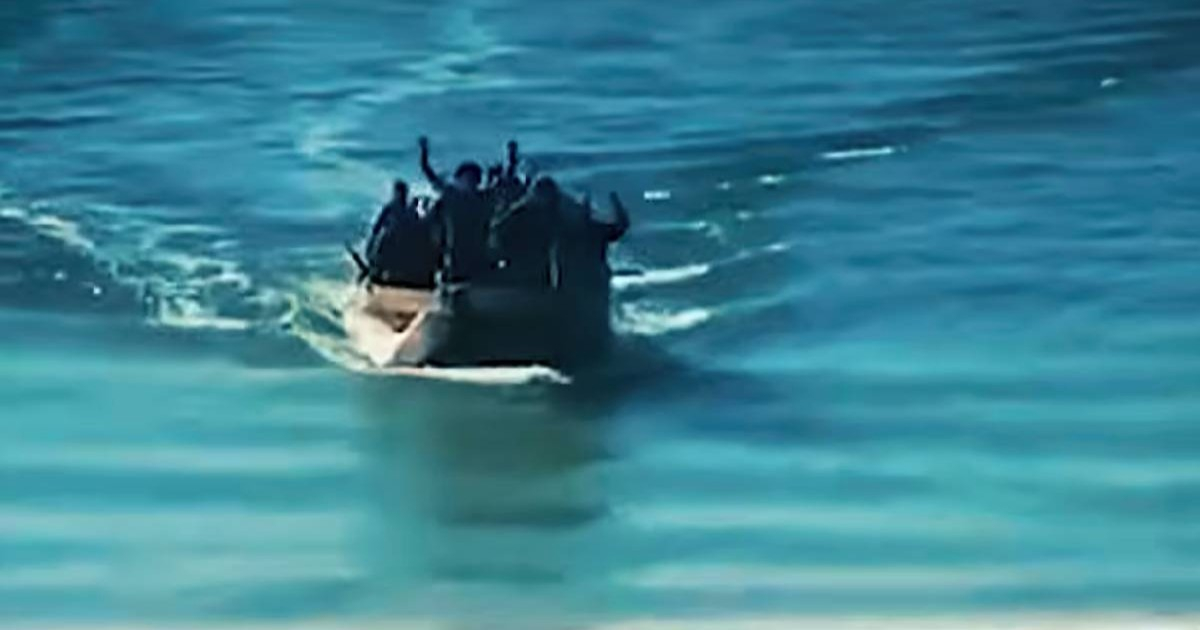
A recently released documentary on YouTube unveils in stark detail the tales of three Cubans who fled the island through different routes: by sea, and by air through Nicaragua and Mexico.
Episode 3 of the first season of Decoding Realities, a project by communicator Nayib Yara, runs for nearly 45 minutes and highlights the voices of Yaser, Dayana, and Lissette. Their narratives offer a raw, inside look at the contemporary Cuban exodus.
In a brief two-week window, Yaser made his decision. Alongside a group of 32 individuals, he secretly crafted a homemade metal raft over the span of two weeks on a hidden farm about 200 meters from the shoreline. The cost was $300 per person.
"There came a point where my frustration outweighed my ability to think rationally," he shares in the documentary. Despite juggling two or three jobs, he couldn't sufficiently support his family amid power outages, water shortages, and bleak prospects.
On the night of their planned departure, December 20, the police almost thwarted their escape. The group hid inside a sand truck to reach the shore undetected.
The raft, powered by a lawnmower engine, hit the water for the first time that night. Mid-journey, they realized the compass was faulty, resulting in 11 hours of drifting in circles. Yaser used his phone's GPS to guide them.
After enduring three nighttime storms and with his phone battery at a mere 3%, they finally spotted the beacon of Dry Tortugas in Florida. "When I saw the lighthouse, I thought... I've made it. I'm alive," he recalls.
The perilous and ever-changing migration routes from Cuba to the United States remain a significant issue. Stay updated on deportations, asylum, and everything related to U.S. immigration policies.
Dayana's Repeated Attempts
Dayana's journey wasn't successful on her first or even her second attempt. On her initial raft attempt, the Cuban regime’s Coast Guard intercepted them.
"They fired shots, tried to sink our boat; people jumped into the water, desperately trying to swim ashore. It was terrible," she describes.
The detained were taken to Mariel and interrogated like criminals. When the police demanded she sign a document pledging not to attempt escape again, she firmly refused: "You can leave. I won’t sign anything. I will keep trying until I make it."
Her second attempt followed the Nicaragua-Honduras-Guatemala-Mexico route, used by over 400,000 Cubans between 2021 and 2024. The passage cost $3,400. She made it to Mexico, but immigration authorities deceived her, placing her on a bus with promises of relocation only to take her directly to the airport instead.
"They bound the women’s hands in front and the men’s behind with zip ties... and didn’t remove them until the plane was airborne, heading back to Cuba," she recounts.
On her third try—this time costing $3,600—she crossed Mexico in a rescue boat, enduring a night and morning on the Pacific coast with a malfunctioning engine, finally reaching the U.S. border.
Lissette's Path to Freedom
Lissette traveled to Mexico alone, aided by a Canadian visa arranged by her son, who had sought political asylum in Canada after fleeing by sea. She sold all her furniture and belongings before leaving.
She spent eight months in precarious conditions, suffered a broken arm, and relied financially on her daughter in the United States until she secured an appointment via the CBP One application and crossed legally through Ciudad Juárez.
"In Cuba, we haven't lived; we've merely survived. Here, I have healthcare and medication. The treatment I receive is incredible," she states.
The three testimonies highlight the same root causes: power outages lasting up to 20 hours a day, food and medicine shortages, and wages that fail to meet basic needs.
Cuba faces nine consecutive years of population decline, and its GDP has plummeted by more than 23% since 2019, with a further contraction of 7.2% projected by 2026.
"I pray for the collapse of that dictatorship, so my country can breathe and be free," Dayana concludes in the documentary.
Understanding the Cuban Exodus
Why are Cubans fleeing the island?
Cubans are fleeing due to severe economic hardships, including frequent power outages, food and medicine shortages, and insufficient wages. These conditions drive many to seek better opportunities abroad.
What risks do Cubans face during their migration attempts?
Cubans often face dangerous sea journeys, interception by authorities, and potential deportation. Routes are perilous, with risks of arrest, deception by traffickers, and life-threatening conditions.
How has the Cuban economy impacted migration trends?
Cuba's prolonged economic decline, marked by a significant GDP drop, has exacerbated living conditions, prompting a rise in migration as citizens seek stability and prosperity elsewhere.