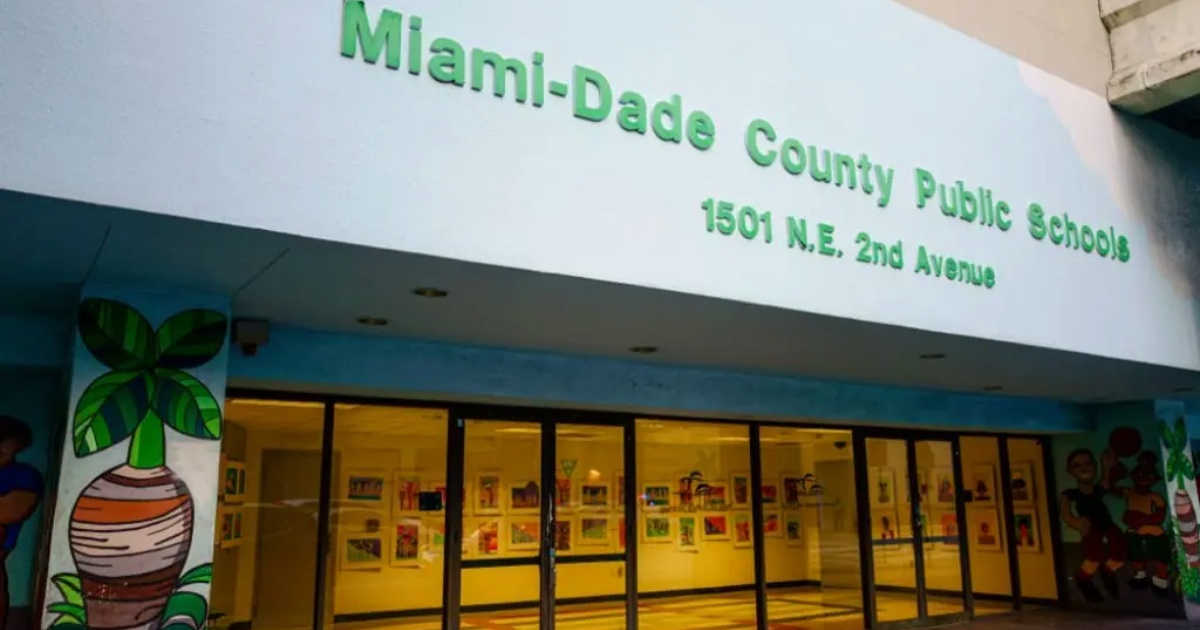
For the first time, Florida is allocating more state funding to scholarships for private school students than to the traditional and charter public schools in Miami-Dade, even though the latter serves nearly four times as many students.
This situation highlights the challenges of an educational funding formula that must support an expanding scholarship program while public school enrollment declines.
During the 2026-2027 school year, the state plans to allocate approximately $766 million in scholarships for about 82,470 private school students, compared to $737 million for 303,506 students in public and charter schools, according to budget documents from the Florida Department of Education, as reported by the Miami Herald.
This $29 million difference makes Miami-Dade the first major urban county in Florida where private school scholarships surpass the state's allocation for public school students.
Implications of the Funding Shift
The distribution amounts to about $8,000 per scholarship recipient, compared to less than $3,000 per public and charter school student, considering only state funds. However, these figures do not reflect the total educational spending per student. The state contributes roughly 25% of the resources allocated to Miami-Dade students, with local property taxes covering a substantial portion of the remainder.
The county receives around $2.2 billion from local taxes for education, which accounts for about 75% of the funding in this distribution. Therefore, these numbers do not indicate that private schools receive more total public money per student than public schools.
This shift is primarily driven by two opposing trends: the rapid growth of publicly funded school scholarships and the declining enrollment in traditional public schools. Scholarships, known as vouchers, allow families to use state resources for certain educational expenses at private institutions, including religious schools.
Reforming an Outdated Funding Model
The scholarship program expanded significantly in 2023 when Governor Ron DeSantis spearheaded a reform that extended access to these aids to nearly all Florida families, regardless of income, although some specific requirements remain. Since then, the number of beneficiaries has increased, making scholarships an increasingly significant part of the state’s education budget.
The issue lies with Florida’s funding formula, which was created in the early 1970s, long before the current scholarship expansion. Although it has been modified over the years, its mechanisms were not originally designed to distribute resources between two systems of this scale.
Alex Rizo, a Republican representative from Hialeah and former charter school principal, acknowledged that the model requires revision. "It's an old formula, and a lot has happened since it was created," he told the Miami Herald.
Other Florida counties have also faced budget challenges due to the growth of scholarships. During the 2025-2026 school year, five counties—Monroe, Collier, Martin, Sarasota, and Walton—had scholarship funding obligations exceeding their corresponding state allocations.
Debate and Proposals for Change
The funding disparities relate to property values and the proportion of educational funding derived from local taxes. In counties with higher property values, like Miami-Dade and Monroe, local contributions represent a particularly high share of school resources.
The Florida Legislature has already introduced adjustments to prevent these obligations from leaving certain districts with insufficient state resources. These include changes in local contribution calculations and mechanisms to provide additional funds when scholarships absorb the planned allocations. However, some officials believe temporary solutions won’t resolve the problem in the long term.
Sue Woltanski, a member of the Monroe School Board, suggests separating private school scholarship funding from the formula used to distribute resources to public schools. "Wouldn’t scholarships be better protected in a separate budget item where they are guaranteed state money and not dependent on the student population of their district?" she proposed.
Meanwhile, some private school scholarship advocates have different proposals. Danny Aqua, a representative of Teach Florida, suggests that scholarship funding should be calculated using the same general criteria applied to public school students, arguing that equal funding sources would benefit both the district and the scholarship program.
As these discussions unfold, they hold immediate implications for Miami-Dade families, including many Cuban families who use scholarships to enroll their children in private and religious schools. For those choosing these institutions, scholarships can significantly reduce the cost of private education.
FAQs on Florida's Education Funding Shift
Why is Florida allocating more funds to private school scholarships than public schools in Miami-Dade?
The shift is due to the rapid expansion of publicly funded scholarships and declining enrollment in traditional public schools. The state's funding formula, created in the 1970s, does not accommodate the current scale of these changes.
How does the funding impact public and charter schools in Miami-Dade?
Despite receiving less state funding per student compared to private school scholarships, public and charter schools rely heavily on local property taxes, which cover about 75% of their educational resources.
What are the proposed solutions to address the funding disparities?
Proposals include revising the funding formula, separating scholarship funding from public school budgets, and adjusting local contribution calculations to ensure fair distribution of state resources.