Those Cubans who acquired Spanish citizenship through the Grandchildren Law and are impacted by the provisional suspension of their voting rights now have a chance to participate in the ongoing legal process that has limited their electoral participation.
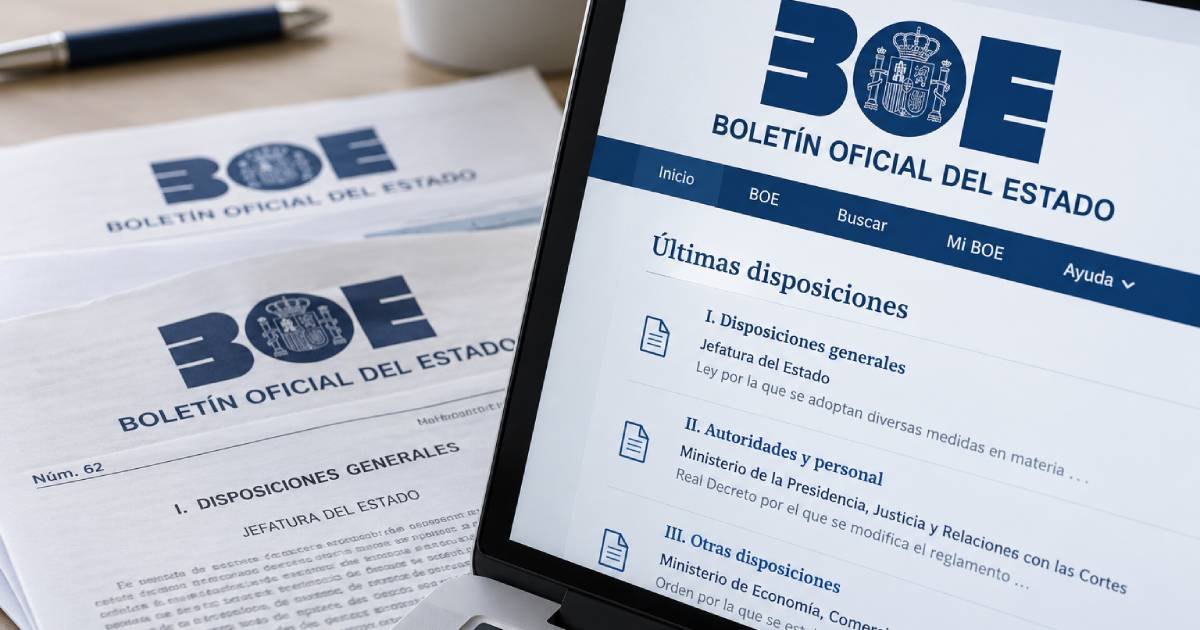
On Thursday, October 15, the Official State Gazette (BOE) announced a resolution that provides a five-business-day window for affected individuals to present themselves before the Spanish Supreme Court and submit objections to the provisional measures.
The official BOE document stipulates that appearances must be made with legal representation, as part of the proceedings examining the electoral implications of certain citizenships granted under the Democratic Memory Law.
The deadline begins on Friday, October 16, and based on the standard calculation of business days, it will conclude on Thursday, October 22, 2026.
This publication reflects an administrative resolution from October 14, which reiterates the operative part of a court order issued by the Supreme Court on October 12. It is not a new judicial decision made on that Thursday.
Eligibility and Process for Legal Appearance
The resolution targets individuals affected by the provisional measures concerning original Spanish nationality obtained through the option right in the first paragraph of section 1 of the eighth additional provision of Law 20/2022, commonly known as the Grandchildren Law.
This means that the electoral suspension does not universally affect all Cubans who acquired Spanish nationality through this legislation.
The Supreme Court specifies that those wishing to intervene in the proceeding may do so as co-defendants, appointing a lawyer and solicitor and simultaneously presenting any arguments they deem relevant regarding the provisional measures.
It is crucial to differentiate this procedure from processes conducted at Spanish consulates. Legal appearances must be made before the Supreme Court, not through consular claims.
The resolution also clarifies that submitting objections does not automatically reinstate voting rights.
Given the judicial nature of the deadline, interested parties should consult with a legal professional regarding submission conditions and applicable procedural timelines.
Continued Suspension of Electoral Rights
The Supreme Court ruling, whose operative part was published in the BOE, maintains the provisional measures affecting certain registrations in the Electoral Census of Absent Residents (CERA).
As a result, the Electoral Census Office is prohibited from enrolling new individuals affected by the suspension who are not yet registered in this census.
For those already listed in CERA, the suspension of their electoral rights remains in effect for the Spanish general elections on November 29, 2026.
However, the resolution allows an exception for those who can provide a certification issued under the responsibility of the consular registry officer, proving that as of August 1, 2026, they met the conditions required for descendants of original Spaniards who were exiled for legally established reasons and lost or renounced their Spanish nationality.
This certification must be made without applying the presumption of exile outlined in the administrative instruction of October 25, 2022.
The consular certification serves as a different mechanism from the judicial appearance option now communicated to those affected.
Consulates to Announce Supreme Court Resolution
The Supreme Court has also directed the Directorate-General for Spaniards Abroad and Consular Affairs to instruct consular registries that processed the affected files to publish the operative part of the court order on their notice boards.
The announcement should inform about the possibility of appearing in the proceeding with legal counsel and submitting objections.
Furthermore, the court ordered the publication in the Single Judicial Edictal Board.
These communications are significant for Spanish citizens residing outside Spain, including Cubans affected by the questioned naturalization process.
Recent Developments and Legal Context
On October 12, the Supreme Court rejected an appeal by the State's Legal Department and upheld the provisional suspension of voting rights for certain naturalized Spaniards.
Earlier, on October 8, another 48-hour window expired for presenting objections, granted to the parties already involved in the litigation.
The new period allows other impacted individuals to appear as co-defendants and present their arguments to the court.
The procedure originates from the contentious-administrative appeal 1013/2026, filed by the Iustitia Europa party against the Central Electoral Board's Agreement 204/2026, dated July 16.
On the same day, the BOE published a second Supreme Court resolution related to proceeding 1015/2026, initiated by the Vox party against the same Central Electoral Board agreement. In this instance, the court also upheld the provisional measures regarding the voting rights of certain Grandchildren Law beneficiaries.
Understanding the Grandchildren Law and Its Implications
What is the Grandchildren Law in Spain?
The Grandchildren Law, officially known as Law 20/2022, allows descendants of Spaniards who were exiled or lost their nationality for political reasons to obtain Spanish citizenship.
How does the Supreme Court's suspension affect voting rights?
The suspension impacts the ability of certain naturalized Spanish citizens to participate in elections, as their registrations in the Electoral Census of Absent Residents are affected.