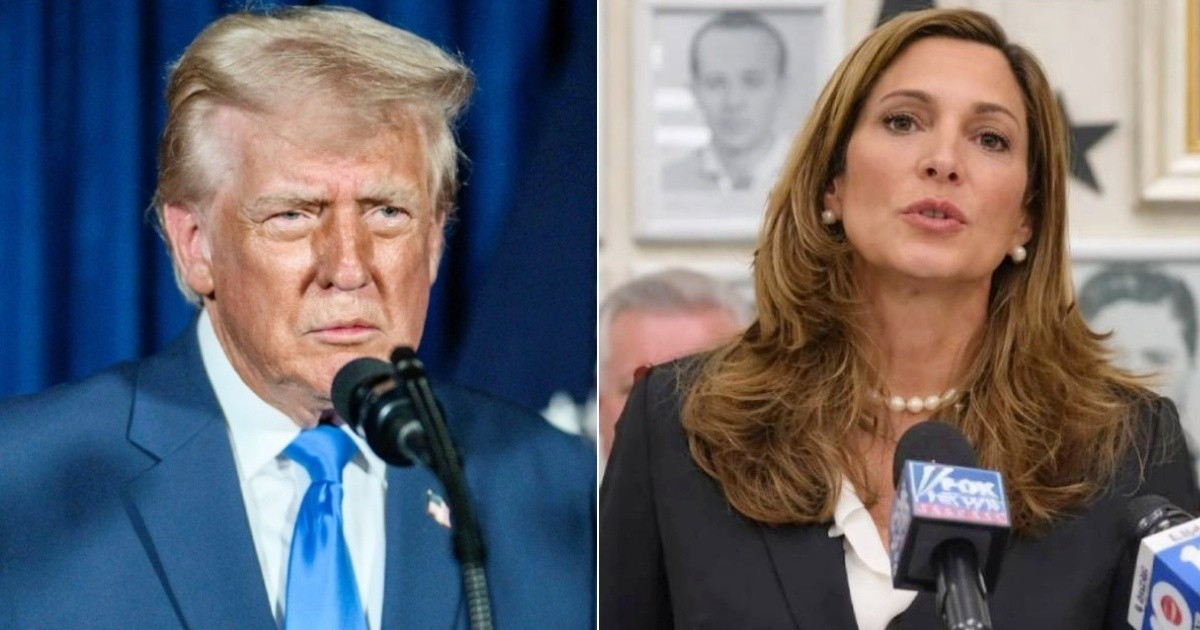
Republican Congresswoman María Elvira Salazar declared on Thursday that President Donald Trump is expected to sign a bill to regularize certain immigrants before his term ends. She also predicted that Cuba will be "without the Castros" once Trump leaves the White House.
Salazar made these remarks in response to questions from the EFE agency during an event hosted by Miami's Community News at Casa Cuba, as part of her re-election campaign for Florida's 27th District, one of the most competitive races in the November 3 elections.
"It's straightforward; the president understands it. I know discussions are happening, and within the next two years, before the president leaves the White House, there will be an immigration reform that addresses a 40-year-old issue. If anyone can accomplish this, it's Trump; you know him," stated the Cuban-American legislator.
The prospect of immigrant regularization and other immigration changes in the U.S. remains constantly evolving. Stay informed about these developments in our Immigration in the U.S. section.
Understanding the Dignity Act
Salazar advocates for the Dignity Act, a bipartisan initiative she reintroduced in July 2025 alongside Democrat Veronica Escobar. This legislation seeks to regularize immigrants without criminal records working in sectors like construction, agriculture, healthcare, hospitality, and food services.
"There is legislation, which is the Dignity Act, that I am presenting. It's balanced; it doesn't grant citizenship, but it allows them to stay with a 'Dignity' visa," explained the congresswoman.
Salazar further argued that 20% of the U.S. GDP relies on five industries that require intensive labor, much of which is undocumented.
Challenges Facing the Dignity Act
Currently, the Dignity Act has 40 co-sponsors in Congress—20 Republicans and 20 Democrats—and more than 100 endorsements from organizations. However, it remains stalled in committee, without having been put to a full vote. The Miami Herald reported in September that the bill has slim chances of becoming law.
These recent statements mark a significant shift in Salazar's tone from previous weeks. In September, she recorded a video outside the White House accusing Trump of going "too far" with mass deportations and warned that Hispanic voters "feel betrayed."
Trump responded by maintaining his formal support for Salazar, though he did not hide his displeasure: "María won only because of me," the president said, adding that she "softened a bit on the border." The Department of Homeland Security also responded firmly, stating there would be "no amnesty."
Now, with less than three weeks until the election, Salazar is moving away from confrontation, portraying Trump as the sole figure capable of pushing through historic immigration reform, in an effort to reconcile her moderate stance with the presidential support she needs to retain her seat.
Her Democratic opponent, Eliott Rodríguez, a former CBS Miami anchor and son of Cuban parents, is tied with her at 45%, according to an internal poll, although Decision Desk HQ estimated on Wednesday a 76% chance of Salazar retaining the district.
In the 27th District, where 73.5% of residents are Hispanic and over half were born outside the United States, immigration policy is the central focus of a campaign set to be decided on November 3.
Key Questions about the Dignity Act and Immigration Reform
What is the Dignity Act?
The Dignity Act is a bipartisan legislative proposal aimed at regularizing immigrants without criminal records who are employed in essential sectors, such as construction and healthcare, by providing them with a "Dignity" visa.
How does Salazar's recent stance differ from her past statements?
Recently, Salazar has shifted to a more supportive tone regarding Trump's potential role in immigration reform, contrasting with her earlier criticisms of Trump's deportation policies, which she described as excessive.
What are the chances of the Dignity Act becoming law?
Despite bipartisan support, the Dignity Act is currently stalled in committee and has limited chances of becoming law, as noted by The Miami Herald.