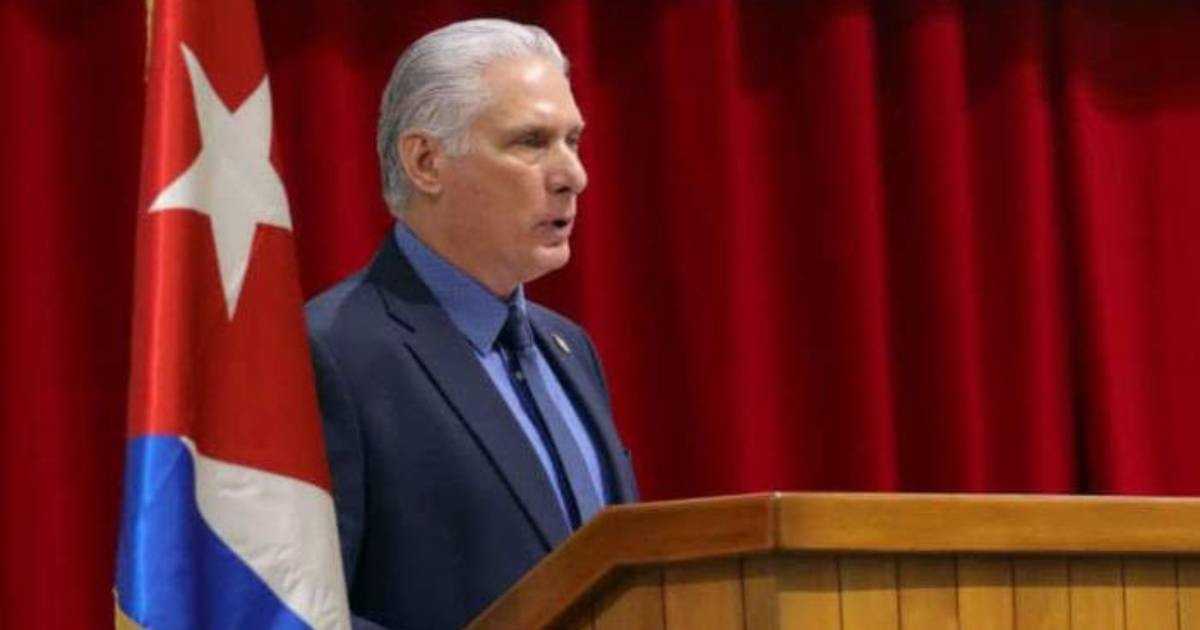
In the days leading up to the annual United Nations General Assembly vote on the Cuban embargo, scheduled for October 28, Cuban leader Miguel Díaz-Canel took to social media to criticize the United States, echoing familiar rhetoric from the Cuban regime.
Díaz-Canel, in a Facebook post, accused Washington of "desperately pressuring sovereign nations to support its genocidal actions," arguing that this "frantic campaign towards international leaders and officials demonstrates how isolated they are in their policy against Cuba."
The Cuban Foreign Minister, Bruno Rodríguez Parrilla, joined the chorus on Wednesday via X, targeting Secretary of State Marco Rubio: "nervous and anxious about yet another impending defeat at the United Nations, he is applying pressure and resorting to threats against Heads of State and Government from various countries to alter their vote," the Cuban diplomat remarked.
Despite presenting these claims as fresh accusations, the regime is following a well-trodden path. In October 2025, Rodríguez Parrilla held an extraordinary press conference to voice similar complaints about a "dishonest, slanderous campaign disrespecting the sovereignty of UN member states" by Washington ahead of that year's vote.
One documented instance of what the regime describes as "blackmail" involves Marco Rubio. The State Department confirmed Rubio's call to Salvadoran President Nayib Bukele on Monday, urging alignment with Washington's stance at the UN, including the Cuban issue.
Rubio argued that "the Cuban regime will not implement the reforms needed by the Cuban people as long as it believes it has the backing of the international community," according to sources cited by Infobae.
The regime's narrative contrasts starkly with a troubling reality: international support for Cuba at the UN has steadily declined. The resolution saw 187 votes in favor in 2024, dropped to 165 in October 2025—the lowest in over a decade—and barely reached 136 during a special session in July 2026.
In 2025, Argentina voted against the resolution for the first time under President Javier Milei, alongside Hungary, Israel, North Macedonia, Paraguay, Ukraine, and the United States. Many of these countries are expected to maintain their stance on October 28.
On the other side, more than 554 Cuban activists and organizations, including José Daniel Ferrer, Orlando Gutiérrez Boronat, and Jorge Luis García Pérez "Antúnez", issued a letter on Tuesday urging democratic governments to vote against or abstain, arguing that supporting the resolution aids the regime rather than the Cuban people.
This initiative, led by the Cuban Resistance Assembly and UNPACU, has garnered over 1,000 total endorsements.
The situation in 2026 is more challenging for Havana compared to previous years: the Trump administration has imposed more than two dozen sanctions since January, including an executive order restricting all fuel imports to the island.
On September 22, Trump labeled Cuba as a "completely failed state" at the General Assembly and disclosed that Rubio "is deeply engaged in negotiations and conversations with Cuba."
The annual UN resolution on the embargo, in place since 1992, is non-binding: its approval does not legally compel the United States to change its policy, rendering the vote a diplomatic gesture with little real impact on the Cuban populace, according to the opposition.
Understanding the UN Vote on Cuba
What is the significance of the UN vote on the Cuban embargo?
The UN vote on the Cuban embargo is a non-binding resolution that serves as a diplomatic gesture. While it shows international sentiment, it does not legally oblige the United States to alter its embargo policy.
Why has international support for Cuba declined at the UN?
Over the years, support for Cuba at the UN has waned due to various geopolitical shifts and changing perspectives on the effectiveness and impact of the Cuban regime's policies.
What role does Marco Rubio play in the situation?
Marco Rubio has been actively involved in advocating for a tougher stance against Cuba, including reaching out to other nations' leaders to align with the U.S. position at the UN.