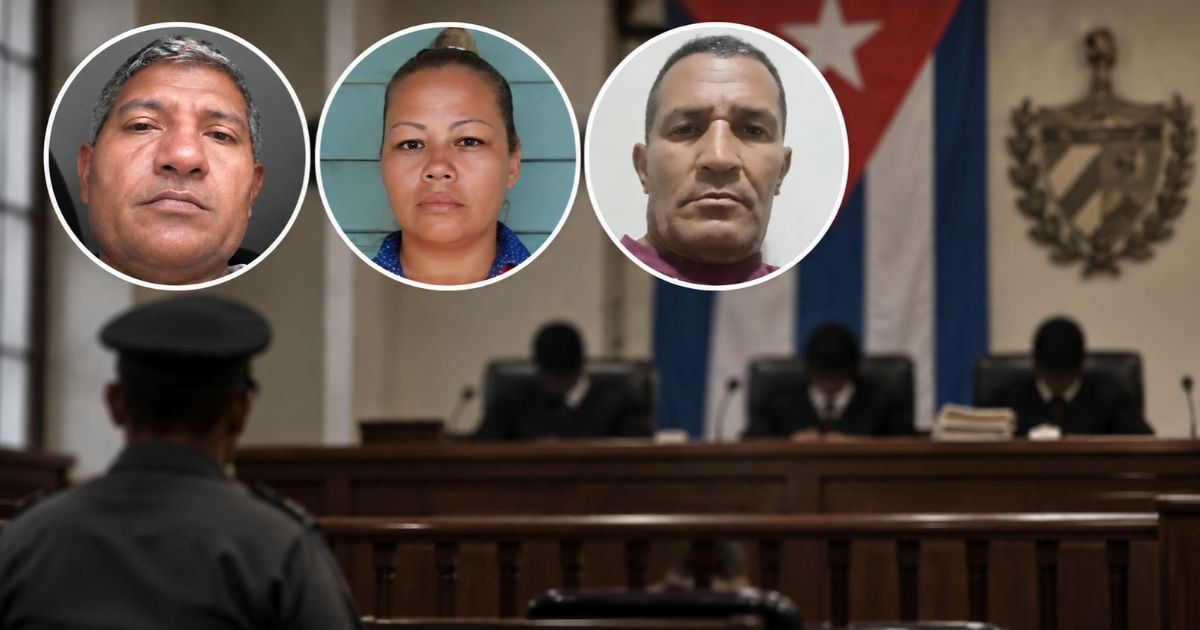
In a controversial move, the Provincial Prosecutor's Office in Granma has called for prison sentences ranging from five to ten years for four Cuban dissidents. The case, as detailed in an investigative report by independent outlet elTOQUE, includes accusations involving critical videos of the regime, WhatsApp messages, and phone top-ups.
The information is drawn from the preliminary conclusions of Case File 45/2025, dated July 21, 2026, which the news portal claims to have accessed. While the document outlines the prosecutor's requests, it does not amount to a verdict nor imply that these requests were made this week.
According to the investigation, the proposed sentences are ten years for Ariel Eugenio Arzuaga Peña; nine years for his wife, Yaquelín García Jaén; seven years for Daniel Barrios Figueredo; and five years for Yoalis Mayelin Figueredo Carbonell. They face charges of "propaganda against the constitutional order" and "public disorder."
The Accusations and Their Context
The prosecution also alleges connections to Cuba Primero, an opposition group based in Miami, listed by Cuba's Interior Ministry as a terrorist organization. However, the inclusion of this affiliation in the case file does not serve as judicial proof. The accusations stem from incidents reported between October and November 2024.
One of the main allegations against Arzuaga involves a video from October 23, 2024, where he criticizes the lack of food, water, and electricity, urging citizens to unite for political change. The prosecutor interprets these remarks as incitements to criminal activity, yet elTOQUE's analysis suggests they are merely government criticisms and calls for unity without advocating violence.
Digital Evidence and Alleged Organization Membership
Another video mentioned in the prosecution's case is a public denunciation by Arzuaga following his wife's arrest during a police raid. This act, according to the prosecutors, signals an attempt to spread information against the authorities. Additionally, digital communications play a significant role in the charges.
The prosecution claims the accused participated in two WhatsApp groups, "Fieles Valientes" and "Workshop for Freedom of Expression," discussing human rights issues. For Barrios Figueredo, the accusation includes sending protest videos via WhatsApp, which allegedly occurred in Bayamo on November 5, 2024.
Barrios' family maintains he was a bystander arrested after responding to a police summons. The report also includes two phone top-ups Barrios received in late 2024, which prosecutors argue are part of external financing, supported by certificates from Cuba's Telecommunications Company (Etecsa).
Implications of the Case
The case highlights the Cuban government's ongoing crackdown on dissent, using political expression, private communications, and personal behaviors as bases for legal action. The prosecutors seek eight years for Arzuaga Peña and García Jaén on charges of constitutional propaganda, adding public disorder penalties for a total of ten and nine years, respectively.
The process follows the arrest of three accused in November 2024, with Barrios detained on the 6th, García Jaén on the 8th, and Arzuaga Peña later that month. All three have been held without trial for nearly 23 months. The status of Yoalis Mayelin Figueredo Carbonell remains unclear.
García Jaén's arrest was condemned by legal aid organization Cubalex, citing alleged irregularities and lack of formal charges. Initially accused of "illicit food sales," she later faced charges of "incitement to crime." These charges differ from those in the July 2026 provisional conclusions.
In a recent development, the Granma Provincial People's Court dismissed a habeas corpus filed on García Jaén's behalf. The prosecutors are pushing for a trial in Santiago de Cuba's State Security Court, though no date has been set.
This case raises questions about the use of criminal law to suppress political expression and the extended duration of pretrial detention. Although Cuba's Constitution guarantees freedom of expression and peaceful assembly, international human rights instruments uphold the presumption of innocence and the right to a timely trial.
Similar charges have arisen in other recent cases, with prosecutors seeking ten-year sentences for young members of the El4tico project in Holguín for social media videos.
Key Questions on the Granma Dissidents' Case
What are the charges against the Granma dissidents?
The dissidents face charges of "propaganda against the constitutional order" and "public disorder."
What evidence is being used against the accused?
The prosecution cites critical videos, WhatsApp messages, and phone top-ups as evidence, along with alleged connections to the opposition group Cuba Primero.
How long have the accused been in pretrial detention?
The three main accused have been in provisional detention for nearly 23 months without trial.