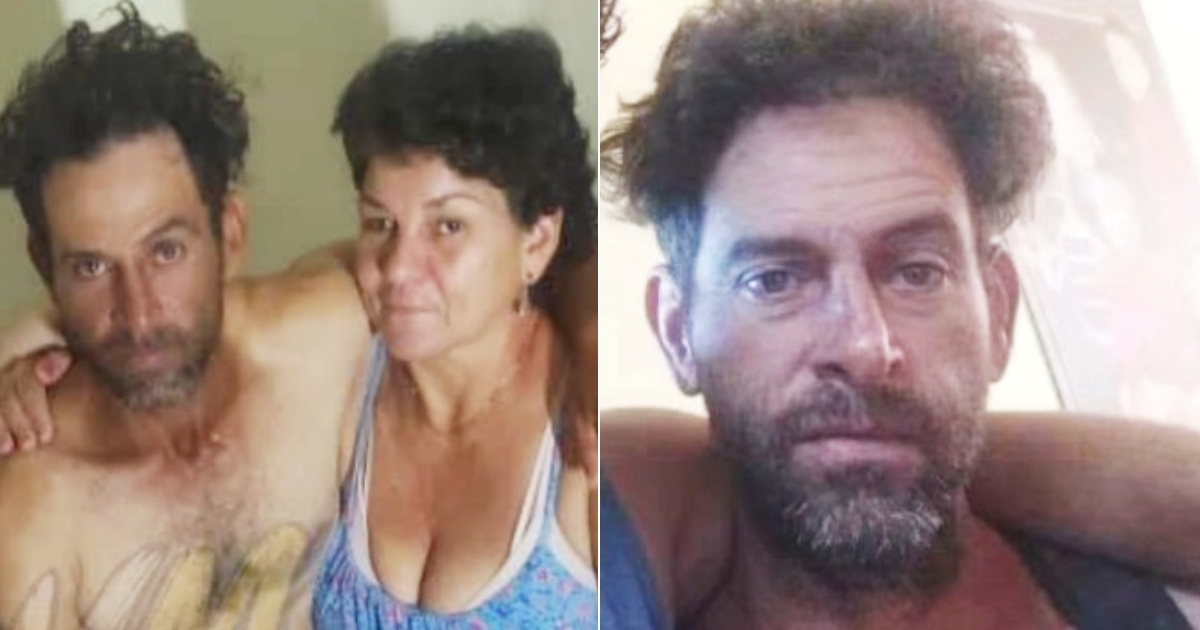
The first photographs of Enrique René Reyes Martínez back in Cuba surfaced this Thursday, confirming that the 38-year-old raftsman from Santiago is alive and in Havana after being returned by U.S. authorities.
These images were exclusively obtained by independent journalist Yosmany Mayeta Labrada, who also unveiled new details about the repatriation process based on accounts from family sources.
Safe and Sound in Havana
According to Mayeta, the photos were taken early Thursday. Contrary to rumors placing him in Cojímar, Enrique René is in another Havana municipality. The precise location remains undisclosed at the family's request to ensure his privacy and safety.
"He's alive, he's in Cuba, and his family knows his whereabouts!" Mayeta wrote when sharing the photos.
The pictures depicted a man in seemingly good health, although noticeably thin and sunburned. One of the photos showed him seated next to two women, likely relatives.
Journalist Javier Díaz from Univision 23 also shared an image of the repatriated raftsman, noting that Enrique René "thanks the Virgin of Charity" for his survival.
Perilous Journey and Return
Enrique René hails from the Los Cangrejitos neighborhood in Santiago de Cuba but had been living in Havana for several years. On October 8, he embarked from Cojímar beach on a makeshift raft composed of polystyrene blocks, wooden planks, and ropes, barely large enough for one person.
Four days later, he was found adrift about 16 nautical miles east of Key Biscayne by a couple returning from the Bahamas to Miami. "They saw something in the distance, approached, and realized it was a person on a raft," a family source told Univision. The couple alerted authorities via the VHF 16 maritime emergency channel, prompting a response from CBP Air and Marine Operations and the Coast Guard.
Mayeta reported, citing a family source, that Enrique René never set foot on U.S. soil. He was transferred from one vessel to another until he boarded the so-called mother ship and claimed he was treated well throughout the process.
Family's Mixed Reactions
On Wednesday night, family members confirmed his deportation to Mayeta and other media outlets. However, none of his direct relatives in Santiago de Cuba had managed to speak with him directly.
There were conflicting accounts regarding his intentions for setting out to sea. His aunt, Yelsa Reyes Fabelo, stated, "He was desperate to leave Cuba, but it wasn't intentional." A cousin, on the other hand, asserted that he indeed planned to emigrate but kept it from his family to avoid causing worry. Another relative recounted, "There was bad weather, a strong breeze that pushed him away. He was very distressed because he had many problems here."
Enrique René is the father of a young daughter who remains in Cuba. His family in Santiago is still hopeful for a reunion.
Challenges of Migration and Limited Legal Pathways
This case highlights the ongoing closure of legal migration avenues for Cubans: the Family Reunification Program stopped accepting new applications in December 2025, and additional restrictions on various family visa categories were announced by Washington in late September 2026.
In the same week of his rescue, the Coast Guard repatriated another six Cubans in two separate operations in the Florida Straits.
CBP Air and Marine Operations warned, "The open sea is unforgiving, and these journeys can quickly become fatal," adding that Enrique René "is fortunate to be alive." From 2021 to 2026, over 1.79 million Cubans left the island in the largest exodus in its history.
Enrique René's story underscores the complex dynamics of migration policy between Cuba and the United States. Stay updated on all developments in our U.S. Immigration section.
Frequently Asked Questions about Cuban Migration
What challenges did Enrique René face during his journey?
Enrique René faced a perilous journey on the open sea with a makeshift raft, enduring four days adrift before being rescued. The journey was fraught with risks, including harsh weather and the possibility of not surviving.
What are the current legal pathways for Cubans to migrate to the U.S.?
Legal pathways for Cuban migration to the U.S. have been increasingly restricted, with the Family Reunification Program closed to new applications since December 2025, and further visa restrictions announced in September 2026.