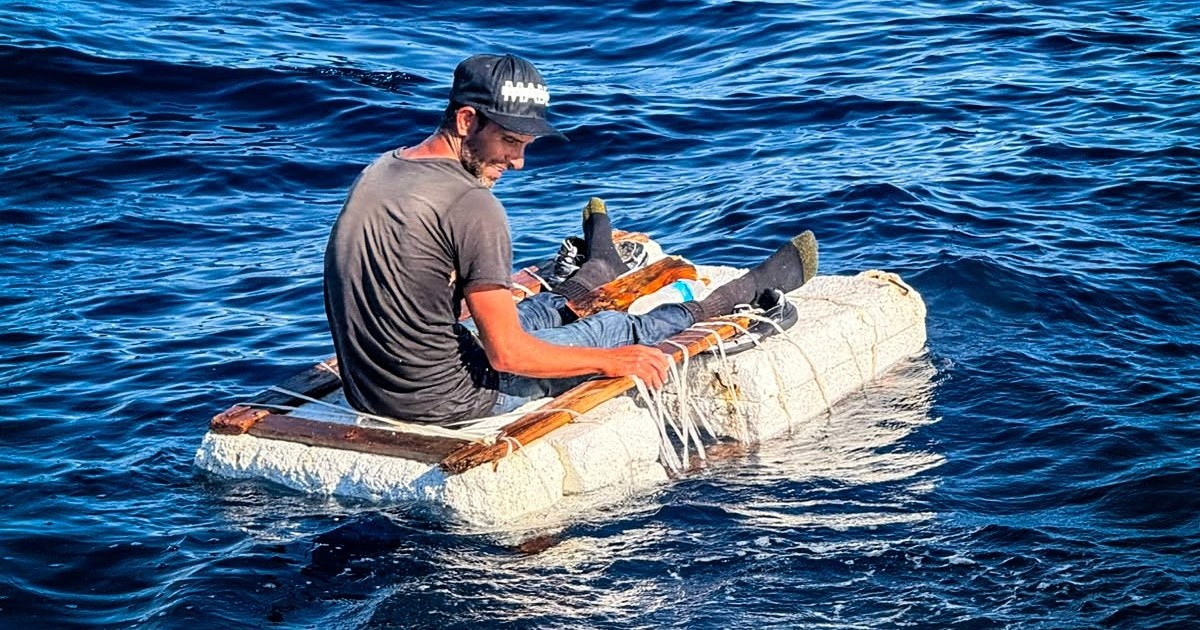
Enrique René Reyes Martínez, a 38-year-old Cuban national who was saved on Monday approximately 16 nautical miles east of Key Biscayne, has been deported back to Cuba this Wednesday. This was confirmed by journalist Javier Díaz through his social media, citing the man's own family as the source.
According to Díaz, Reyes Martínez "was always attended to on a Coast Guard vessel and was never taken to a hospital," meaning he never set foot on U.S. soil after being found adrift on a makeshift raft constructed from polystyrene blocks, wooden planks, and ropes.
Originally from Santiago de Cuba and living in Havana, Reyes Martínez set off from Cojímar Beach on Thursday, October 8, and was missing at sea for four days when a couple returning from the Bahamas to Miami spotted him and reported his location to authorities via the VHF 16 maritime emergency channel.
The Complex Landscape of Cuban Migration
This incident is part of a continually evolving migration scenario. Keep up with all the developments on deportations, rescues, and border policies in our U.S. Immigration section.
The rescue operation involved units from CBP Air and Marine Operations and the Coast Guard, who transported him to the USCGC Melvin Bell cutter for immigration processing.
Reyes Martínez's family gave conflicting accounts about the circumstances of his journey during interviews with Univision.
His aunt, Yelsa Reyes Fabelo, said, "He was desperate to leave Cuba, but it wasn’t intentional," attributing the voyage to an accident during a fishing trip worsened by bad weather.
However, a cousin argued that the journey was indeed intentional and that Reyes Martínez kept his plans secret to avoid worrying his family.
Reyes Martínez is the father of a young daughter who remains in Cuba.
Legal Hurdles and Accelerated Deportation
Immigration lawyer José Guerrero had previously warned Univision, before the deportation was confirmed, that Reyes Martínez would face expedited removal proceedings: "He is going to be transferred to a detention center and placed in an expedited deportation process because he is a foreign national arriving in the United States, in this case by sea."
Guerrero reminded that the "wet foot, dry foot" policy was abolished in January 2017, though he noted that not all migrants intercepted under these circumstances end up being deported.
This case comes amidst a week of heightened migratory activity in the Florida Strait. The Coast Guard repatriated six Cubans on Tuesday following two separate operations, and on October 8, the USCGC Raymond Evans cutter rescued three Cuban men southwest of Cay Sal, Bahamas, one of whom required specialized medical evacuation.
The gradual closure of legal emigration pathways partly explains the rise in risky journeys: the Cuban Family Reunification Program closed to new applications in December 2025, and on January 1, 2026, a presidential proclamation suspended the issuance of immigrant visas for Cubans outside the United States.
Just eleven days before the rescue, the U.S. Embassy in Havana issued a deterrent message with the slogan "Don’t risk your life, it’s not worth it," prompting a flood of critical responses from Cubans pointing out the impossibility of emigrating legally.
Between 2021 and 2026, more than 1.79 million Cubans have left the island in the largest exodus in its history.
Understanding the Risks and Realities of Cuban Migration
What are the main reasons behind the recent increase in Cuban migration?
The main reasons include the closure of legal emigration pathways, such as the Cuban Family Reunification Program, and the suspension of immigrant visas for Cubans outside the United States. These restrictions have led to a rise in dangerous, unauthorized journeys.
How has the U.S. policy regarding Cuban migrants changed in recent years?
The elimination of the "wet foot, dry foot" policy in January 2017 marked a significant change, as it previously allowed Cubans who reached U.S. soil to remain in the country. Now, most migrants intercepted at sea are subject to expedited removal proceedings.
What should Cubans consider before attempting to migrate by sea?
Cubans should be aware of the significant risks involved, including the possibility of deportation and the dangers of traveling by sea without proper safety measures. The U.S. Embassy in Havana has issued warnings against such journeys, emphasizing that they are not worth the risk.