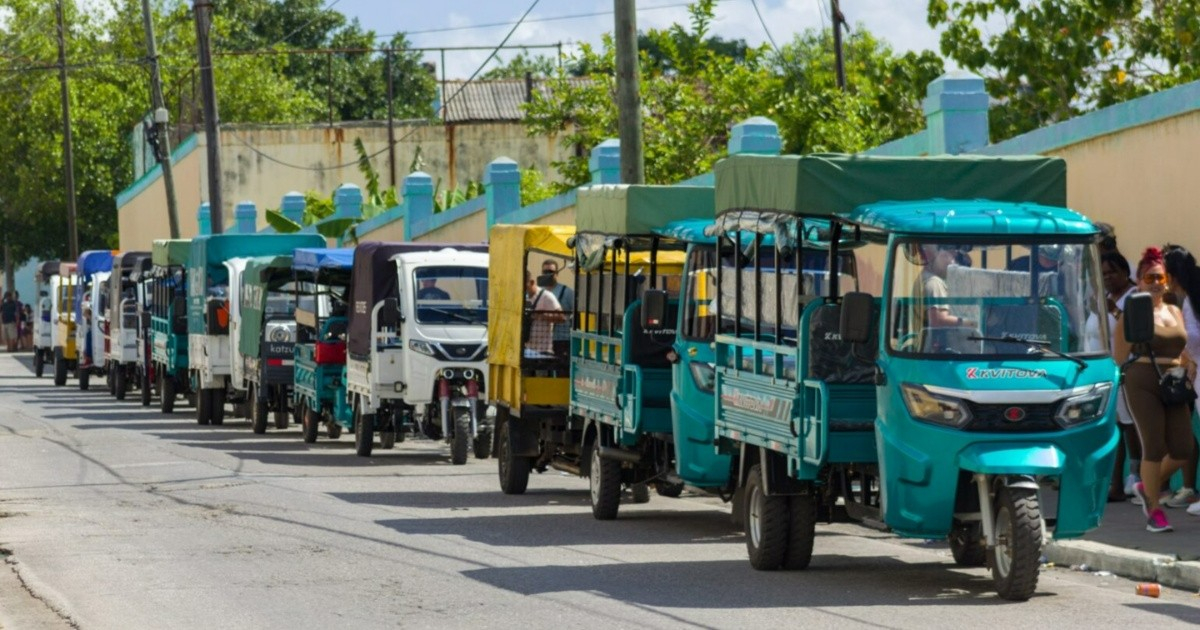
In a rare acknowledgment of the dire situation in Cuba, the state-controlled newspaper Girón reported on Wednesday that while public transportation options like buses and tricycles exist in Matanzas, they remain financially unattainable for most residents. This stark admission highlights a unique paradox in Cuba's ongoing transportation crisis: vehicles are available on the streets, but the average citizen simply can't afford the fares.
Journalist Humberto Fuentes Rodríguez illustrated this contradiction by focusing on the Viaducto intermunicipal bus station, once bustling with people waiting for nonexistent buses. Now, the buses are parked and waiting, while potential passengers remain stranded due to exorbitant costs.
"A bus ride that once cost 10 pesos now demands 700," Fuentes Rodríguez writes, pointing out that for those earning in Cuban pesos, their salary must stretch across essential needs like food and medicine, making the decision to travel more about survival than convenience.
Steep Prices and Limited Options
The same financial strain applies to tricycles, which emerged as an informal alternative when the state transportation system collapsed. In June, fares for electric tricycles in Matanzas doubled. Despite public outcry and subsequent government intervention to regulate prices—250 pesos between the Preuniversitario and Peñas Altas, 150 pesos to the Hospital Faustino Pérez, and 125 pesos to the Terminal or Versalles—these rates remain unaffordable. Given that the average daily wage in Matanzas is just 236 pesos, a single trip to Peñas Altas costs more than many earn in a full day of work.
Wider Economic Struggles
The national picture is equally grim. In August 2026, the average state salary in Cuba was 7,354 pesos per month, approximately nine dollars at the informal exchange rate, according to the National Office of Statistics and Information. The national minimum wage stands at 3,210 pesos monthly since July 2026.
This collapse stems from systemic issues. By September 2025, only 63 of the 129 provincial buses in Matanzas were operational—less than half the fleet. By February 2026, urban and intermunicipal services were nearly halted due to fuel shortages. The government attempted to address this by leasing state vehicles to private operators, bringing more vehicles onto the roads, but at market prices unaffordable for salaried workers.
Girón itself admits that basic economic logic has faltered: "Despite the increase in vehicles, fares remain too high for a significant portion of those who need to use them."
National Transportation Challenges
Across Cuba, state-run passenger transport plummeted by 93% between January and September 2025, falling from 40.2 million to just 900,000 users, as reported by the ONEI. A private route between Matanzas and Havana that began in July charges 3,000 pesos per trip, a price far beyond what most can afford.
"Residents of Matanzas have learned to live without transportation," the official article concludes. "Now, they must learn to live with its unaffordability," encapsulating the failure of a system that addressed the shortage of vehicles without solving the income deficiency.
Understanding the Transportation Crisis in Matanzas
Why are transportation costs so high in Matanzas?
Transportation costs in Matanzas have skyrocketed due to economic mismanagement and systemic failures, including fuel shortages and a reliance on market-driven pricing for leased state vehicles.
What alternatives do residents have for transportation?
Residents have limited alternatives, such as electric tricycles, but even these options have become unaffordable for many due to recent fare increases.
How does the current situation impact daily life in Matanzas?
The transportation crisis forces residents to make hard choices between essential expenses and travel, significantly hindering their mobility and access to services.