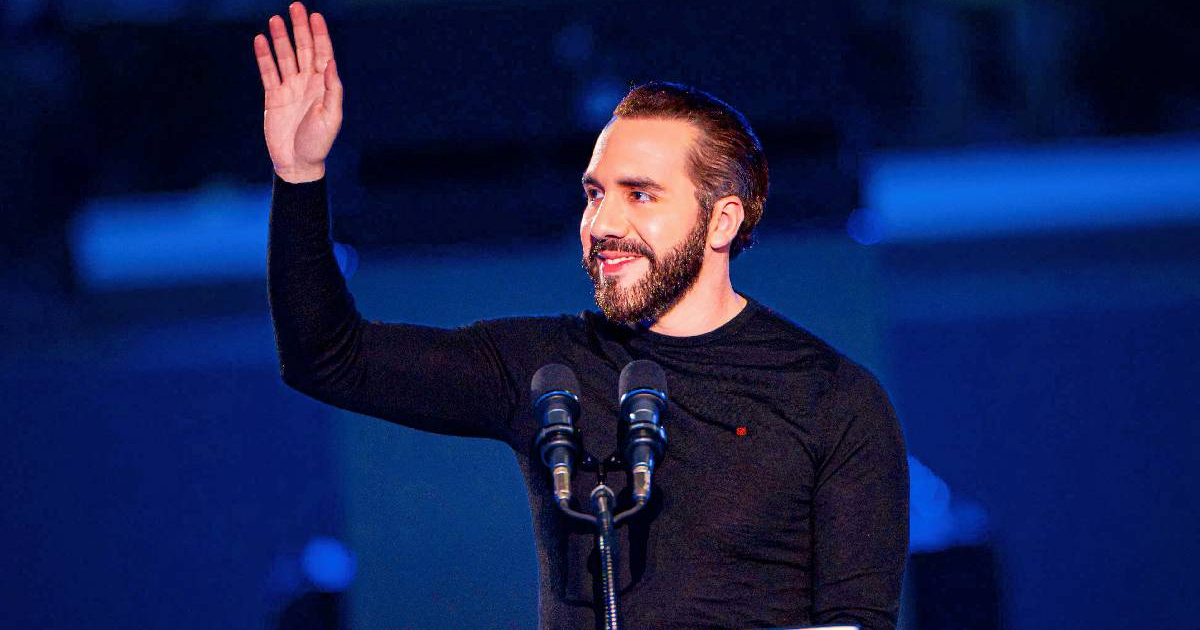
El Salvador's President, Nayib Bukele, announced on Wednesday that the country is on a trajectory to becoming the safest in the world. This assertion is supported by a historic drop in homicides, with the Attorney General's Office reporting only 49 murders so far in 2026.
Bukele responded on social media platform X to a post highlighting the Central American nation's homicide rate of 0.97 per 100,000 residents up to October, translating to 48 deaths. "Although crime rates are already at extremely low levels, we are reducing them even further. On track to becoming the safest country in the world," he stated.
This figure starkly contrasts with the country's recent past. In 2015, El Salvador recorded over 6,600 homicides, with a rate of 103 per 100,000 inhabitants, among the highest globally, driven by gangs such as MS-13 and Barrio 18. When Bukele assumed office in mid-2019, the rate was about 50 per 100,000 inhabitants.
Impact of the Emergency Regime
The decline accelerated after the enactment of the emergency regime in March 2022, which suspended constitutional guarantees, resulting in over 92,000 arrests. The homicide rate decreased from 7.8 that year to 2.4 in 2023, then to 1.9 in 2024, and finally to 1.3 in 2025, the lowest ever recorded in the Americas.
At the end of September, Foreign Minister Alexandra Hill addressed the UN General Assembly, noting the drop from 103 to 1.3 homicides per 100,000 inhabitants. However, fact-checkers have pointed out inconsistencies in the timeline used during that presentation.
Shifts in Security Strategy
Bukele's statement comes amid significant shifts in his security policies. On the same Wednesday, he announced that a government commission is evaluating the possibility of granting conditional release to up to 46,000 detainees under the emergency regime, following discussions with U.S. Secretary of State Marco Rubio. This announcement marks a departure from Bukele's previously staunch position that detainees "would never be released."
Human rights organizations have reported over 500 deaths in state custody since the emergency regime began, with 90% of the deceased lacking a conviction at the time of death. In March 2026, a UN expert group concluded there are reasonable grounds to believe crimes against humanity, including torture and forced disappearances, are occurring in the country.
Cautious Optimism or Political Rhetoric?
The claim of being "the safest in the world" remains a political statement rather than an internationally certified result. Safety also encompasses thefts, disappearances, police violence, and respect for human rights—areas critics of the model argue remain unaddressed.
Bukele, who secured his party Nuevas Ideas' presidential nomination last July, is aiming for a third consecutive term in the February 28, 2027 elections, enabled by a 2025 constitutional amendment allowing indefinite reelection.
FAQs on El Salvador's Security Developments
What measures has El Salvador taken to reduce crime rates?
El Salvador has implemented an emergency regime since March 2022, which suspended certain constitutional guarantees and led to over 92,000 arrests, significantly reducing the country's crime rates.
How has the international community reacted to El Salvador's security policies?
The international community, including human rights organizations and UN experts, has raised concerns about potential human rights violations, including reports of torture and forced disappearances under the emergency regime.
Is El Salvador's claim of being the safest country internationally recognized?
No, El Salvador's claim to be the safest country is a political assertion and has not been officially recognized on an international level. Critics argue that other safety dimensions need improvement.