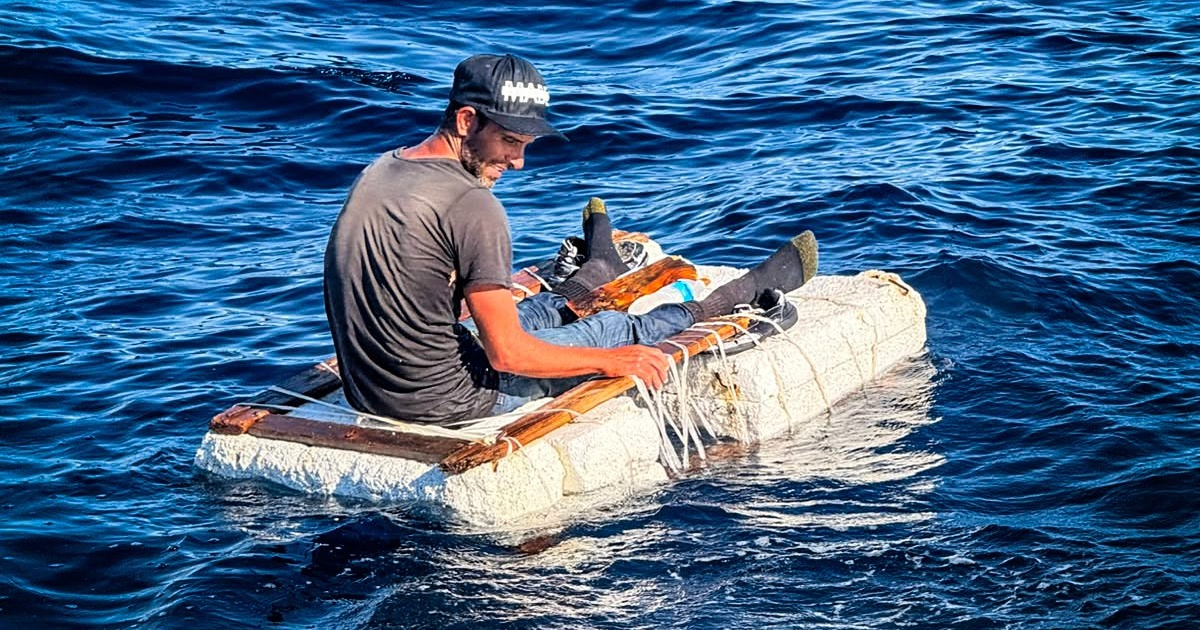
Enrique René Reyes Martínez, a 38-year-old originally from Santiago de Cuba, has been identified by his family as the man rescued on Monday from a makeshift polystyrene raft approximately 16 miles east of Key Biscayne, Florida. He had reportedly been missing at sea for four days.
His identity was confirmed by his relatives to independent journalist Yosmany Mayeta Labrada, who delved into the case after the U.S. authorities released images of the dramatic rescue.
Reyes Martínez hails from the Los Cangrejitos neighborhood in Santiago de Cuba, but had been living in Havana for several years. According to his family, he departed on Thursday morning from Cojímar beach, and they lost all contact with him thereafter.
The disappearance of Reyes Martínez was initially reported by Niover Licea from the page "Nio Reporta un Crimen," who then alerted Mayeta Labrada about the possibility that he was the man discovered off the Florida coast.
Conflicting accounts have emerged regarding how he ended up adrift at sea. His immediate family claims he went fishing and was swept away by a storm. Meanwhile, journalist Javier Díaz from N+ Univision 23 reported that other acquaintances believe Reyes Martínez attempted to leave Cuba intentionally to emigrate, and was allegedly detained by Cuban authorities weeks before his disappearance. None of these statements have been independently verified.
The rescue took place on Monday, October 12, when a boater spotted the Cuban on a small, improvised structure made of polystyrene blocks, wooden planks, and ropes, just barely sufficient to keep a person afloat.
The witness alerted authorities via the VHF 16 marine emergency channel. Units from the Air and Marine Operations of the U.S. Customs and Border Protection (CBP) and the U.S. Coast Guard responded promptly.
Miami-Dade Fire Rescue paramedics assessed Reyes Martínez, determining he did not require emergency medical care. He was later transferred to the USCGC Melvin Bell for immigration processing.
U.S. authorities emphasized the Cuban man's luck in surviving and issued warnings about the dangers of traveling in such fragile vessels.
Since the repeal of the "wet foot, dry foot" policy in January 2017, reaching U.S. shores no longer assures Cubans the right to legally remain in the country. Those intercepted at sea may face repatriation procedures, although there are protections for individuals expressing a fear of persecution or torture.
FAQs about Cuban Migration and U.S. Policies
What happened to the "wet foot, dry foot" policy?
The "wet foot, dry foot" policy was repealed in January 2017, ending the guaranteed pathway for Cubans who reached U.S. soil to remain legally in the country.
What are the risks of traveling in makeshift rafts?
Traveling in makeshift rafts poses significant dangers, including the risk of drowning, dehydration, and exposure to harsh weather conditions.
What procedures exist for Cubans intercepted at sea?
Cubans intercepted at sea may undergo repatriation processes, but there are protections for those who express fear of persecution or torture.