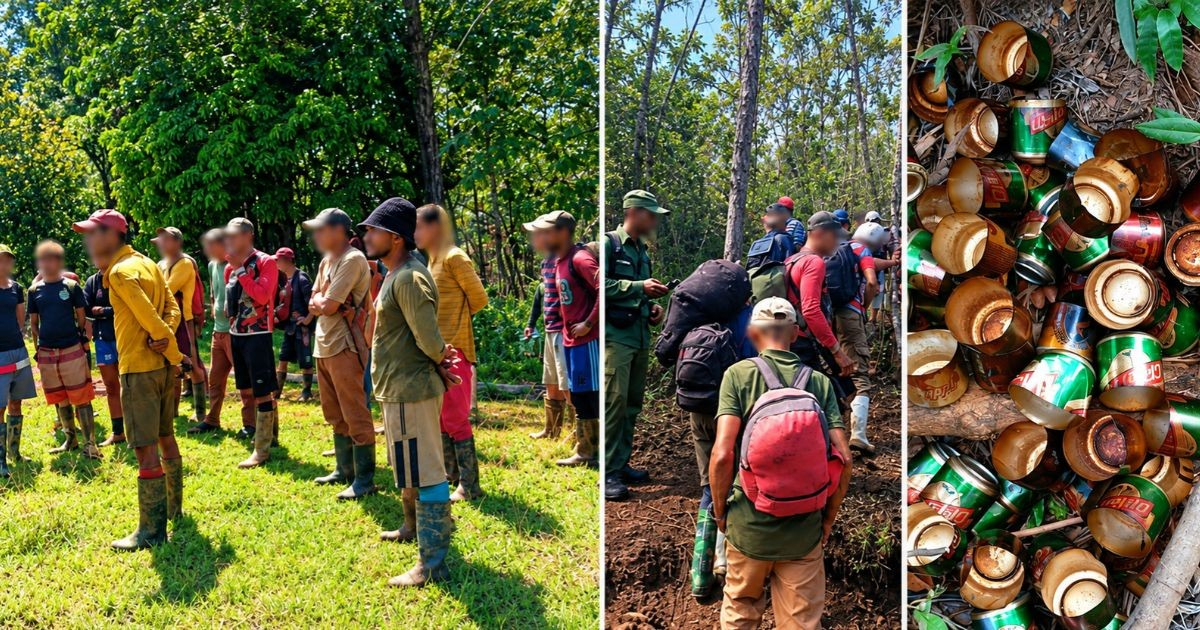
Authorities have detained more than 60 individuals in a crackdown led by the Ministry of the Interior (MININT) targeting alleged illegal mining activities in El Yarey, a region within the Yateras municipality, Guantánamo province. This information was released on Tuesday by a pro-government Facebook profile.
The social media post, which included photographs of the operation, cited accounts from members of Yateras' Social Policy group concerning the arrests. These individuals are reportedly connected to illicit extraction activities occurring along a local riverbank and in the area known as El Yarey.
According to the post, the operation was spearheaded by MININT forces from the area, with assistance from other unnamed officers and collaborators. The report highlighted that most of those pictured are young people, but no specific ages or residential details were provided. Their identities and the specific circumstances of their arrests remain undisclosed.
The report mentioned that some detainees might face legal proceedings for alleged crimes such as soil contamination and disobedience, while others could be subjected to preventive measures based on their individual circumstances and any previous involvement in such activities.
It's important to note that being detained doesn't equate to being guilty. The mentioned offenses and measures are part of preliminary information from a source linked to the official narrative.
The same profile pointed out a recent violent incident in El Yarey involving an individual allegedly connected to illegal mining practices. This person reportedly sustained injuries and is receiving medical care.
Illegal gold mining has previously been the focus of law enforcement and judicial actions in Guantánamo, particularly in Yateras. In September 2025, five Yateras residents were sentenced for soil contamination related to illegal gold mining, as reported by the state-run newspaper Venceremos. Unlike the current operation in El Yarey, that case had already gone through the judicial process, with sentences ranging from one year and six months to two years and seven months of imprisonment.
Informal mining has also raised environmental concerns in Cuba's eastern protected areas. In July of this year, a forest fire affected approximately 600 hectares of the Alejandro de Humboldt National Park. Authorities had previously identified illegal mining as a threat to the park's ecosystems, though the fire's cause remains under investigation.
The dangers of informal mining extend beyond environmental damage. In Las Tunas, a recent report warned of potential mercury poisoning due to artisanal gold extraction in Jobabo. A toxicology specialist noted neurological and renal impairments among individuals exposed to mercury, a substance used in some artisanal methods to separate gold from other materials. Without proper handling, mercury can contaminate soil and water sources, endangering the health of those who come into contact with it.
Key Questions About Illegal Mining in Cuba
What is the focus of the recent crackdown in Guantánamo?
The recent operation in Guantánamo targets illegal mining activities, particularly in the El Yarey area of Yateras municipality.
What are the potential legal consequences for those detained?
Detainees could face charges of soil contamination or disobedience, with some possibly subjected to preventive measures depending on their individual circumstances.
What environmental risks are associated with illegal mining in Cuba?
Illegal mining poses environmental threats, including contamination of soil and water sources, and risks to ecosystems, as seen in the Alejandro de Humboldt National Park.
How does mercury use in mining impact health?
Mercury, used in some artisanal mining techniques, can cause neurological and renal damage, and contaminate soil and water, posing significant health risks.