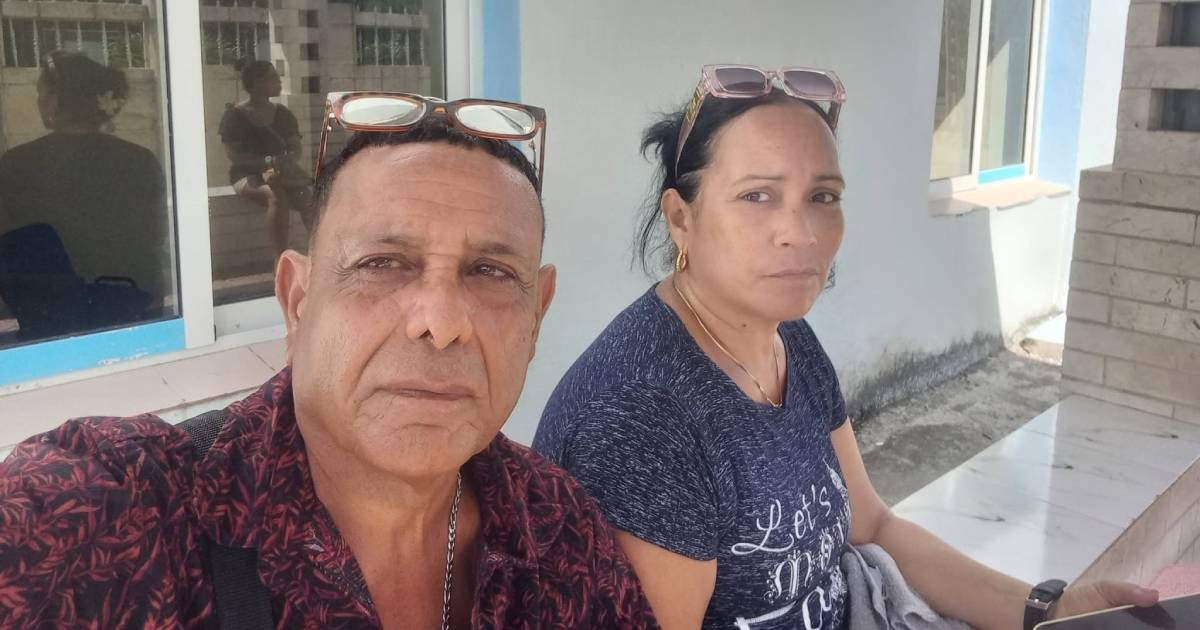
Independent journalist Yunia Figueredo has accused Cuban State Security agents of threatening to prevent her young daughter's surgical procedure if she continues her independent journalism work in Cuba.
The threat was allegedly made on Tuesday during an interrogation at Villa Marista, the State Security headquarters in Havana. Figueredo and her husband, writer and journalist Frank Correa, were taken there after being detained in Jaimanitas.
Figueredo reported to the Cuban Institute for Freedom of Expression and the Press (ICLEP) that a female officer, identified as Major Hilda, warned her, "Your daughter will never be able to have the surgery if you keep engaging in counterrevolutionary activities."
The officer also reportedly threatened to jeopardize her eldest daughter's university enrollment while questioning her about an open case concerning her alleged involvement in protests against power outages in the Havana neighborhood of Jaimanitas.
The couple was stopped by a police patrol around 8:30 a.m. in the Playa municipality, as initially reported by Figueredo on her Facebook page. The arrest was justified by the authorities due to Figueredo's absence from a mandatory police appearance on October 10.
At Villa Marista, they were separated and interrogated individually. Figueredo stated that she was held for approximately five and a half hours without access to water or restroom facilities, all while unaware of her husband's situation.
Correa revealed that he was confined for over two hours in a roofless cell known as a "solera." He also reported threats of travel restrictions and pressure to quit independent journalism and leave Cuba, as noted by the independent media outlet CubaNet.
The couple was released around 2:30 p.m., but transportation issues delayed their return home until 5 p.m. During this time, their daughters were left alone at home, without electricity or phone communication.
This is not the first time the couple has reported such harassment. ICLEP documented 22 incidents of persecution against them between April 2025 and September 2026, including surveillance, arrests, and communication restrictions.
One previous incident involves their detention in July 2025 on their way to a reception at the U.S. Embassy, where they were held incommunicado for more than 16 hours.
The Cuban Observatory for Freedom of Expression (OCLE), part of ICLEP, recorded this new case under the categories of "Arbitrary Detention" and "Attacks, Threats, and/or Psychological Aggression," demanding that no medical needs of their daughters be used as tools for political blackmail.
Due to the persistent harassment of the family, ICLEP requested precautionary measures from the Inter-American Commission on Human Rights (IACHR) on September 9 to protect Figueredo, Correa, and their two daughters.
The request, submitted under Article 25 of the IACHR's Rules of Procedure, aims to ensure their personal safety and end the detentions, threats, movement restrictions, and reprisals related to their independent journalism activities.
Despite the reported threats, Figueredo reaffirmed their commitment to stay in Cuba and continue their work: "We will neither surrender nor leave."
Understanding the Threats to Independent Journalism in Cuba
What actions have been taken against Yunia Figueredo and Frank Correa?
They have faced multiple incidents of harassment, including arbitrary detentions, threats, and restrictions on their communication. These actions are part of an ongoing effort to suppress their independent journalism.
How has the international community responded to their situation?
The ICLEP has sought intervention from the Inter-American Commission on Human Rights to protect the family and ensure their safety, highlighting the international concern over these human rights violations.
What are the potential consequences for their daughters?
Their daughters face threats to their educational opportunities and medical needs, which are being used as leverage against their parents' journalistic activities.