The Cuban Electric Union (UNE) recently issued a warning on social media, specifically on Facebook, highlighting the dangers of stealing dielectric oil from transformers. "It's not just equipment that suffers; lives are at stake," the post declared.
Their explanation outlines specific repercussions: entire communities left without power, crucial medications losing refrigeration, compromised medical equipment, and increased risks for both children and the elderly.
However, this line of reasoning leads to an unasked question: if disabling a transformer endangers lives, what about those responsible for allowing the deterioration of the National Electrical System (SEN), which is supposed to supply the entire nation?
Systemic Failures Beyond Theft
The concerns raised by the UNE are also present when electricity is absent due to planned outages, delayed maintenance, frequent breakdowns, insufficient generation capacity, and overall system failures. For patients relying on medical devices or medication preservation, the institutional accountability behind a blackout does not mitigate its impact.
Deferred Maintenance and Known Decay
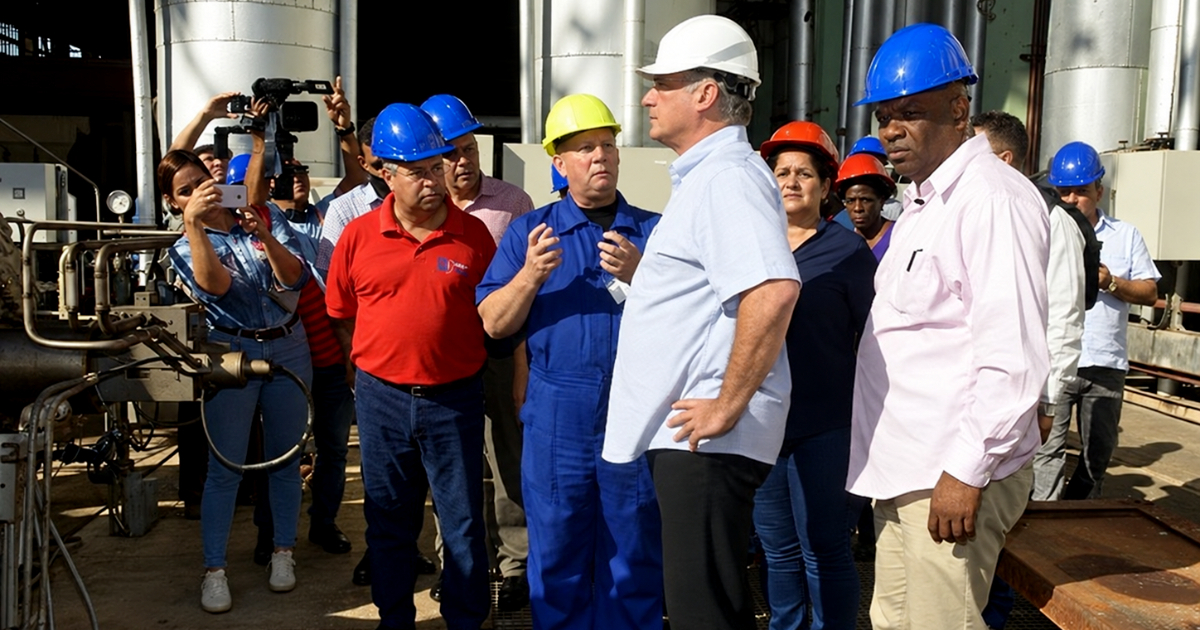
The Antonio Guiteras thermoelectric plant serves as a well-documented example. In May 2026, its director, Román Pérez Castañeda, acknowledged that the last major maintenance was conducted in 2010, and the plant needed at least 180 days for an overhaul. However, the intervention planned for late 2025 was postponed by Minister Vicente de la O Levy, citing temporary issues.
By June, Pérez Castañeda admitted the absence of parts necessary for an extensive emergency repair. Workers were forced to continue locating and selectively repairing the most threatened sections of the boiler. Authorities were aware of the critical needs of this essential facility. Nevertheless, the country found itself in a situation where stopping the plant for repairs was necessary, yet lacked the capacity to replace its generation output.
Misplaced Priorities and Investment
Efforts to expand the system also remained unfulfilled. In September 2022, Deputy Minister Tatiana Amarán Bogachova explained that Cuba could not activate a Russian credit line of 1.2 billion euros for four 200 MW blocks due to the absence of the required advance payment. Amarán Bogachova noted that the government prioritized other matters but did not specify which.
Official statistics reveal these decisions. In 2024, activities primarily associated with tourism accounted for 37.4% of investments, as per Pedro Monreal's analysis of ONEI data. Business services, real estate, and rental activities received 24,907 million CUP; hotels and restaurants another 11,936.5 million. Public health and social assistance received a mere 1,977.4 million, while hotel occupancy remained at 23%.
Although in the first half of 2025, the weight of investments in electricity, gas, and water increased to 33.6%, this reorientation does not erase previous priorities or their accumulated consequences.
Broader Impact on Essential Services
The electrical crisis extends to other services. Antonio Rodríguez Rodríguez, president of the National Institute of Hydraulic Resources, acknowledged that 87% of the population supplied by the water system depends on the SEN. He also admitted to increased leaks and reduced fuel allocation for repairs. Thus, the lack of electricity jeopardizes both water supply and sanitation.
Accountability in Question
The regime continues to blame the crisis on the "blockade," while electric companies point fingers at consumption habits. In August 2025, the Las Tunas Electric Company blamed the use of air conditioners and electric stoves for overloading transformers. In July 2026, the Holguín company warned that reconnecting devices simultaneously post-blackout could trigger another failure.
While technical recommendations may be necessary, demanding restrictions from users does not replace the obligation to maintain an infrastructure capable of meeting their needs. Neither does decrying theft account for decades of insufficient investments, postponed repairs, and inefficient management.
Even Díaz-Canel admitted in June 2025, "We haven't been efficient in managing the limited resources available," acknowledging corruption and administrative inefficiency.
The contrast is stark when it comes to personal consequences: a Cuban received a 10-year prison sentence for stealing 40 liters of dielectric oil in Jovellanos, while four men were sentenced to 15-20 years for taking 140 liters and halting Havana's Dairy Complex.
Despite these severe penalties, no resignations or investigations have been made public to hold senior leaders accountable for the accumulated deterioration of the SEN.
While those damaging a transformer face trials and exemplary sentences, those expected to prevent the system's collapse see their admissions of inefficiency fail to result in political consequences. The suffering of the population serves to justify punishment for some, but not to demand accountability from those in power.
UNE concludes its post by urging that the benefit of a few thieves should not cause the suffering of many.
If the state-run company demands accountability for leaving a community powerless, it should also require the same from those responsible for safeguarding the entire country's power supply. The hospitals, children, and elderly that the Electric Union invokes deserve accountability to be scrutinized in the offices where resource decisions are made.
Understanding the Crisis in Cuba's Electrical System
What are the consequences of stealing dielectric oil from transformers in Cuba?
The theft of dielectric oil can lead to communities losing electricity, medications not being refrigerated, medical equipment becoming compromised, and increased risks for children and elderly individuals.
How has the Cuban government prioritized its investments?
In 2024, the Cuban government focused 37.4% of its investments on tourism-related activities, with much less allocated to public health and social assistance. This misprioritization contributed to ongoing issues in the electrical and water systems.
What are the broader impacts of the electrical crisis in Cuba?
The electrical crisis affects other essential services, such as water supply and hygiene. The majority of the population relies on the electrical system for water, which is compromised by power outages and insufficient maintenance.