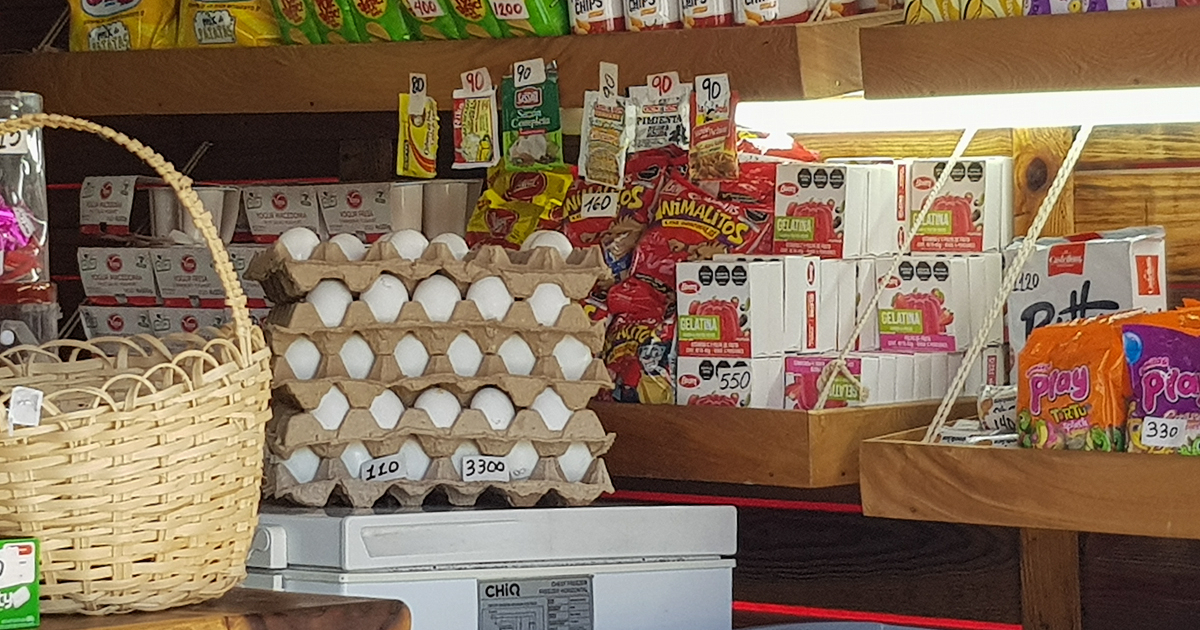
In Cuba, price controls have inadvertently fostered corruption, driven goods to the black market, and failed as a tool to curb inflation, according to economist Ayuban Gutiérrez Quintanilla, whose analysis was featured on the state-run website Cubadebate this Tuesday.
Questioning State Policies in Economic Management
In his article titled "Should Prices Be Freed or Capped in Cuba? Ten Essential Questions," Gutiérrez critiques the administrative restrictions imposed on trade, warning that these state decisions might exacerbate the very economic imbalances they aim to address.
Gutiérrez argues that such controls demand substantial institutional oversight and, when enforced amidst scarcity and income disparities between the state and private sectors, they create an environment ripe for irregularities.
"These restrictions end up pushing goods and services into informal markets," the author notes, adding that such a scenario "leads to increased corruption."
The Ineffectiveness of Price Controls
The economist explains that vendors might either shift regulated products to the informal market or continue selling them in official outlets while disregarding the set prices. In both cases, consumers face a limited supply and prices that remain beyond governmental control.
Gutiérrez asserts, "In Cuba, price caps have only been effective for a few weeks at best," attributing this failure to weakened institutional capacity in enforcing measures that run counter to market dynamics.
The analysis also emphasizes that widespread non-compliance with regulations erodes trust in institutions, highlighting the state's struggles in implementing its own decisions effectively.
Contradictions in Policy Implementation
Gutiérrez criticizes the so-called reference prices adopted by various local administrations after the national government removed certain caps during the summer. He describes these reference prices as "a euphemism" and essentially "capped prices or a caricature of them," doubting their sustainability in the medium to long term.
Additionally, he points out a contradiction: while national authorities adjust their pricing policies, some local governments persist in imposing similar restrictions, undermining the credibility of economic management and trust in the government's ability to lead it.
Understanding Inflation's Root Causes
On inflation, Gutiérrez identifies both internal and external factors. Domestically, he highlights sustained fiscal deficits financed by money printing without adequate production backing as a fundamental source of demand-driven inflation.
He also mentions declining domestic production, scarcity, negative economic expectations, rising international import costs, and U.S. sanctions as contributing factors.
His conclusion is that administratively setting prices won't solve these structural causes.
Public Reactions: A Call for Immediate Solutions
The technical explanations offered in the analysis starkly contrasted with the concerns voiced by many Cubans responding to the publication, focusing on a more immediate question: how to survive on wages and pensions that lose purchasing power while food prices continue to rise.
One reaction lamented that economic decisions never seem to benefit ordinary citizens: "The reality is nothing benefits the common folk, a retiree cannot live like this, nobody thinks or creates anything to help the people."
Another commenter criticized authorities for focusing on explaining the problem's causes when families need concrete answers: "Basic needs are above all explanations, urgent solutions are required."
Recurrent complaints centered on the erosion of income. One response noted that wages and pensions cover less each day, describing the struggle to meet everyday expenses like feeding schoolchildren.
Other comments used irony to highlight the gap between economic explanations and people's needs. "A tongue twister that only salary and stomach don't understand," wrote one person.
Another questioned why citizens must continually accept new hardships: "So many things to understand in this beautiful and incomparable country of ours. And not just understand, ACCEPT."
Government Accountability and Economic Solutions
Frustration also turned towards the government's responsibility. "What I have to understand is that the country's leadership must resolve the issue, that's what I have to understand, I don't know how, but they have to solve it with or without price caps," a commenter remarked.
Another reaction summed up the distrust in authorities with a phrase: "The only thing I understand is that the solution lies in the hands of the problem."
Some rejected the economic justifications, criticizing the focus on so-called objective causes. "It's unbelievable how they love blaming external factors," wrote one person, while another questioned why those directing the economy didn't take greater responsibility for their outcomes.
Others opposed price liberalization, arguing it disproportionately harms workers and retirees. One response claimed that removing caps and circulating high-denomination bills contributes to rising product prices and the impoverishment of those reliant on fixed incomes.
The Debate Over Private Business Practices
The debate extended to private micro, small, and medium-sized enterprises (MSMEs). Some participants accused them of primarily reselling imported goods instead of producing, while others highlighted obstacles in making payments through bank transfers.
One extensive intervention claimed certain businesses reject transfers, set times or limits for accepting them, and force customers to seek cash, a particularly difficult situation for those paid via bank channels.
"We go hungry because they refuse to accept transfers, money earned through sweat and sacrifice," lamented that person. These accusations reflect experiences shared by commenters, not individually verified economic analysis violations.
Structural Challenges and Economic Reform
Other interventions pointed to a lack of domestic production and bureaucratic restrictions. One person called for agricultural plans that allow food sales at prices compatible with wages, while another suggested reforming import procedures faced by non-state entities.
The reactions indicate disagreement not only over whether to fix or free prices but also concern over Cubans' actual ability to acquire food and other essentials, regardless of the authorities' chosen mechanism.
The recent diagnosis isn't the first acknowledging the ineffectiveness of price caps. Back in June 2026, Miguel Díaz-Canel himself admitted these measures hadn't contained inflation and led to shortages, illegal diversions, and higher prices.
Shortly thereafter, the Ministry of Finance and Prices lifted national retail limits on products like cut chicken, edible oils, powdered milk, pasta, and sausages.
However, lifting those national controls didn't end administrative interventions. By August, Cuban economists criticized several provinces for reestablishing caps, despite the negative outcomes acknowledged weeks before by the government itself.
State press journalists also highlighted the challenges in implementing these restrictions. In Ciego de Ávila, reporters from the newspaper Invasor labeled the capped prices as "dead letter," noting that official agricultural product prices never effectively materialized in markets.
As the debate over controls persists, official year-on-year inflation reached 25.19% in August 2026, according to data from the Center for the Study of the Cuban Economy at the University of Havana. For households reliant on wages and pensions in Cuban pesos, this trend continues to erode their buying power.
Understanding Cuba's Economic Challenges
Why have price caps in Cuba failed to control inflation?
Price caps have failed due to insufficient institutional oversight, leading to corruption and diversion of goods to the black market. These measures are also difficult to enforce amid scarcity and economic disparities.
What are the main causes of inflation in Cuba according to the economist?
The economist identifies internal factors like sustained fiscal deficits financed by unbacked money printing and external factors such as international price increases and U.S. sanctions as primary causes of inflation.
How have the public reacted to the economic situation in Cuba?
Public reactions have focused on the immediate struggle to survive with diminishing purchasing power while criticizing the government's explanations and lack of concrete solutions.