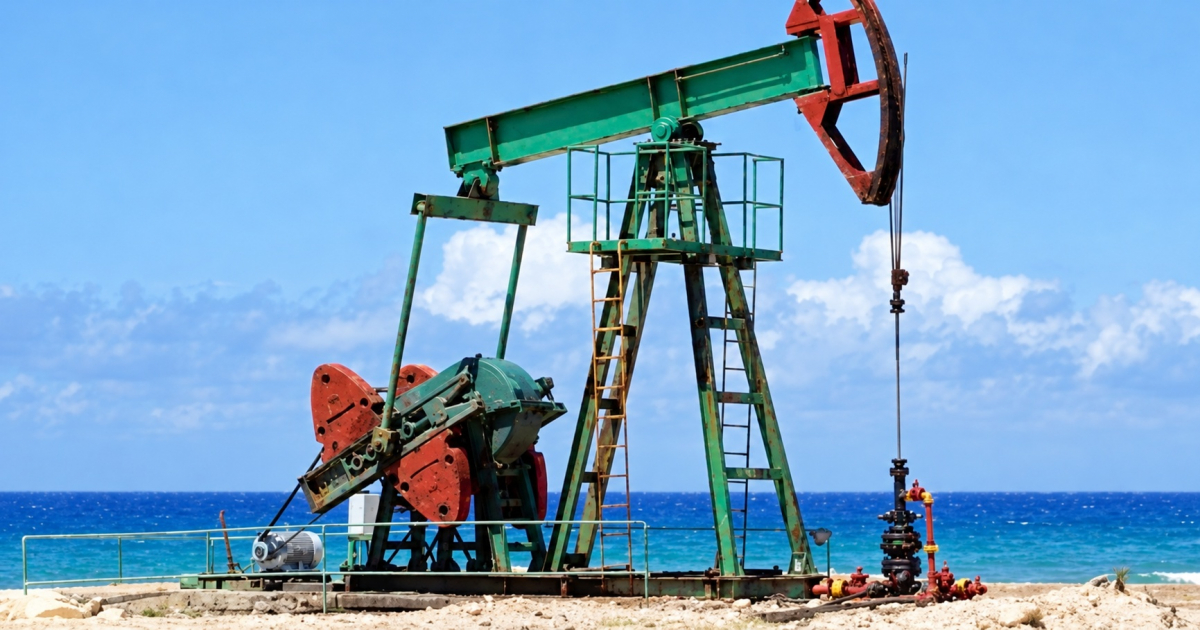
The Cuban government has initiated a policy shift to welcome private investors, both domestic and international, into the realm of fuel refineries, storage facilities, and fuel marketing. This move is part of a broader reform of petroleum legislation aimed at attracting capital and boosting hydrocarbon production.
During a recent press conference, officials from the Union Cuba-Petróleo (CUPET) outlined the potential for negotiating investments in strategic installations that remain under state control, including refineries and major fuel depots, as reported by Cubadebate.
The reform is backed by Decree-Law 135 on Oil and Gas, published on October 12 in the Official Gazette, accompanied by its regulations, Decree 184. This new legislation, effective from October 19, expands the contractual frameworks, allowing greater involvement of Cuban private firms and foreign companies in various petroleum industry activities.
Opportunities for Private Capital in Strategic Infrastructure
One of the significant aspects of the reform is the opportunity for private capital to engage in projects involving oil infrastructure that the state deems strategic. Irenaldo Pérez Cardoso, CUPET's deputy director, clarified that negotiation opportunities extend beyond oil exploration and extraction to include refining, storage, and fuel marketing.
Pérez Cardoso emphasized that facilities such as oil wells, refineries, and large storage infrastructures—like the Matanzas supertanker bases—will remain under state control. However, this does not preclude specific installations from entering agreements with national or foreign investors to integrate private capital into specific projects.
The conditions of these operations will hinge on factors such as the resources contributed by participants and the negotiated terms between parties. The reform does not equate to the privatization of refineries or the sale of major fuel depots; instead, it allows for economic participation formulas under appropriate authorizations and regulations.
New Concessions and Opportunities for Cuban Firms
The reform also introduces new avenues for attracting foreign investors interested in oil and gas exploration and exploitation. Since the early 1990s, Cuba has permitted foreign company participation in its oil industry, primarily through production-sharing contracts with state entities. Now, the legislation includes oil concessions, enabling investors to explore and exploit designated areas under conditions set by Cuban authorities.
Pedro Abigantus León, the Ministry of Energy and Mines' (MINEM) director of Oil and Gas Investments and Business, explained that this option might be more appealing to certain foreign companies. Concessions will last up to 30 years, with a possible ten-year extension, subject to approval from competent authorities.
Meanwhile, production-sharing contracts can extend up to 40 years, also with a ten-year extension option. These concessions are specifically tailored for exploration and exploitation activities. Participation in refining, transport, or storage will be governed by applicable business modalities and authorizations.
Economic Flexibility Amidst Energy Crisis
This decision comes at a time of severe energy supply challenges in Cuba, characterized by fuel shortages, production limitations, and electrical system issues. Cuba produces roughly 40% of the oil it consumes, primarily powering thermal power plants that support a significant portion of the national electricity generation.
The situation has worsened due to U.S. petroleum restrictions imposed since January 2026, which have curtailed crude supply to the island. While Washington has allowed Cuban private entrepreneurs to acquire U.S. fuel, these operations account for only about 3% of the nation's consumption needs.
The petroleum reform aligns with a broader economic liberalization process. In June, the Cuban government approved a package of 176 measures encouraging greater participation of non-state actors, and in July, it advanced the opening of activities such as gas stations, pharmacies, and other services.
State Control Over Oil Resources Remains
Despite new opportunities for private investors, the legislation retains state ownership over oil and gas deposits. Decree-Law stipulates that subsurface resources remain socialist property of all people, according to the Cuban Constitution.
Moreover, exploration and exploitation activities require specific authorizations, and the state retains the authority to determine investor participation conditions and deny certain permits for national security reasons. Companies interested in operating in the sector must meet technical capacity, industrial safety, and environmental protection requirements.
CUPET has indicated that integrating new actors will be gradual, with pilot projects potentially preceding broader participation modalities. The new regulations also demand specialized controls to prevent fires, spills, and other accidents related to hydrocarbon handling.
Pérez Cardoso acknowledged that having a more flexible legal framework doesn't eliminate obstacles to attracting foreign capital, citing geopolitical issues and U.S. restrictions impacting economic operations with Cuba. While the reform sets the legal conditions for negotiating new projects, its impact on production and supply will depend on securing investments, authorizing operations, and incorporating necessary resources.
Key Questions on Cuba's Petroleum Legislation Reform
What does Cuba's new petroleum legislation aim to achieve?
The new legislation aims to attract private investment, both domestic and foreign, to boost hydrocarbon production and modernize the petroleum industry.
How are private investors involved in Cuba's petroleum industry?
Private investors can participate in refining, storage, and fuel marketing projects through economic participation formulas, but the state retains control over strategic installations.
What is the impact of U.S. restrictions on Cuba's fuel supply?
U.S. restrictions have limited crude supply to Cuba, exacerbating the country's energy crisis, despite allowing some fuel purchases by Cuban private entrepreneurs.