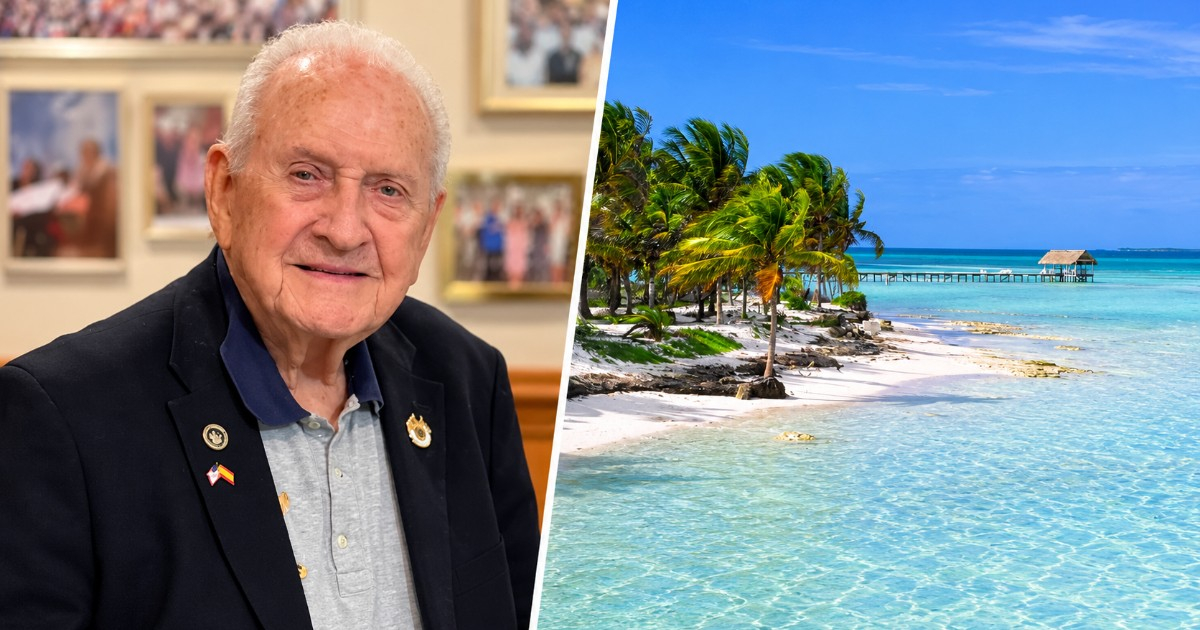
Mario Echevarría, a Cuban-American, has announced that he will no longer be personally pursuing his legal battle over Cayo Coco, a northern Cuban tourist hotspot. Echevarría claims hereditary rights to properties that he states were confiscated from his family.
"I've already told my family that I'm done," he stated in an interview with Darcy Borrero Batista, published by CubaNet on October 12th.
Echevarría expressed that the lengthy legal proceedings have become increasingly challenging for him. "At 91, approaching 92, it's not easy to spend eight hours in court," he remarked. He admitted that although he maintains mental clarity, he no longer has the physical stamina to continue the legal fight.
Cayo Coco Property Disputes
The claimant asserts that his family held rights to Cayo Coco, located in Ciego de Ávila province, prior to the Cuban regime's confiscations. Beginning in 2019, he initiated legal actions against Expedia Group, Hotels.com, and Orbitz for marketing hotel reservations on land he claims ownership of.
The lawsuits are based on Title III of the Helms-Burton Act, which allows for claims of damages against those who traffic in properties seized by the Cuban government. A court resolution from March 2025 includes both Echevarría's hereditary claim and the objections from the companies being sued.
In April 2025, a federal jury in Miami ruled in favor of Echevarría, but Judge Federico Moreno overturned the verdict in September of the same year, determining that the legal criteria for holding the companies accountable were not met.
On August 31, 2026, another jury sided with Expedia in a trial that also included another Cuban-American claimant. The jury found that the plaintiffs had not adequately proven their rights to the disputed lands, as reported by CiberCuba.
Echevarría has not ruled out the possibility of his children continuing the family's claims. "We have the deeds to Cayo Coco. We have them," he affirmed in the interview.
Key Questions About the Cayo Coco Legal Dispute
What legal basis did Mario Echevarría use for his claims?
Mario Echevarría's claims were based on Title III of the Helms-Burton Act, which allows for legal action against those who traffic in properties confiscated by the Cuban government.
Why did the federal jury initially rule in favor of Echevarría?
In April 2025, a federal jury in Miami ruled in favor of Echevarría, likely based on the evidence presented regarding his hereditary claims. However, the verdict was later overturned by Judge Federico Moreno.
Will Echevarría's family continue the legal battle?
There is a possibility that Mario Echevarría's children may continue pursuing the claims, as he mentioned that they possess the necessary property deeds.