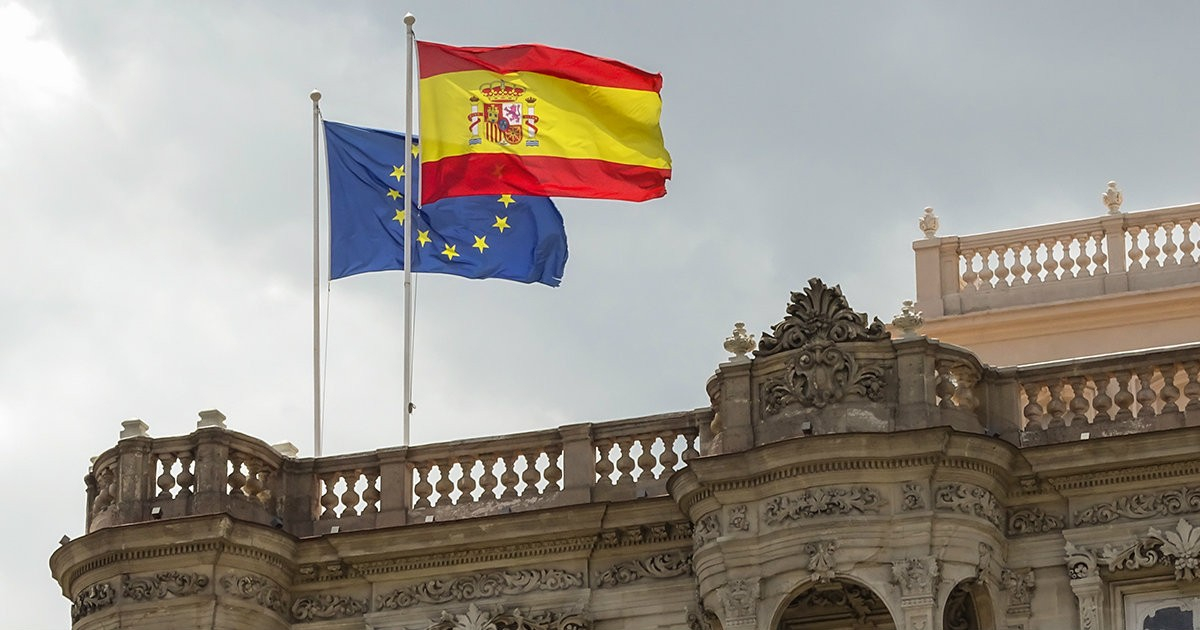
The General Consulate of Spain in Havana is bound by an agreement with the Cuban state-owned entity, PALCO, which operates under the auspices of Cuba's Council of Ministers. This contract grants PALCO the authority to approve or reject workers proposed by Spanish officials. This power, explicitly outlined in the workforce supply contract between the two parties, gives the Cuban regime's company veto power over the hiring of local staff at the consulate.
Signed on January 1, 2025, by then Consul General Antonio Álvarez Barthe and Rubén Santiesteban Ferrás, General Director of PALCO, this agreement is documented as file 2024SWs00114. The contract, valued at 1,131,295.68 euros, is initially set for four years, providing office and general services staff.
Key Provisions and Limitations
Clause 3.9 of the contract allows the Consulate to suggest any candidate for vacant positions, but PALCO retains the right to either provide or withhold them. Until PALCO agrees to the proposed personnel, they cannot serve the Spanish authorities. This means a candidate selected by the Consulate is not guaranteed the position, as PALCO can reject them even if chosen by Spanish diplomatic representatives.
Additionally, clause 2.1 specifies that the Consulate can only employ Cuban workers or foreign permanent residents who have already established an employment relationship with PALCO. Clause 3.3 further mandates that roles and responsibilities must be mutually agreed upon, and any changes in specialization must be communicated to the hiring company.
The contract also addresses the withdrawal and dismissal of employees, though these powers are not exclusively PALCO's. Clause 3.10 enables the state company to terminate employment and remove staff for justified reasons, provided they notify the Consulate 30 days in advance.
Nevertheless, clauses 3.8 and 3.11 also grant authority to the Spanish officials. The Consulate can dismiss a worker with proper notice and request immediate termination in cases of negligence, misconduct, or other employee-related issues without compensating PALCO.
While the Cuban enterprise doesn't have exclusive control over personnel retention, it does hold significant influence over new hires: no candidate proposed by Spain can begin working if PALCO opts not to accept them. This clause highlights Spain's reliance on a labor intermediation system overseen by the Cuban state, even when dealing with personnel selected by Spanish authorities.
Spanish Government's Defense of the Arrangement
The government of Pedro Sánchez officially acknowledged the use of PALCO for staffing in a response to the Spanish Congress dated September 23, 2026, following an inquiry by Popular Party deputies. The response stated that employees supplied by the Cuban company perform administrative, technical, and auxiliary roles "under the direction and supervision of consular office officials."
The government also noted that these workers "in no case" carry out tasks reserved for Spanish public officials or make decisions regarding civil registry, passport, or visa applications. However, the parliamentary response did not elaborate on PALCO's contractual power to reject candidates proposed by the Consulate, which is distinct from overseeing tasks performed once staff are onboarded.
While Spanish authorities retain control over daily operations and consular decisions, the Cuban company is mandatorily involved in the hiring process and can block candidates chosen by Spain. The government did not specify the methods used to verify the suitability of PALCO-provided personnel or the procedures if Spanish authorities raise concerns about specific workers.
This state-mediated hiring process is justified by citing Decree-Law 384 of 2019, which regulates local staffing for foreign missions in Cuba. According to the government, this practice has been in place since 2017, complying with Cuban law that requires diplomatic missions to work with state employment agencies.
Financial Aspects and Employee Compensation
The contract's annexes reveal details about job roles, monthly work hours, service costs billed by PALCO, and agreed salaries for employees. For instance, the monthly service cost for an office assistant is set at 5,822.47 Cuban pesos (CUP), while the agreed monthly wage is 3,706.69 CUP, creating a difference of 2,115.78 CUP per employee, roughly 36.3% of what PALCO charges for the service.
For general service assistants, the monthly cost is 5,702.57 CUP, with a set salary of 3,630.14 CUP, resulting in a 2,072.43 CUP difference. These figures indicate that the state company receives more than the employee's agreed compensation, though the contract does not specify if this discrepancy covers management fees, labor obligations, or other costs.
This labor intermediation system has been scrutinized by the Spanish press, questioning the gap between payments made by Spanish authorities and the final wages received by Cuban employees.
Handling of Sensitive Documentation
The Consulate General of Spain in Havana processes a large volume of personal documentation due to over 350,000 nationality applications under the Law of Democratic Memory, known as the Grandchildren Law, which involves managing birth certificates, family records, identity documents, and other personal data.
To manage the flood of applications, Spain has relied on PALCO-supplied staff, benefiting from the labor intermediation system established by Cuban authorities. The Popular Party questioned the government about these workers' physical and digital access to files and potential links to the military conglomerate GAESA, controlled by the Cuban Revolutionary Armed Forces.
In response, the government assured that access to documents and information systems is limited to service needs and subject to authorization, supervision, and traceability mechanisms. They also stated that staff must adhere to confidentiality obligations and comply with current data protection and information security regulations.
However, the response did not detail the specific access levels for each employee category or individual checks conducted before hiring. The contract's provisions do not prove that PALCO or Cuban authorities have improperly accessed nationality files but raise questions about the controls applied to workers whose hiring relies on a foreign state-owned company.
The Grandchildren Law controversy has also reached the electoral arena. On Monday, Spain's Supreme Court rejected a State Attorney appeal and maintained the temporary suspension of voting for certain individuals naturalized under this law in the November 29 general elections. The measure could affect 163,020 voters, although it does not revoke Spanish nationality nor determine how many of those affected are Cuban.
PALCO's Connections to the Cuban State Apparatus
Grupo PALCO is a Cuban state entity under the Council of Ministers, offering services to governmental bodies, diplomatic missions, and foreign entities. The company has been linked to the economic network associated with GAESA, the business conglomerate controlled by the Cuban Armed Forces and subject to U.S. sanctions.
PALCO's history has been marked by controversy. In October 2024, the group was mentioned in reports about an investigation into alleged economic irregularities involving Yoel Perdomo Di-Lella, brother of then Deputy Prime Minister Jorge Luis Perdomo Di-Lella, who was dismissed that same month.
Regarding the Spanish Consulate, the main concern is not just the public funds directed to the company but the powers it retains over worker integration. Although Spain oversees consular functions, retains the authority to dismiss employees, and is in charge of nationality cases, the contract allows PALCO to reject candidates proposed by Spanish authorities.
As a result, the Consulate's operation depends on a Cuban state company that can block the hiring of staff even when selected by the Spanish diplomatic mission itself.
Understanding PALCO's Role in Spanish Consulate Staffing
What power does PALCO have over staffing at the Spanish Consulate in Havana?
PALCO has the authority to approve or reject candidates proposed by the Spanish Consulate, effectively giving it veto power over local staff hiring.
How does the Spanish government justify the use of PALCO?
The Spanish government cites Decree-Law 384 of 2019, which mandates the use of state employment agencies for local staffing at foreign missions in Cuba, as justification for using PALCO.
What concerns have been raised regarding PALCO's involvement?
Concerns include the company's power to reject consulate staff, the disparity between payments and wages, and potential access to sensitive documentation handled by consulate staff.
What is the financial arrangement between PALCO and the Spanish Consulate?
The contract outlines service costs and employee wages, revealing that PALCO receives more than the agreed salary for each worker, raising questions about the use of the surplus.