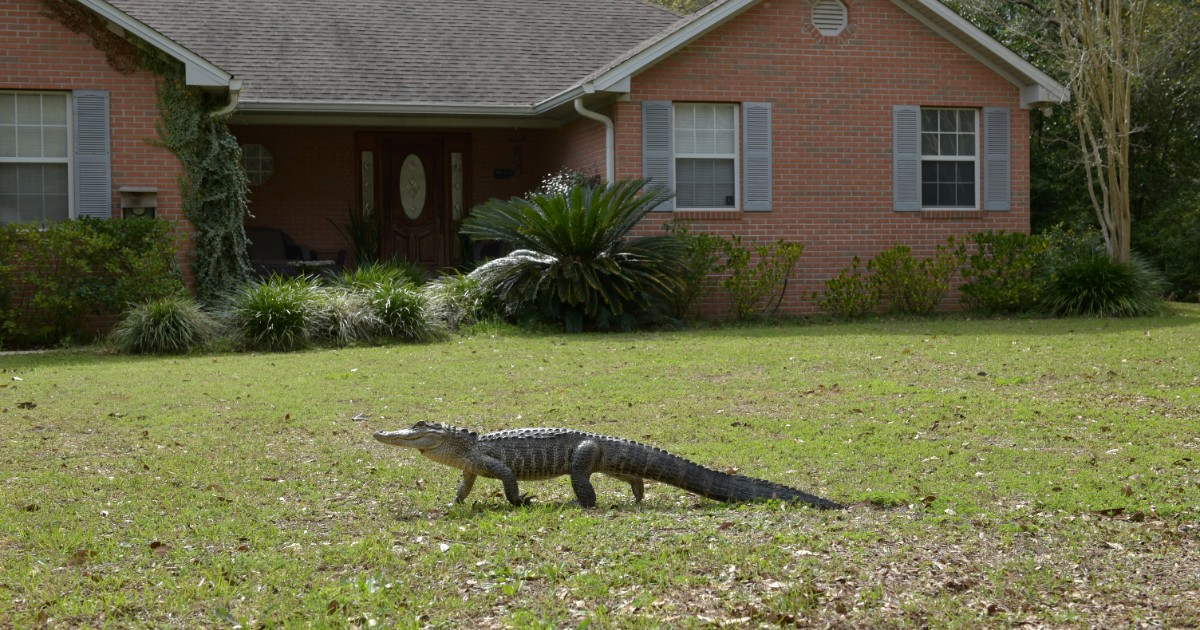
The Florida Fish and Wildlife Conservation Commission (FWC) issued a warning on Saturday to residents, highlighting a likely surge in alligator and snake sightings in flooded regions following Hurricane Isaias. The FWC advises keeping a safe distance from any displaced wildlife due to the storm.
The state agency emphasized in a public notice that severe weather events can disrupt habitats, leading to more frequent interactions between humans and animals.
"You might see more alligators and snakes after a major storm, particularly in areas that have experienced flooding," the FWC cautioned, advising residents to maintain a safe space around these creatures.
According to the agency's official guide on wildlife and storms, alligators tend to appear more often in flooded locales post-hurricanes or tropical storms. Similarly, elevated water levels can increase snake sightings.
If an alligator poses a threat to people, pets, or property, the FWC urges contacting their dedicated nuisance alligator hotline at 866-FWC-GATOR (866-392-4286).
The advice regarding snakes is straightforward: do not attempt to capture or approach them. The agency notes that most snake species appearing after a storm are non-venomous and generally avoid humans but might react defensively if threatened.
Impact on Other Wildlife
The warning is not restricted to reptiles. Adverse conditions and high surf can cause manatees to become stranded or trapped, necessitating immediate assistance from specialists.
The FWC requests reporting any stranded, injured, or deceased manatees to the wildlife alert line at 888-404-3922 and advises against attempting to move the animals independently.
Storms can also push small sea turtles back onto land after they've already reached the ocean. They may be found entangled in seaweed or in unusual spots such as pools and yards, and the agency recommends contacting specialized personnel for help.
Post-Storm Cleanup Concerns
Bear encounters might become more common during post-hurricane cleanup efforts. Bears are often drawn to food and waste left exposed among debris, so the FWC advises securing and separating food waste.
This advisory follows Hurricane Isaias making landfall near Destin as a Category 2 hurricane, with maximum sustained winds of 105 mph and heavy rains causing flooding in parts of northwest Florida.
Although the cyclone weakened swiftly upon reaching land, authorities warned that the threat of flooding persisted in the Panhandle and Big Bend areas due to accumulated rainfall and rising river levels.
The storm also left nearly 450,000 homes and businesses without power across Florida, alongside wind and storm surge damage.
Alligator encounters are not uncommon in Florida. In July, the FWC explained that habitat reduction due to drought had increased sightings near populated areas, as the animals searched for water.
FAQs on Wildlife Encounters After Hurricanes
What should I do if I encounter an alligator after a storm?
Maintain a safe distance and contact the FWC's nuisance alligator hotline at 866-FWC-GATOR if the alligator poses a threat.
Are the snakes that appear after storms dangerous?
Most snakes are non-venomous and will try to avoid humans, but they may react if threatened. It's best to leave them alone and not attempt to capture them.
How can I help a stranded manatee?
Report the stranded manatee to the FWC wildlife alert line at 888-404-3922 and refrain from trying to move the animal yourself.