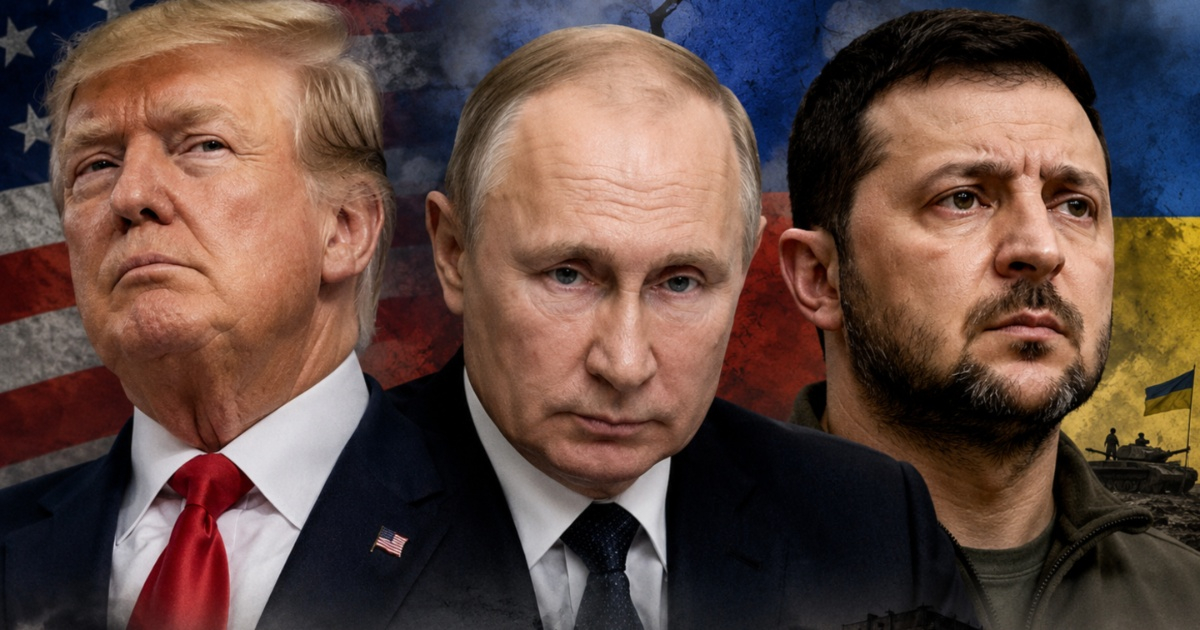
On Sunday, Donald Trump announced an immediate "energy ceasefire" between Russia and Ukraine, in which both countries would refrain from targeting each other's oil and power facilities. However, neither Moscow nor Kyiv officially confirmed this development.
"Effective immediately, there is an energy ceasefire in the war between Russia and Ukraine. Both parties have agreed. Don’t break it!" Trump posted on social media, without providing any agreement text or verification mechanisms.
The Ukrainian President, Volodymyr Zelensky, expressed surprise at the announcement, stating that its implementation depended on Russian reciprocity.
"The ceasefire announcement was unexpected, but if the Russians agree to an energy ceasefire, Ukraine will also," Zelensky told journalist Barak Ravid of CNN and Axios.
In a video shared on his platforms, Zelensky described the announcement as "good news for everyone," but emphasized, "What matters is that it comes true."
Zelensky demanded specific details about what was negotiated between Washington and the Kremlin: "If President Trump has negotiated with Putin, please tell us when the ceasefire begins. We are ready and will accept it."
The credibility of the announcement was immediately questioned as Zelensky confirmed that hours after Trump's post, Russia attacked the CHP-5 thermal power plant in Kharkiv, a vital heating and power facility.
A Russian missile also struck a store on the outskirts of the city, resulting in three deaths and nine injuries, including two children.
Zelensky reminded that over the last week, Russia had carried out more than 200 attacks on Ukrainian power generation and transmission facilities, stressing, "Ukraine has proposed numerous de-escalation measures. Putin's response to all has been: 'niet'."
There was no official confirmation from Moscow. The only comment came from Igor Ananskij, vice-chair of the Duma's Energy Committee, who claimed no knowledge of any agreement and suggested Trump might be making a "verbal intervention" to lower oil prices: "We all know Trump often says things to bring down oil prices. I don't know if it's true."
The announcement comes amid heightened tension between Washington and Kyiv. On Saturday, Trump publicly called for Ukraine to have "a new president" capable of reaching an agreement with Russia, and U.S. envoys reportedly warned Kyiv that Washington might suspend intelligence sharing if Ukraine did not halt attacks on Russian refineries.
On Thursday, Trump and Putin formalized an agreement to lift U.S. sanctions on Russian diesel exports, which Zelensky branded as "unfair and dishonest," accusing it of being negotiated behind his back while his delegates were engaged in talks in Miami.
This is not the first time Trump has announced such an understanding without verifiable support: in September, he proclaimed a similar agreement to protect energy infrastructures, which Zelensky denied had official confirmation, and Republican lawmakers rejected both the diesel deal and the proposal to replace the Ukrainian president this week.
"Ukraine wants peace. The question is whether Russia wants it," Zelensky concluded.
Understanding the Trump Announcement on Ukraine Ceasefire
What did Trump announce regarding the Ukraine-Russia conflict?
Trump announced an immediate "energy ceasefire" between Russia and Ukraine, where both sides would stop targeting each other's oil and power facilities.
How did Zelensky respond to Trump's announcement?
Zelensky expressed surprise and conditioned the ceasefire's implementation on Russian reciprocity. He also asked for specifics about the negotiations between Washington and the Kremlin.
Was there any confirmation from Russia regarding the ceasefire?
No official confirmation came from Moscow, and a Russian official suggested that Trump's announcement might be a tactic to influence oil prices.
What actions did Russia take following Trump's announcement?
After Trump's announcement, Russia attacked the CHP-5 thermal power plant in Kharkiv and struck a store outside the city, resulting in casualties.