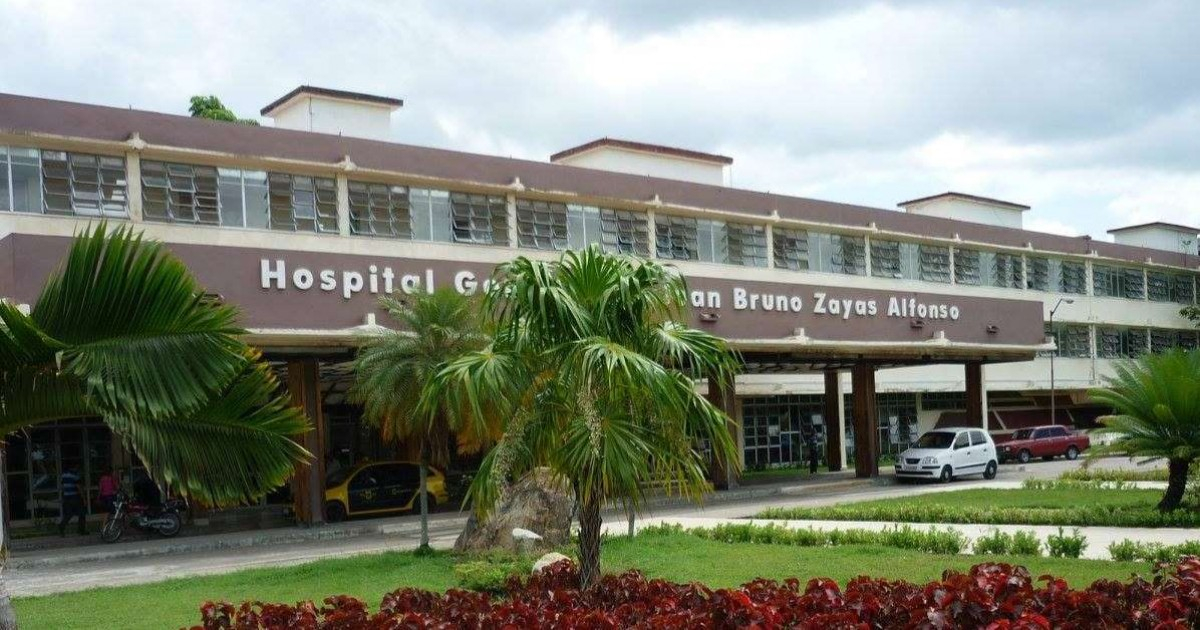
The family of Leonardo Orué Calderín, a resident of Nuevo Bamba in Palma Soriano, Santiago de Cuba, has accused the Cuban healthcare system of negligence, claiming that his death could have been prevented with timely medical intervention for his peritonitis. This was reported by Martí Noticias on Sunday.
Orué Calderín, well-known in his community for his voluntary blood donations, arrived at a Palma Soriano clinic in the early morning with severe abdominal pain. From the outset, a series of failures ensued: delays in deciding on a transfer and further delays in the ambulance transport to the Juan Bruno Zayas Alfonso Clinical Surgical Hospital in Santiago de Cuba.
His ordeal in the hospital dragged on for days. Danieyis Orué, his daughter living in the United States, recounted the string of negligent acts: "They dressed him in green, took him to the operating room door, then pulled him back, as more critical patients arrived. By Thursday, they decided to operate, but then discovered his blood type wasn't available."
The family had to source blood bags on their own. A hospital orderly offered to sell one bag, yet two were needed. "Finally, at 6 PM, they took him to the operating room, confirming what we feared: a peritonitis that had been festering for days," Danieyis shared.
Her anger focused on the hospital's lack of preparation: "How do you plan a surgery from Tuesday, bring the patient on Wednesday, intend to administer anesthesia, and only then realize his blood type isn't available? It's inhumane."
Dr. Yonardo Fonseca, a specialist consulted by Martí Noticias, highlighted that the most critical delay occurred within the hospital: "What stands out is the extensive delay from diagnosis to the decision to operate."
After the surgery, doctors told the family it was a "success." However, the patient suffered another organ failure and died in the early hours. The necessary metronidazole medication had to be urgently acquired by relatives due to its absence in the hospital.
The attending physician, during a video call with Danieyis, stated he had done "all he could" and that the ambulance transfer was beyond his control. Martí Noticias attempted to contact the hospital for their account, but calls went unanswered.
Orué Calderín's case is not isolated at Juan Bruno Zayas. In 2026, Aniari Barrientos Vázquez, 26, died after induced labor; Alexis Rosales Aldama passed away in April after waiting over four hours for an ambulance; and in January, Yordanis Beltrán Beltrán, 42, died after more than two hours without medical transport.
The hospital's decline is evident: sewage under beds, rats in the Perinatology unit, critically poor bathroom conditions, and halted hemodialysis services due to a salt shortage. Nationwide, Díaz-Canel has acknowledged the medicine deficit as over 98,500 patients, including 12,000 children, await postponed surgeries due to blackouts and supply shortages across the island.
Frequently Asked Questions on Healthcare Crisis in Cuba
What led to the death of Leonardo Orué Calderín?
Leonardo Orué Calderín died due to complications from peritonitis, which his family claims could have been avoided with timely medical attention and appropriate resources, which were lacking at the hospital.
What are the systemic issues in Cuban hospitals?
Systemic issues include inadequate medical supplies, delays in surgery and transport, poor sanitary conditions, and shortages of essential medications, all exacerbated by national resource constraints.
How has the Cuban government addressed the healthcare challenges?
President Díaz-Canel has acknowledged the medicine shortages and the backlog of surgeries due to power outages and supply issues, but substantial improvements remain to be seen across the healthcare system.